
The Summer Peach Guide: How to Find, Pick, and Use the Best Local Peaches at Your Farmers Market
Local peaches have a short, glorious season — here's when to find them, what to look for at the market, how to store them, and what to make when you have more than you can eat.
 1 min read
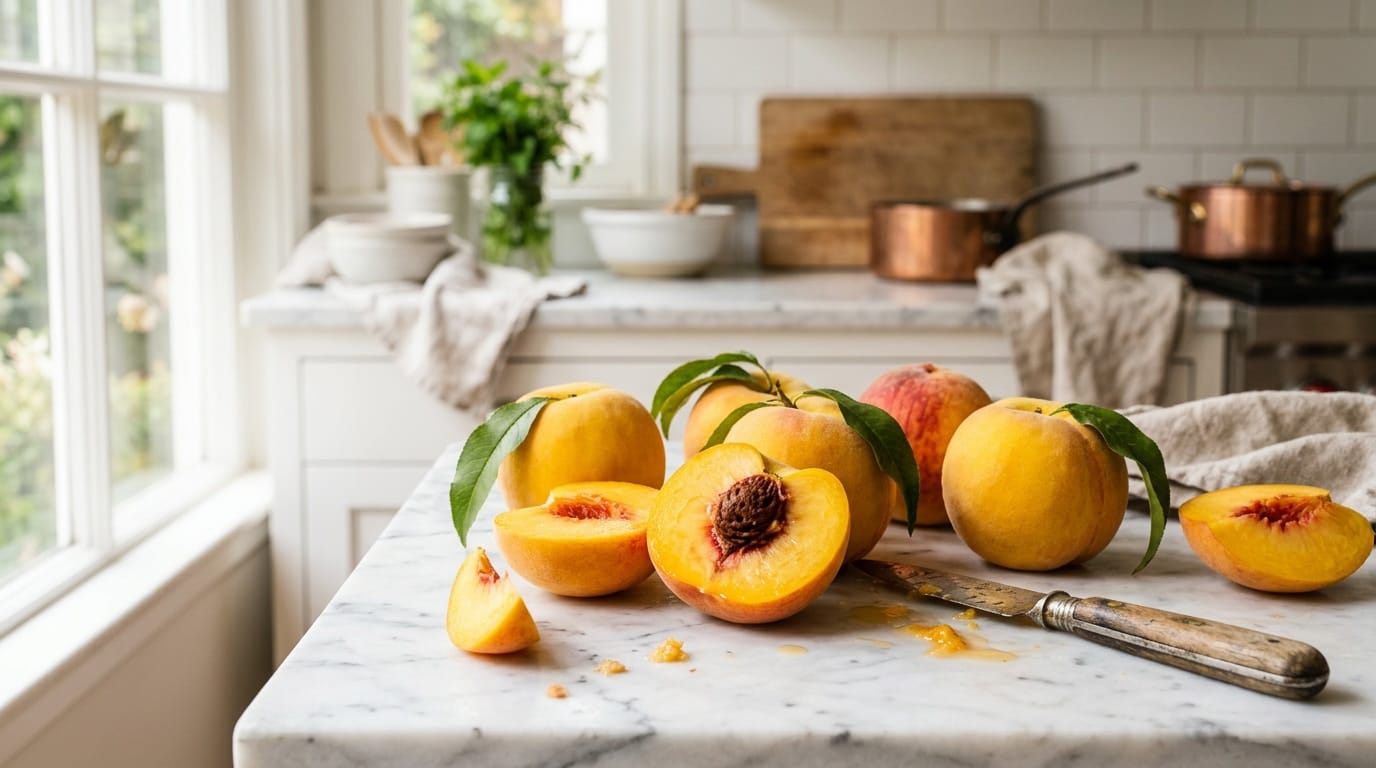
There's a window — maybe six weeks, in most parts of the country — when local peaches are at their peak. Grown close to home, picked when they're actually ripe, sold by the person who grew them. And if you've ever bitten into a peach like that, you know there's no going back to the grocery store version.
The problem is most people don't know when that window opens, what to look for when they get there, or what to do with more peaches than they can eat in a week. So let's fix all three.
When Are Local Peaches in Season?
Peach season varies by region, but here's a rough guide:
Southeast (Georgia, South Carolina, North Carolina): June through August. Georgia is America's most famous peach state for good reason — the season starts earlier and lasts longer in the warm South.
Mid-Atlantic and Midwest: July and August. Pennsylvania, Michigan, and Ohio all produce excellent peaches at the height of summer.
Mountain West and Pacific Coast: July through September. Colorado peaches — especially from the Western Slope — have a devoted following and a short, intensely flavored season in August.
Your best source for exact timing in your area is your local farmers market. Ask the vendors when their peach crop typically peaks and whether you can sign up for a text or email when the best batch is ready. Good fruit growers are used to that question, and they'll love that you asked.
What to Look For When Buying Local Peaches
The rules are simple, but they trip people up because commercially grown peaches are bred for transport and shelf life — not for ripeness at point of sale. At the farmers market, the rules flip.
Smell it first. A ripe peach smells like a peach — fragrant, sweet, unmistakable. If you pick it up and smell nothing, it's not ready yet. Follow your nose before your eyes.
Give gently. A ripe peach should yield slightly when you press near the stem. Firm peaches will ripen on the counter at home in a day or two, which is fine if you're planning ahead.
Look at the background color. Red blush is beautiful but doesn't tell you much about ripeness. Look at the skin that isn't red — it should be yellow, orange, or creamy gold. Green near the stem means give it another day.
Freestone vs. clingstone. Freestone peaches separate easily from the pit — great for slicing, grilling, and canning. Clingstone peaches are sweeter and juicier, tend to ripen earlier in the season, and are ideal for eating out of hand. If you're making jam, either works beautifully.
How to Store Local Peaches
Ripe peaches: store at room temperature and eat within two days. They do not improve in the refrigerator — cold storage dulls their flavor and makes the flesh mealy. If you need to buy an extra day, refrigerate briefly right before you plan to eat them, then let them come back to room temperature first.
Almost-ripe peaches: leave on the counter, out of direct sunlight, in a single layer if you have space. A paper bag speeds ripening slightly.
Too many peaches: freeze them. Halve, pit, and slice, then lay the slices on a parchment-lined baking sheet to freeze individually before transferring to a freezer bag. Frozen peach slices are excellent in smoothies, overnight oats, and baked goods all winter long.
What to Make With a Perfect Haul of Local Peaches
Ripe local peaches don't need much. Sliced with good yogurt and a drizzle of honey is a complete breakfast. Halved and grilled for five minutes becomes a surprisingly good dinner side. But if you want to make the most of a serious haul:
Peach jalapeño jam. The sweet-heat combination is everywhere this summer for good reason — it's genuinely delicious, and a standout product for cottage food vendors looking for a wow-factor item. Check out our peach jalapeño jam recipe.
Peach salsa. Dice ripe peaches with red onion, jalapeño, cilantro, and lime. It takes ten minutes and is the best thing that's ever happened to grilled fish or chicken tacos.
Peach crisp. The easiest summer dessert that exists. Sliced peaches, a little sugar and lemon juice, topped with an oat and brown butter crumble. Serve warm with vanilla ice cream and do not apologize for how simple it is.
Peach shrub (drinking vinegar). Combine diced peaches with sugar and apple cider vinegar, let macerate in the fridge for three days, strain, and bottle. Mix with sparkling water for a refreshing drink all summer. Cottage food vendors: this is a product your market shoppers are actively looking for right now.
How to Find Local Peach Vendors Near You
The best local peaches are grown close to home and sold by the person who grew them. Browse the Butter & Sage Market vendor directory to find small farms and cottage food makers in your area — including vendors selling peach preserves, peach jam, peach salsa, and other peak-season peach products.
Peak peach season is short. Go find your local growers this week.

Keep reading
More from the market
Buying Ingredients in Bulk Without Wasting Money
The bulk bag is only a saving if you use it in time. How to work out your true break-even, which ingredients…
Read more
How to Freeze Your Farmers Market Haul (Without a Freezer Full of Regret)
No canner, no jars, no boiling water bath. What to blanch first, what to freeze raw, what to skip entirely, and how…
Read more
How to Accept SNAP and EBT at Your Farmers Market Booth
SNAP at a market usually runs through the market itself, not your card reader. What qualifies, how tokens work, how you get…
Read more