Why Buying Local Food Matters More Than You Think (And What Your Dollar Really Does)
Buying local food is more than a feel-good choice — your grocery store and farmers market dollars go to very different places. Here is what actually happens when you shop local.
 1 min read
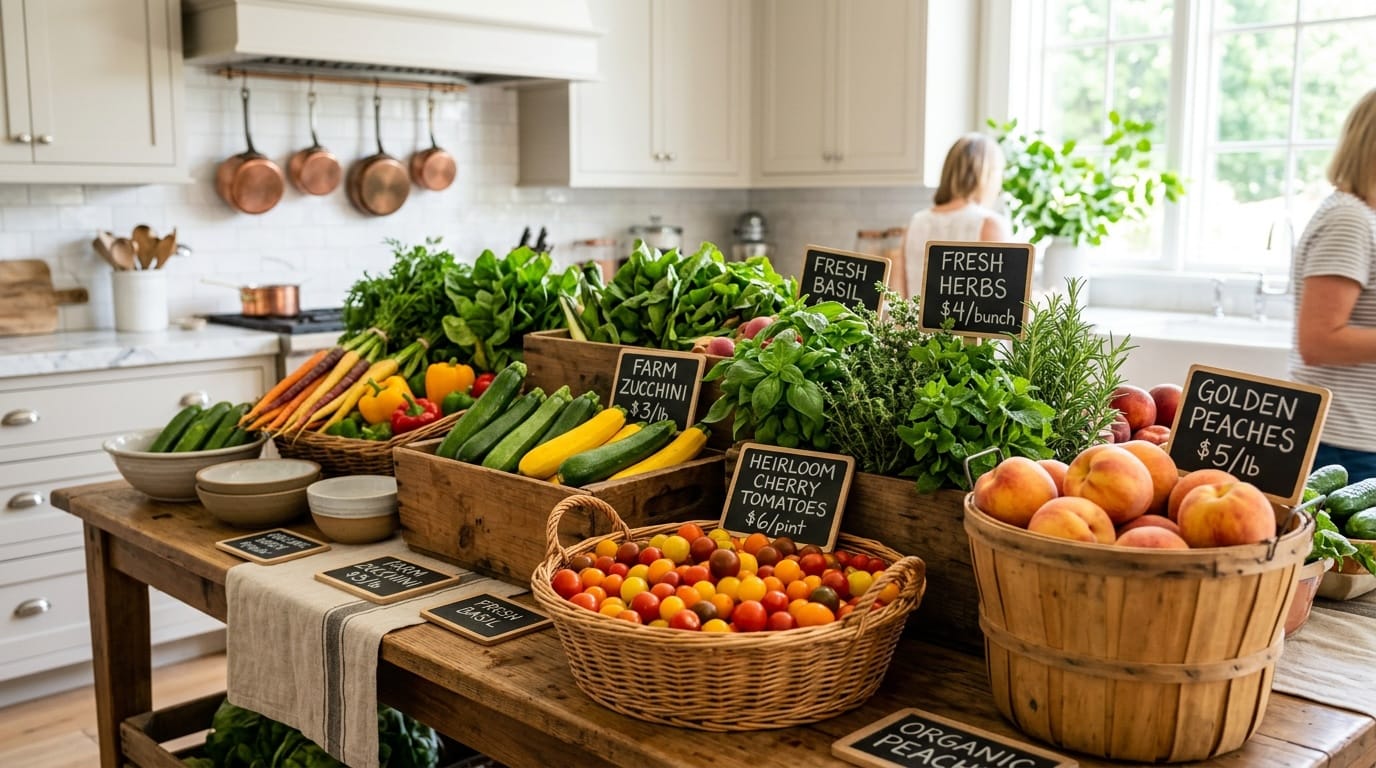
Picture two Saturday mornings. In the first, you are navigating a fluorescent-lit grocery aisle, dropping a bag of tomatoes into your cart — tomatoes picked ten days ago, a thousand miles away, engineered to survive the journey rather than to taste like anything in particular. In the second, you are at the farmers market, handing cash to the person who pulled those tomatoes from the vine yesterday morning, who will take your $3 and spend most of it right back in your town before the weekend is over.
Same purchase. Very different story.
Your Dollar Goes Further When It Stays Close to Home
One of the most compelling cases for buying local food is math. When you spend money at a local food business, an average of 48% of every dollar gets recirculated right back into the local economy through wages, services, and supplies. Spend that same dollar at a chain store, and less than 14% stays local. The rest leaves and does not come back.
The job creation numbers are just as striking. Farmers and food producers who sell locally create 13 full-time jobs for every $1 million in revenue. Industrial food producers who do not sell locally? Three jobs per million. That is not a small difference — it is a fundamentally different kind of economy.
When you buy a jar of jam from your farmers market vendor or a loaf of sourdough from a local cottage baker, you are not just getting breakfast. You are helping someone keep their assistant, pay their supplier, afford their commercial kitchen time, and maybe — eventually — turn a side hustle into a livelihood.
The Food Is Actually Better
The average American meal travels 1,500 miles to reach your plate. To survive that journey, most produce is harvested before it is ripe and bred for durability over flavor. What you lose in that compromise is flavor, texture, and nutrition.


Local food does not have that problem. Farmers market produce is often picked within 24 hours of sale. It is ripe, designed to taste good, not to endure a cross-country truck ride. This is why a farmers market tomato in July tastes like a completely different species from the grocery store version — because in a meaningful way, it is.
Freshness also reduces food safety risk. Every hand a product passes through, every storage facility, every transfer point is another opportunity for contamination. The shorter the supply chain, the fewer those chances. When something goes wrong with a local product, you know exactly who made it — and so do they.
The Environmental Math Adds Up
Food transportation is a significant source of greenhouse gas emissions, and a lot of that is avoidable. Buying locally shortens the supply chain, which shrinks the carbon footprint of your grocery cart. It also dramatically reduces food waste — most food loss happens during long-distance storage and transport, and cutting that step keeps more of your food out of a landfill.
Small local farms also tend to be better for the land itself. Diverse, small-scale farming systems support biodiversity, protect soil health, and avoid the monoculture patterns that industrial agriculture depends on. When you support local farms, you are also — indirectly — supporting the ecosystems around them.
You Know Who Made Your Food
There is something underrated about being able to look your food producer in the eye. Local food creates a transparency that industrial supply chains simply cannot offer. You can ask the baker what is in her granola. You can ask the farmer how he raised his honey bees. You can watch the jam being made and know exactly what went into it.
That accountability changes how food is made. Small producers who sell directly to their community have every reason to do things right. Their neighbors are their customers. Their reputation travels as fast as their product.
How to Start Buying More Local Food
You do not have to overhaul your entire grocery routine overnight. Start with one or two things you already buy regularly — honey, jam, bread, eggs, salsa — and find a local version. Farmers markets are the obvious starting point, but cottage food vendors and small food producers also sell online, at specialty shops, and through platforms built specifically to connect local buyers with local makers.
The habit builds on itself. Once you taste the difference, going back to the alternative starts to feel like a step in the wrong direction.


Keep reading
More from the market
How to Get Your Baked Goods to Market Without Wrecking Them
Cakes slide, frosting sweats, cookies go soft in the car. The crates, timing and packing order that get your bakes to the…
Read more
How to Store Root Vegetables and Winter Squash So They Last Until Spring
Potatoes, squash, carrots and onions will keep for months if you get a few things right. What each one wants, and the…
Read more
What to Do With Unsold Stock When the Market Season Ends
The last market of the season ends with a car full of what did not sell. Here is how to turn that…
Read more