Farmers Market Display Ideas That Actually Stop Foot Traffic (Visual Merchandising for Cottage Food Vendors)
The difference between a booth that sells out and one that gets overlooked usually is not the product. Here is how to design a market display that makes people stop.
 1 min read
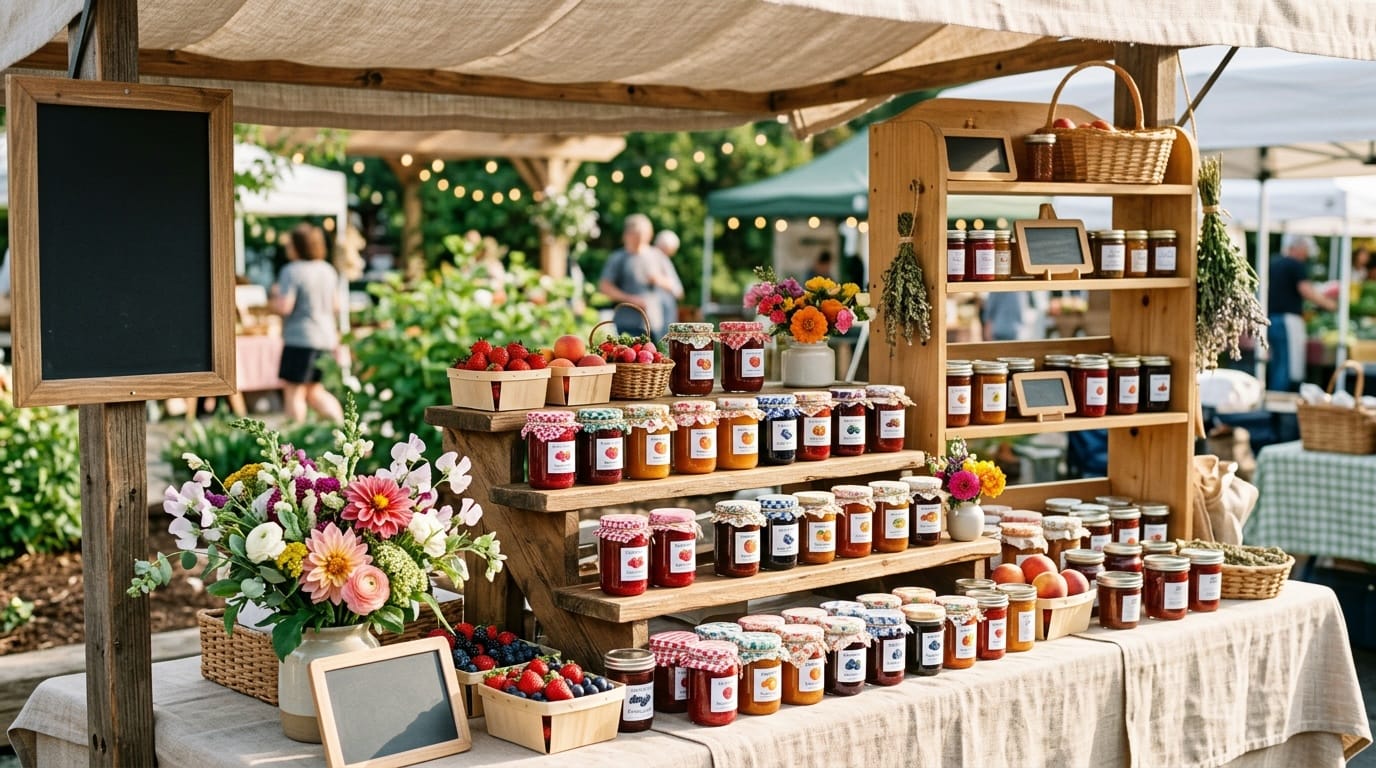
You have spent hours baking, labeling, and packing your products. Your booth is set up, your banner is straight, and you are ready. But twenty minutes into market you have noticed something: the table two spots down has a line, and yours has occasional eye contact. The difference, usually, is not the product. It is the display.
Height Creates Visual Hierarchy
The single biggest upgrade most cottage food vendors can make is adding height. A flat table with products lined up in rows reads as a wall, not an invitation. Shoppers eyes move horizontally as they walk; something taller breaks the pattern and makes them stop. A tiered wooden display stand, a crate stacked on a box, a small shelf riser. Anything that creates layers. Put your most visually striking products at the highest point. Put grab-and-go items at table level where hands can reach easily. Create a scene, not a shelf.
The Hero Product Principle
When everything in your booth is equally featured, nothing is. Pick one hero product for each market: your bestseller, your seasonal special, or whatever is most photogenic that day, and build the display around it. The hero gets the elevated position, the best light, the biggest label card. Everything else is supporting cast.
Labels and Signage: Your Silent Salesperson
Good signage works when you are busy talking to someone else. Large, clean fonts. Prices visible from two feet away. Descriptors that sell rather than just name things: not peach jam but small-batch peach jam made with Georgia peaches, no pectin. Your story and your sourcing are selling points. Put them on the sign. A chalkboard with your name, a short tagline, and a try me arrow pointing toward samples is one of the most effective tools in a market vendor toolkit.
Samples: The Fastest Path from Browser to Buyer
If your product is edible and your cottage food law permits samples, serve them. Keep samples clearly labeled. Replenish frequently because a nearly empty sample bowl signals depletion, not popularity. If you can pair a sample with a brief story about the ingredient or the farm it came from, you have started a conversation that ends at the cash register.
Color, Texture, and Props Tell Your Story
Linen napkins. A small wooden cutting board. A sprig of fresh rosemary. A vintage canning jar holding market flowers. These props cost almost nothing and position your products as handcrafted and worth the price you are charging. Use a neutral backdrop and let your products provide the color. A row of colorful jam jars pops against a white tablecloth; those same jars disappear into a busy patterned background.
Make Your Booth Photo-Ready on Purpose
At every market, someone will photograph your booth. A beautiful display becomes free marketing every time that photo gets shared. Create one intentional photo corner with a chalkboard sign, your prettiest products, and a small branded prop. Put your social media handle and your website somewhere visible. Every photo your customers take is an advertisement for your next market.


Keep reading
More from the market
How to Get Your Baked Goods to Market Without Wrecking Them
Cakes slide, frosting sweats, cookies go soft in the car. The crates, timing and packing order that get your bakes to the…
Read more
How to Store Root Vegetables and Winter Squash So They Last Until Spring
Potatoes, squash, carrots and onions will keep for months if you get a few things right. What each one wants, and the…
Read more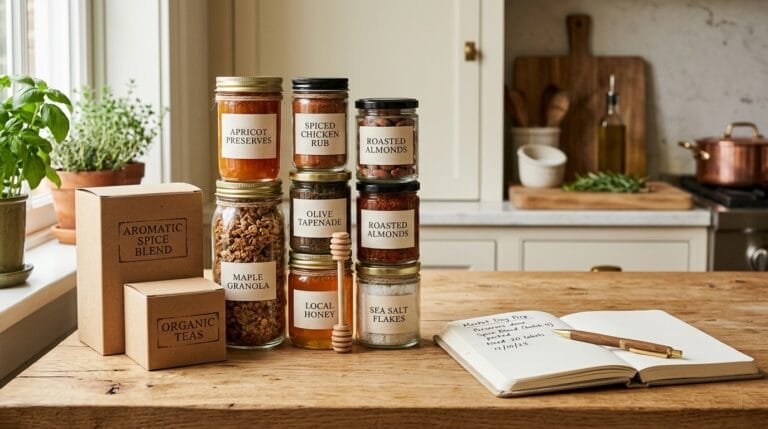
What to Do With Unsold Stock When the Market Season Ends
The last market of the season ends with a car full of what did not sell. Here is how to turn that…
Read more