
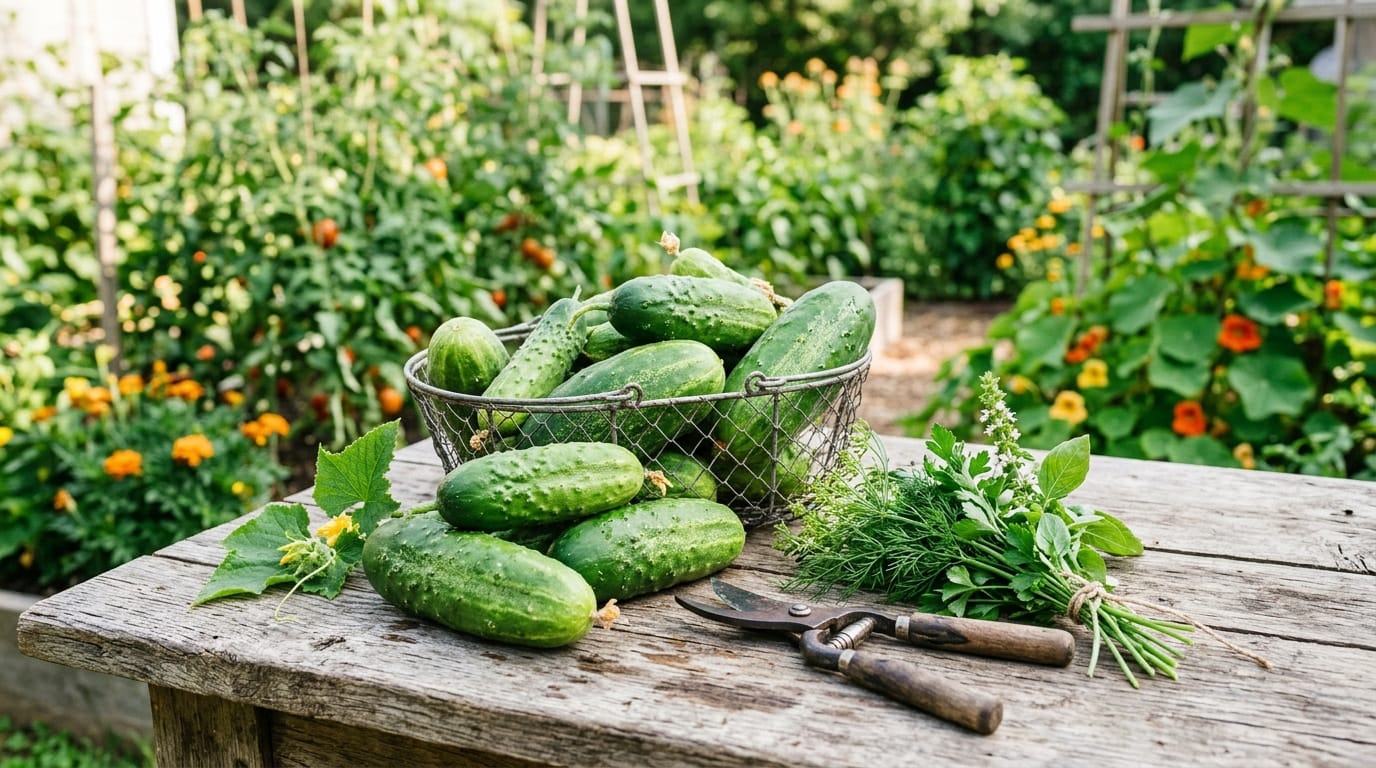
Cucumbers are the plant that tricks you into thinking you are a gardening genius. You plant them, give them something to climb, keep the soil evenly moist, and stand back because in about sixty days you will be drowning in cucumbers. Beautifully, deliciously, gloriously drowning. Whether you are growing for your own kitchen, for a farmers market booth, or because you have always wanted to make your own pickles, cucumbers are one of the highest-reward vegetables you can grow in a backyard setting.
Choosing the Right Variety
For fresh eating and summer salads, slicing cucumbers like Marketmore 76, Straight Eight, or Diva produce long mild fruits ready in 55 to 70 days. For pickling, pickling cucumbers like National Pickling, Calypso, or Boston Pickling are the move. They are shorter, blockier, with thinner skins and smaller seed cavities that help them absorb brine beautifully and stay crunchier longer in the jar. Bush varieties work well for small spaces and containers. Vining varieties need a trellis but produce dramatically more fruit per plant.
When and How to Plant
Cucumbers are genuine warm-weather crops and hate cold soil. Plant after your last frost date when soil temperatures are consistently above 60 degrees F. Direct sow seeds 1 inch deep, 6 inches apart in rows spaced 3 to 4 feet apart. Or start seedlings indoors 2 to 3 weeks before your last frost date and transplant carefully, since cucumbers dislike root disturbance. Full sun is non-negotiable: six or more hours of direct sunlight per day.
Why a Trellis Changes Everything
Cucumbers trained vertically take up less ground space, get better airflow which dramatically reduces fungal disease, and produce fruit that hangs straight and is easy to spot at harvest time. A simple cattle panel, a bamboo A-frame, or a sturdy wire cage all work well. Train young vines gently upward as they grow. Cucumbers have tendrils that grab on naturally. Once they are moving you mostly just stay out of the way and keep up with harvesting.
Watering and Feeding: Consistency Is Everything
Cucumbers are more than 95 percent water, which means consistent moisture is critical. Irregular watering leads to bitter fruits, misshapen cucumbers, and hollow centers. Aim for 1 to 2 inches of water per week applied at the base of the plant rather than overhead. A 2-inch layer of mulch around each plant helps with moisture retention. Feed with a balanced fertilizer every 2 to 3 weeks, switching to a slightly lower-nitrogen formula once flowering begins.
Harvesting: More Often Than You Think
Harvest frequently, every other day during peak season, and harvest before cucumbers get too large. An overgrown cucumber signals the plant to slow fruit production. Keep picking and the plant keeps producing. Slicing cucumbers are typically ready at 6 to 8 inches. Pickling cucumbers at 3 to 5 inches. Both should be firm and deep green. Use scissors rather than twisting.
What to Do With All of Them
Refrigerator pickles are the home cook best friend when the cucumber plants go into overdrive, no canning equipment required, ready in 24 hours. A cucumber-heavy week also calls for tzatziki, cucumber agua fresca, shaved cucumber salad with sesame and rice vinegar, and chilled cucumber soup. For cottage food vendors, cucumber-based pickles, relishes, and brines are farmers market staples that sell consistently all summer. There is something satisfying about growing your own ingredient and selling the finished product two booths down. Plant your cucumbers, build your trellis, and keep your jars ready. Summer is coming in fast.



0 Comments