
The Farmers Market Pear Guide: Which Variety to Buy for Eating, Baking, and Poaching
Which pear to buy for eating, baking and poaching, how to ripen pears at home after the market, and the one question to ask the grower before you buy a bag.
 5 min read
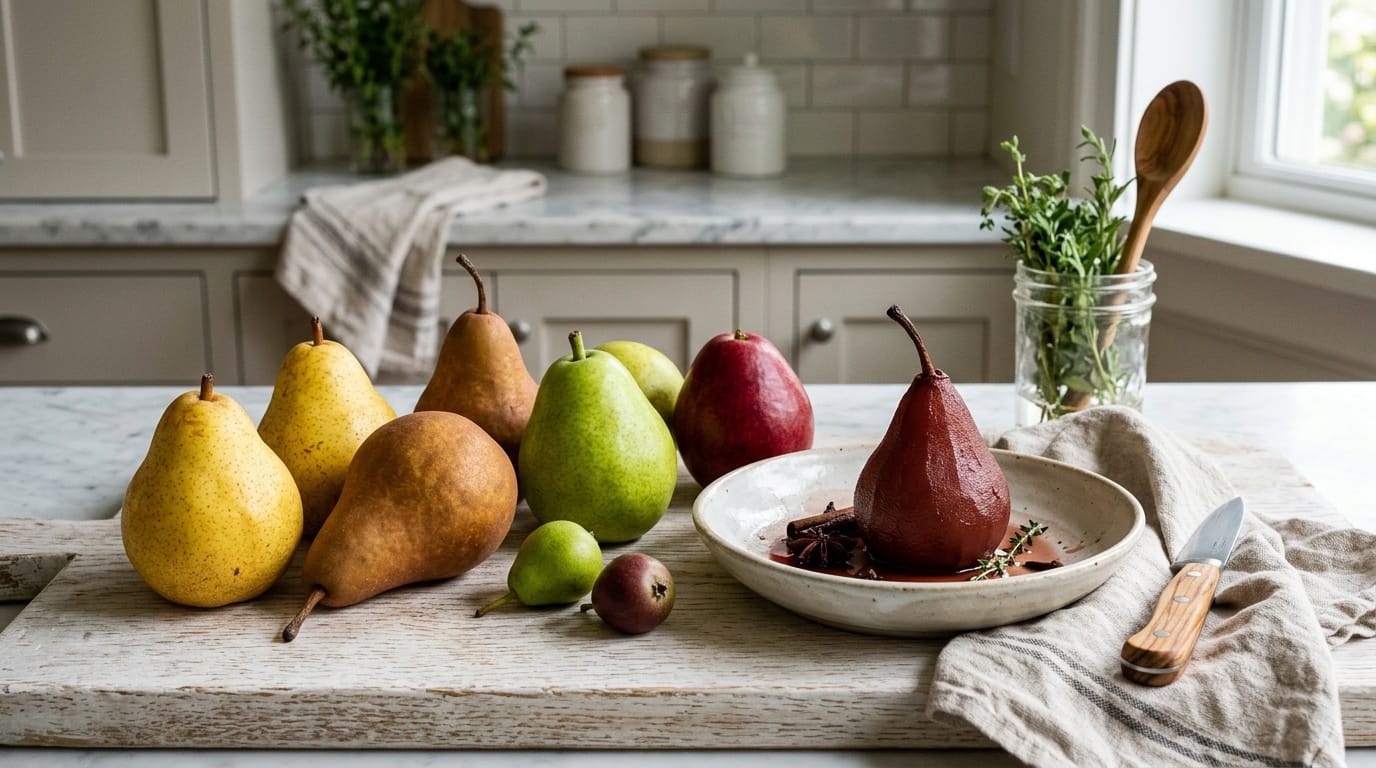
You bring home a bag of beautiful pears from the market, bite into one that evening, and it is as hard and flavorless as a raw potato. Then you forget about them for four days, and suddenly they are perfect. Pears are the one fruit you are actually supposed to buy before it is ready, and almost nobody explains how to ripen pears once you get them home.
Here is the farmers market pear guide: which variety to buy for what you want to make, how to tell when it is ready, and the question worth asking the grower before you pay.
The one thing to know: pears ripen off the tree
European pears, which covers nearly every pear you will see at a fall market, are picked mature but hard. If they are left to ripen on the branch, Iowa State Extension explains, they develop gritty stone cells and poor flavor. The good eating happens on your counter, not on the tree.
There is a second wrinkle. According to Penn State Extension, most pears need a spell of cold storage after harvest before they will ripen properly at all. Bartlett needs only a day or two in the cold, while Bosc, Anjou and Comice need two to six weeks. Without that chill, a pear can shrivel and rot without ever turning sweet. Pears from a grocery store have already been chilled. Pears from a small orchard may or may not have been, which is why the question at the end of this guide matters.
The exception is Asian pears, the round, apple-shaped ones. Iowa State notes these should ripen on the tree, so buy them crisp and eat them crisp.
Best pears for eating fresh
- Bartlett. The classic. USA Pears notes its skin brightens to gold as it ripens, which makes it the easiest pear to read. Juicy, fragrant and best eaten the day it softens.
- Comice. Buttery, very sweet and very juicy. This is the pear for a cheese board, and it is worth forgiving a slightly scruffy skin.
- Seckel. Tiny, ultra-sweet and lunchbox-sized. Kids love them.
- Concorde. Sweet, with a distinct vanilla note. Lovely sliced into salads.
- Asian pears. Crisp and refreshing, more like a juicy apple. No ripening needed.
Best pears for baking
For tarts, galettes, crisps and anything baked, you want a pear that keeps its shape and does not flood the pan. USA Pears calls Bosc “a baker’s best friend,” and it earns the title: dense, honey-sweet flesh with a woodsy note that stands up to heat and spice.
Anjou is the other reliable choice. It stays fairly firm as it ripens, and the green ones do not change color at all, so do not wait for a yellow that never comes. Whatever you use, bake with pears that are just ripe, giving a little at the neck but still firm through the body. A fully soft Comice is glorious raw and turns to sauce in the oven.
Best pears for poaching
Poaching is where firm pears shine. USA Pears lists both Bosc and Concorde for poaching, and both keep their elegant shape through a long simmer in wine or spiced syrup. Bosc has the classic long neck that looks lovely standing on a plate.

Choose pears that are firm-ripe rather than soft. Peel them, leave the stem on, and slice a thin piece off the bottom so they stand up on their own. A soft pear will slump and fall apart before the syrup has done its work.
How to ripen pears at home
Leave them on the counter at room temperature. Iowa State puts the ideal range at 60 to 70°F and says ripening takes about seven to ten days. Penn State gives typical times by variety: around five days for Bartlett, seven for Bosc and Comice, and nine for Anjou.
To speed things along, put them in a paper bag. Ripening pears give off ethylene gas, and a closed bag holds it around the fruit. Adding a ripe banana or apple speeds it up even more.
To check, press gently near the stem with your thumb. USA Pears has trademarked a name for it, Check the Neck. If the flesh just below the stem yields to gentle pressure, the pear is ready.
Hard pears keep in the fridge, too. Iowa State says unripe pears can be stored at 32 to 35°F for one to three months, then brought out to ripen a few at a time, which makes a box of seconds from the orchard a smart buy.
How to pick a good pear at the market
Look for smooth, unbroken skin with no soft bruises or punctures. A firm pear is not a flaw. It is exactly how pears should be sold. Some brown roughness on the skin is normal for certain varieties, and USA Pears notes that Comice can look a little rough around the edges. Skip any pear with wrinkled, shriveled skin. Penn State notes that a pear which never got its chill can shrivel without ever ripening.
Then hold one to your nose. A pear close to ripe smells like a pear.
Ask the grower one question
“Have these been in cold storage?” That one question tells you whether your pears will ripen beautifully on the counter or need a week in the fridge first. Most orchard growers will be delighted you asked, and they can tell you which variety is eating best right now.
If you are building a fall fruit bowl, our Farmers Market Apple Guide covers the other half of the orchard, and the Winter Squash Guide sorts the strange-looking ones on the next table. Our post on why local fruit tastes better explains why the pear from the orchard down the road is worth the wait.
Pears often stay on market tables well into late fall, after the tender summer fruit is long gone. Find a market near you on the Butter & Sage farmers market map, check which growers are selling there, and go meet the person who grew your pears.

Keep reading
More from the market
Can You Sell Homemade Candy and Fudge? Why Fudge Is the Tricky One
Want to sell homemade fudge, toffee or brittle? Most candy is a cottage food, but fudge is where states disagree. Here is…
Read more
How to Price CSA Shares So the Farm Actually Gets Paid
How to price CSA shares from your real costs: a worked season budget with your own pay, packaging, card fees and a…
Read more
Can You Sell Homemade Cookies? What Is Allowed, What Is Not, and Decorated Sugar Cookies
Can you sell homemade cookies? Almost everywhere, yes. Here is what makes frostings and fillings risky, how states treat royal icing, and…
Read more