
There's a particular pride that comes with pulling a garlic bulb from the ground — something satisfying about the way it comes up with a fistful of dirt and then cleans up into something that looks exactly like garlic should look. Garlic rewards patience without asking much of you in return. You plant it in fall. You more or less ignore it for eight months. And then in June or July, you pull up more garlic than you know what to do with. That last part is the best problem you'll ever have.
The Basics: When and How to Plant Garlic
Garlic is planted in fall in most of the US — typically October through November, 4–6 weeks before the ground freezes. This is counterintuitive for new gardeners used to planting in spring. Garlic needs that cold period to develop properly. Plant a single clove, roots-side down, pointed tip up, about 2 inches deep and 6 inches apart. Cover with soil and an inch of mulch, then leave it alone. In early spring, you'll see green shoots emerging before almost anything else in the garden — one of the quiet pleasures of growing garlic.
Hardneck vs. Softneck: Which Should You Grow?
Hardneck varieties (Rocambole, Purple Stripe, Porcelain) produce a central stalk called a scape and tend to have more complex, nuanced flavor. They're the farmers market baker's choice: beautiful, aromatic, with large cloves that are easy to peel. They don't store quite as long as softneck, but they're what chefs reach for and what market shoppers recognize as something special. Softneck varieties (Artichoke, Silverskin) have milder flavor, longer shelf life (up to 9 months when cured), and more cloves per bulb — the practical choice for large-volume growing and the type most easily braided into decorative ropes.
Garlic Scapes: The Early Summer Bonus
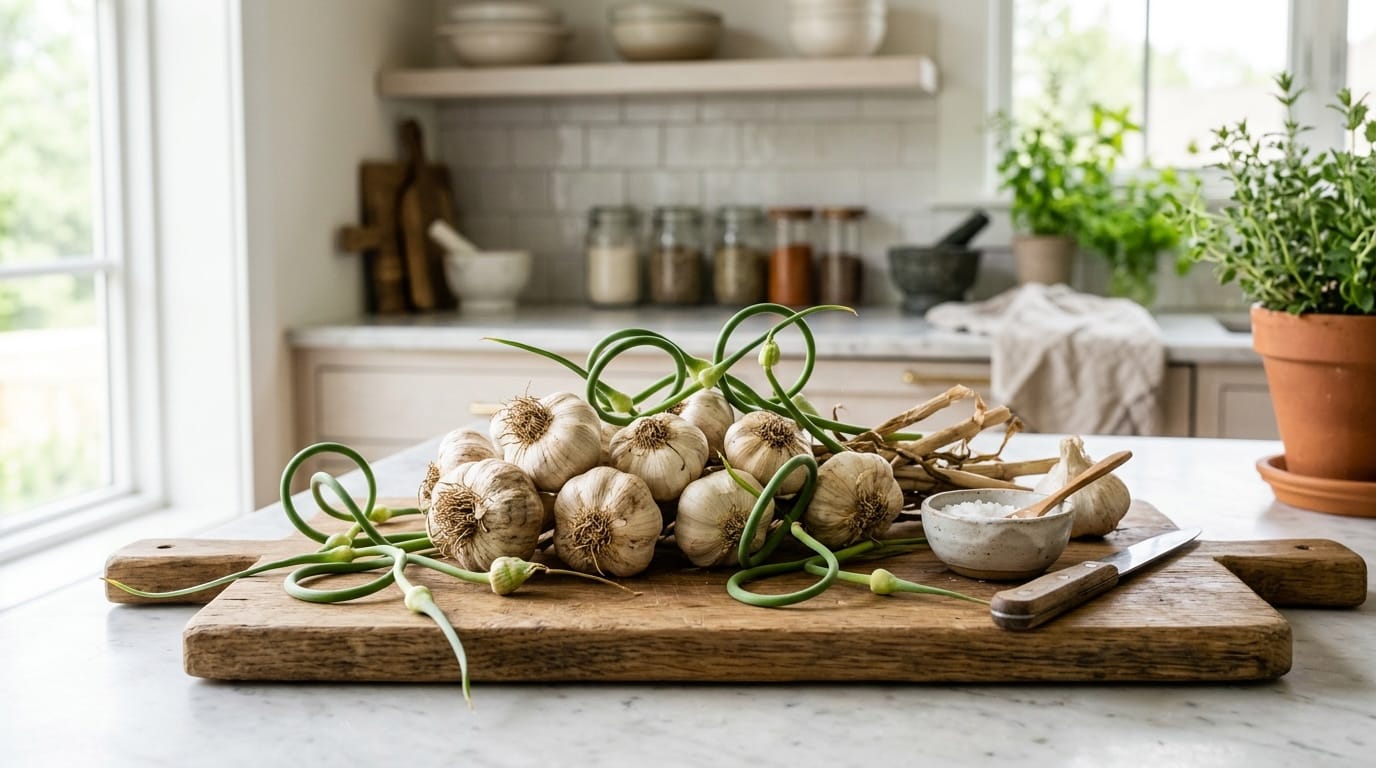
In early summer — typically June in most regions — hardneck garlic sends up a curling, looping central stalk called a scape. Cut it off. Removing the scape directs the plant's energy into the bulb rather than seed production, resulting in bigger, better garlic at harvest. And the scape itself is a culinary treat: mild garlic flavor, tender texture, excellent grilled, sautéed, or blended into pesto. If you're selling at a farmers market, garlic scapes arrive before your bulbs are ready and can be bundled and sold while you wait. Shoppers who don't know what they are will ask — which is your opportunity to educate and build a relationship.
Harvest, Curing, and Storing Your Garlic
Garlic is ready to harvest when about half the leaves have turned brown — typically late June through July. Don't wait until all leaves are brown or the bulb wrappers will have started to break down. Loosen the soil with a fork and pull gently by hand. Cure by hanging (or laying flat on a screen) in a warm, dry, well-ventilated place out of direct sun for 3–4 weeks. After curing, trim the roots and tops and store in a cool, dry, dark place. Hardneck keeps 3–6 months; softneck up to 9.
What to Do With More Garlic Than You Can Eat
Roast a whole head with olive oil and thyme and you have the building block of a hundred different meals. Make garlic salt — roasted garlic, dried, blended with sea salt — a cottage food product with essentially infinite shelf life and strong market appeal. Braid your softneck garlic into decorative ropes that double as holiday gifts. Save your best cloves for next fall's planting stock and you're already planning next year's garden. If you're growing garlic to sell, farmers market buyers will pay a meaningful premium for local hardneck garlic. Show up with beautiful, well-cured bulbs and a scape pesto sample, and you'll have a market following by the end of your second Saturday.
Butter & Sage Market
Growing More Than You Can Eat? Sell It on Butter & Sage Market
If your garden is producing more than your kitchen can use, Butter & Sage Market is your outlet. Open a shop and connect with buyers in your community who are looking for exactly what you grow.
Fresh. Local. Sustainable.



0 Comments