

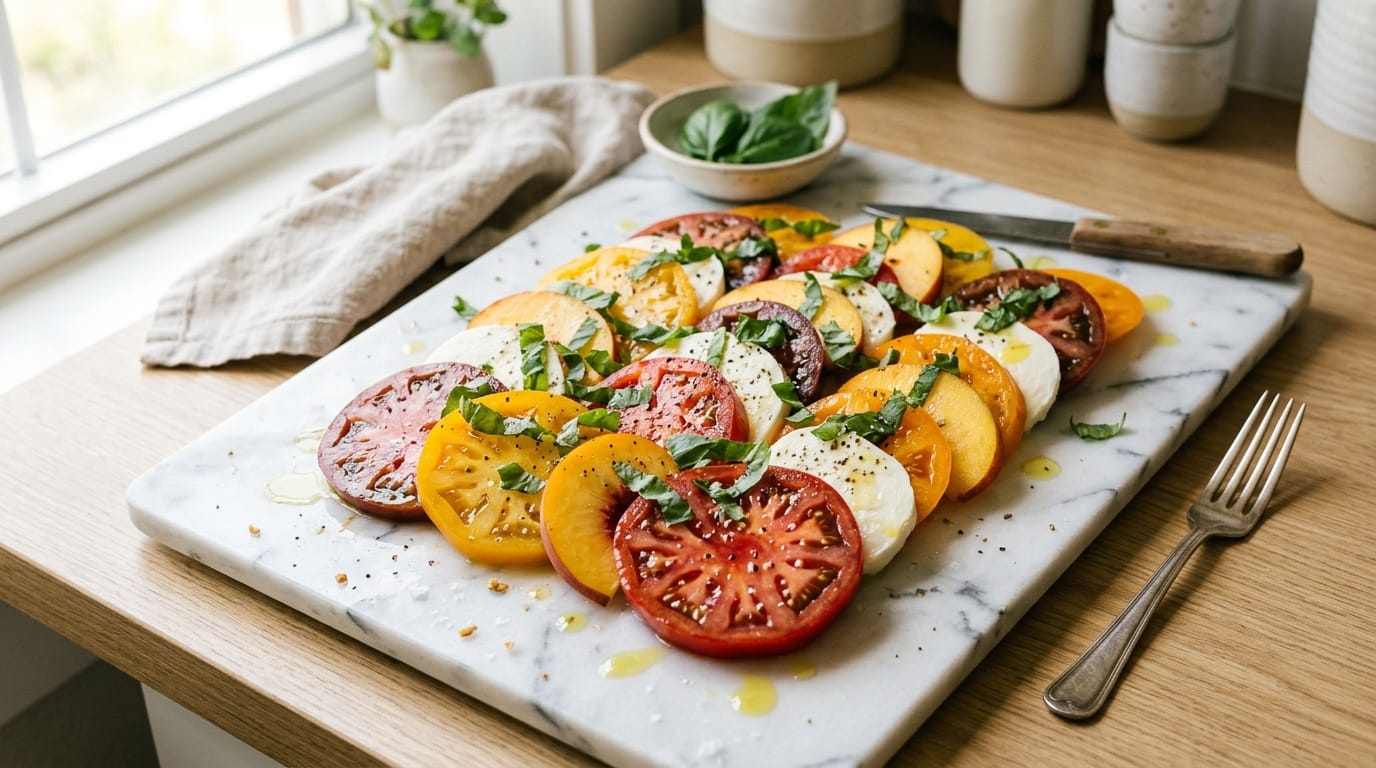
There's a moment in midsummer when the tomatoes and the peaches overlap — both at peak, both ridiculous with flavor — and the only reasonable thing to do is put them on a plate together. Add fresh mozzarella and basil, finish with good olive oil and flaky salt, and you have one of the most quietly perfect dishes summer produces.
Tomato and peach caprese is not a recipe so much as a principle: start with the best produce you can find, get out of its way, and let it do the work. It takes ten minutes, requires zero cooking, and it will make people ask what you did to it. The answer is: nothing. That's the whole point.
Why This Works (And Why Most People Miss It)
Classic caprese is tomato, mozzarella, basil, olive oil. Adding peach sounds like a gimmick until you taste it — and then it makes complete sense. Ripe summer peaches and ripe summer tomatoes are both high in natural sugars and acidity, and they share a floral sweetness that makes them genuine flavor partners. The peach softens the tomato's savory edge; the tomato keeps the peach from reading as dessert.
The mozzarella is the neutral, creamy backdrop that makes the whole combination land. The basil is the bridge — equally at home with both. The olive oil and salt are what pull the juices out of everything and turn the plate into its own sauce.
The only way this dish goes wrong is with bad produce. Great caprese requires ripe, in-season, locally grown tomatoes and peaches. The farmers market in July and August is the right place and time. Anything else — out-of-season tomatoes, refrigerator-cold fruit, hard peaches — and the dish falls flat. It's not a forgiving recipe because it has nowhere to hide.
How to Choose Your Produce at the Market
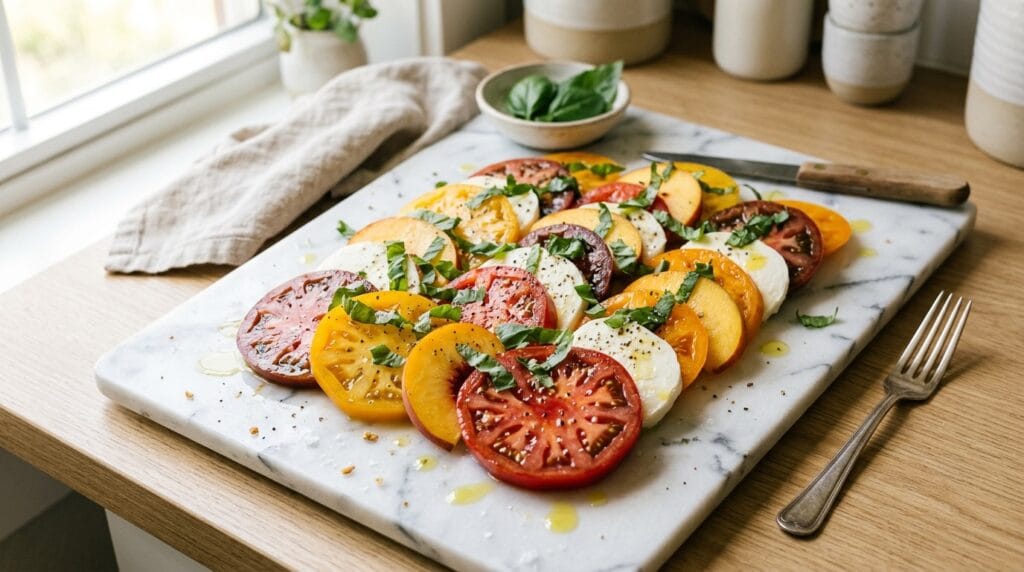
Tomatoes: Look for heirlooms if your market has them — the color variation (gold, purple, striped, deep red) makes the platter visually stunning. A mix of sizes works too. Whatever you choose, the tomato should smell like a tomato when you hold it. If it smells like nothing, pass.
Peaches: Freestone varieties are easier to slice cleanly. The peach should yield slightly when pressed near the stem and smell unmistakably peachy. Firm peaches will ripen on your counter in a day; underripe peaches will taste like nothing regardless of what you do with them. A drizzle of honey at the end can help if you're working with peaches that are just slightly off their peak.
Mozzarella: Fresh, packed in water — not the low-moisture block. Burrata, if you want to upgrade: it's richer, creamier, and spectacular with the peach and tomato combination. Slice both dry before plating or the water will dilute everything.

The One Rule: Room Temperature
Cold tomatoes taste like almost nothing. Cold peaches taste like almost nothing. If everything comes straight from the refrigerator, you will have a beautiful plate of almost nothing.
Pull your produce out of the fridge at least 30 minutes before plating. Let the mozzarella come to room temperature too. This single step is responsible for more of the flavor than any technique.
The Assembly
There's no wrong way to arrange it, but alternating slices of tomato, peach, and mozzarella in overlapping layers looks intentional without being fussy. Scatter torn basil — not chopped — over the top. Drizzle generously with your best olive oil. If you have a good balsamic glaze, a thin ribbon of it adds depth and a little sweetness that plays beautifully with both fruits.
Season with flaky sea salt and black pepper. Then let it rest for five minutes. This is important — the salt draws juice out of the tomatoes and peaches, which pools on the plate and becomes the best, most effortless dressing you've ever made.
Serve at room temperature. Eat within an hour — this dish doesn't wait well once dressed.
Make It Yours
Add arugula. A handful of peppery arugula underneath the arrangement adds a bite that contrasts beautifully with the sweet fruit. Also helps the plate go further as a starter.
Try burrata. Tear it rather than slice it — let the cream spill out over the tomatoes and peaches. One ball of burrata instead of fresh mozzarella is a seriously impressive upgrade for almost no extra effort.
Add prosciutto. Drape thin slices over the arrangement and it becomes a meal. The salt and funk of the prosciutto against the sweet fruit is one of summer's best combinations.
Swap the basil. Mint is a beautiful alternative — lighter, brighter, slightly more surprising. Or use both.
This is the dish to make when your farmers market bag is full and you don't want to turn on the stove. It's the dish to bring to a summer dinner where you've been asked to contribute a salad. It's the dish that makes peak-season local produce look like you really know what you're doing — because you do. You went to the market at the right time of year and you trusted the ingredients.
Find local tomato growers, peach farms, and artisan food makers at Butter & Sage Market. And if your farmers market has a cottage food vendor making flavored salts, this is the dish to use one on. Fresh. Local. Sustainable.
Tomato and Peach Caprese
The easiest summer dish you can put on a table: ripe heirloom tomatoes and peak-season peaches layered with fresh mozzarella and basil, finished with good olive oil and a pinch of flaky salt. No cooking. Ten minutes. Entirely dependent on great market produce — which is exactly the point.
Ingredients
Instructions
- Slice tomatoes and peaches to an even thickness — about 1/4 inch. Pat mozzarella slices dry with a paper towel.
- Arrange on a large plate or platter, alternating tomato, peach, and mozzarella slices in overlapping layers. Scatter torn basil over the top.
- Drizzle generously with olive oil. Add balsamic glaze if using. Season with flaky salt and several grinds of black pepper.
- Let rest 5 minutes before serving — this gives the salt time to draw out the juices, which pool into the best impromptu dressing. Serve at room temperature.
Notes

Keep reading
More from the market
Buying Ingredients in Bulk Without Wasting Money
The bulk bag is only a saving if you use it in time. How to work out your true break-even, which ingredients…
Read more
How to Freeze Your Farmers Market Haul (Without a Freezer Full of Regret)
No canner, no jars, no boiling water bath. What to blanch first, what to freeze raw, what to skip entirely, and how…
Read more
How to Accept SNAP and EBT at Your Farmers Market Booth
SNAP at a market usually runs through the market itself, not your card reader. What qualifies, how tokens work, how you get…
Read more