

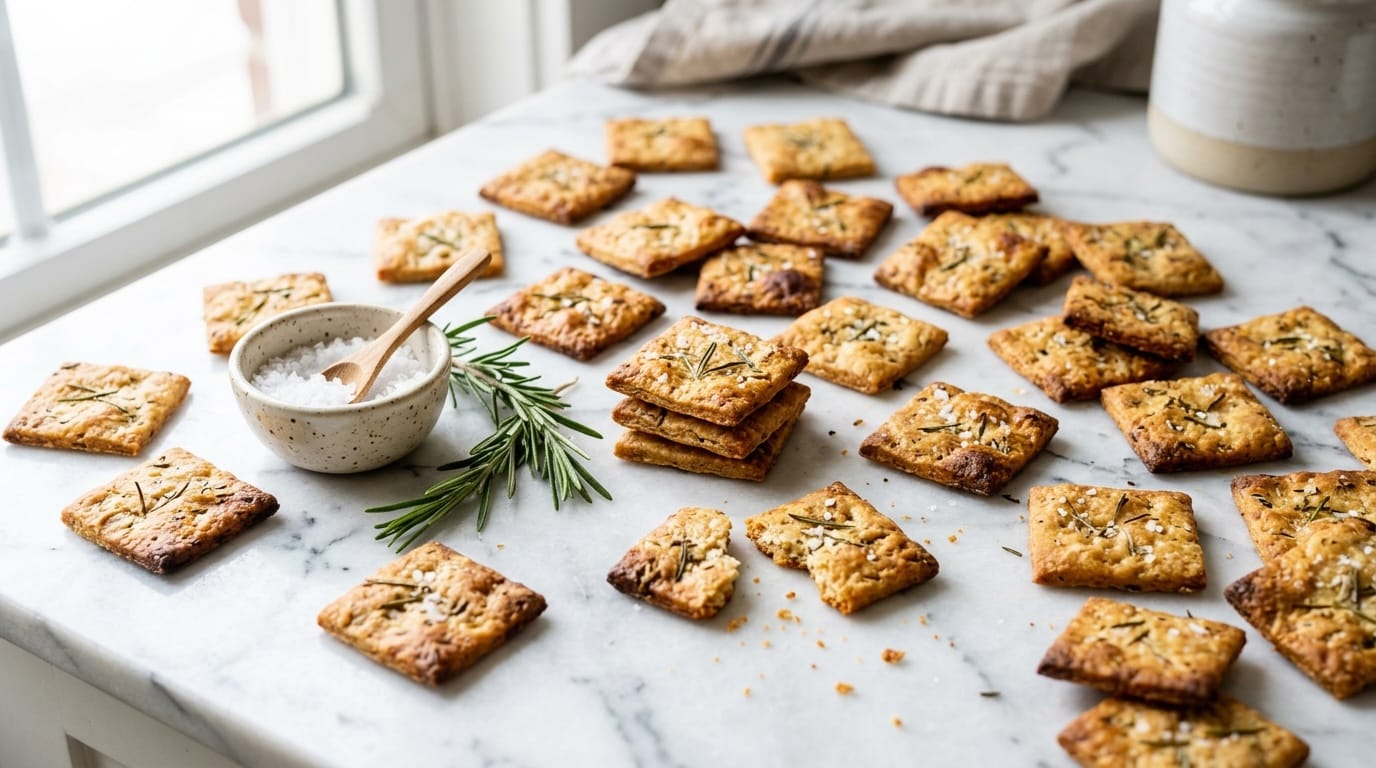
There is a jar in your refrigerator right now that you feel vaguely guilty about. It has a rubber band around a paper towel, or a lid balanced on top, and every time you feed your starter you pour some of it into the sink and think, briefly, that there has to be something better to do with this.
There is. It takes about an hour, most of which is the oven doing the work, and it turns the thing you were throwing away into the single most reliable snack in your kitchen.
Sourdough discard crackers are having a real moment, and for once the trend is not silly. They are genuinely easy, they cost essentially nothing, and they are one of the best small-batch products a cottage food vendor can put on a table next to a jar of jam.
Why Discard Makes Better Crackers Than a Recipe From Scratch
Discard is not a compromise ingredient here. It is actually the reason these work.
All that fermentation has already broken down some of the flour, which means the dough rolls out thin without snapping back at you the way a plain flour-and-water dough does. And the lactic acid that built up while the starter sat in your fridge gives the finished cracker a low, tangy backnote that a cracker made from scratch simply does not have. It tastes like it came from somewhere.
Older discard is more sour, which is a feature rather than a problem. Discard that has been in the fridge for two weeks and grown a layer of dark hooch on top will make a punchier cracker than yesterday's. Stir the hooch back in, add a spoonful of extra flour if it looks thin, and carry on.
The One Thing That Determines Whether These Work
Thickness. That is it. That is the whole technique.
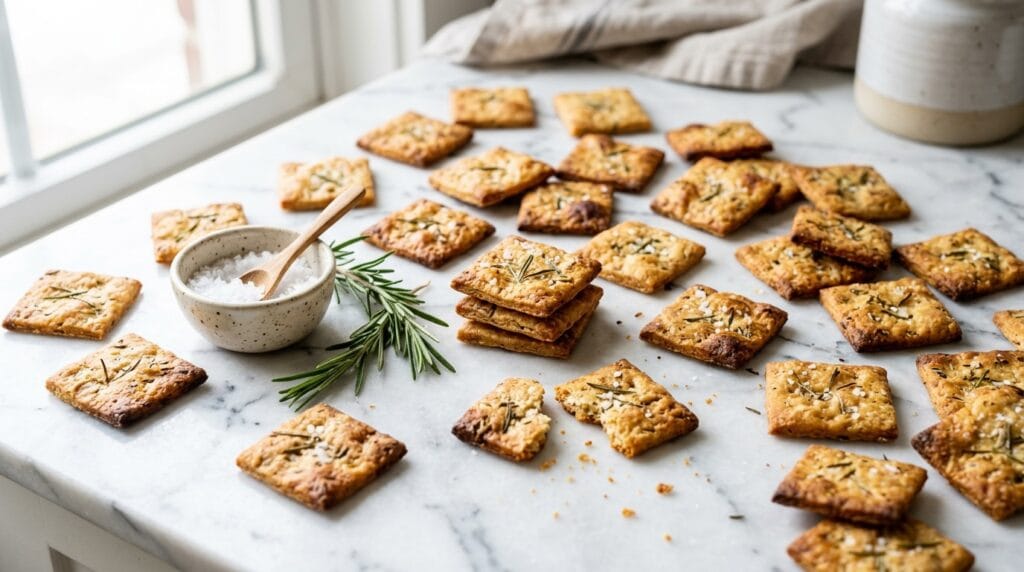
Every mediocre batch of discard crackers comes from dough that was rolled too thick, and every great batch comes from dough rolled thinner than felt reasonable. You are aiming for about one sixteenth of an inch, which sounds precise but really just means: keep rolling until you can faintly see the parchment through the dough.
Roll directly on the parchment, not on the counter. This solves the transfer problem entirely, because a sheet of dough that thin will tear if you try to lift it. Roll it, score it, slide the whole parchment onto the pan, done.

And expect the edges to finish before the middle. That is normal, not a failure. Pull the browned edge pieces off at about eighteen minutes and give the center another five or seven. Nobody will know, and you will have saved yourself a pan of half-burnt crackers.
Rosemary, and What Else to Reach For at the Market
Rosemary is the classic here for good reason. It is sturdy enough to survive a hot oven without turning to dust, its resinous edge cuts the richness of the olive oil, and it is one of the few herbs that is genuinely better dried into a cracker than fresh in a salad.
Get it from the herb grower at your market if you can. Late summer rosemary from a plant that has been sitting in full sun all season is dramatically more aromatic than the plastic clamshell version, and a single bunch costs a couple of dollars and lasts a month in a glass of water on your counter.
Once you have the base down, the market gives you a whole shelf of directions to take these:
- Thyme or za'atar instead of rosemary, for something a little earthier
- A local spice blend from the vendor two stalls down, which is the fastest way to make these taste like nobody else's
- Grated hard cheese worked into the dough, about a quarter cup, for a richer, shorter cracker
- Seeds pressed into the surface with the flaky salt: sesame, poppy, or an everything blend
- Hot honey drizzled over the warm crackers, if you want to lean all the way into the sweet-heat thing everyone is doing right now
The Flaky Salt Is Not Optional
It looks like a garnish. It is doing structural work.
Fine salt in the dough seasons the whole cracker evenly, which is good but a little flat. Flaky salt on the surface hits your tongue first, in bright irregular bursts, before the rosemary and the tang arrive. That contrast is most of the reason a good cracker is more interesting than a fine one.
Brush the surface with a little olive oil before you salt so it actually sticks, and press it in gently with your palm. Otherwise most of it ends up in the bottom of the bag.
If You Are Thinking About Selling These
You should be. Crackers are one of the friendliest products a cottage food vendor can add.
The cost of goods is close to nothing, since the primary ingredient was headed for the drain. They are shelf-stable for weeks, which takes all the pressure off your market-day math. They do not melt, crumble in a cooler, or need refrigeration in a hot tent. And they sell the rest of your table for you: a bag of crackers next to your jam, your honey, your pepper jelly, or a local cheesemaker's booth turns a single-item purchase into a pairing.
Package them in clear cello bags or small boxes so the flaky salt and the rosemary flecks are visible, because these look far more expensive than they cost to make. Do check your state's cottage food rules before you sell, since baked goods are almost always allowed but labeling requirements vary, and label per your state's requirements.
Make a Batch This Week
The next time you pull your starter out to feed it, do not reach for the sink. Reach for a bowl.
An hour later you will have six dozen crackers, a kitchen that smells like a bakery, and the mildly smug feeling of having gotten something for free. Eat half of them standing at the counter with a piece of cheese. That is what they are for.
If you make these, tag us at @butterandsagemarket so we can see what you flavored them with. And if you are looking for the jam or the honey to go alongside, find a local vendor near you who made it by hand a few miles from your kitchen.
Sourdough Discard Crackers with Rosemary and Flaky Salt
Crisp, snappy crackers made from the sourdough starter you were about to pour down the drain. Rosemary, olive oil, flaky salt, and about an hour start to finish.

Ingredients
Crackers
For finishing
Instructions
Make the dough
- In a medium bowl, stir together the sourdough discard, flour, olive oil, chopped rosemary, fine sea salt, and black pepper until a shaggy dough comes together. It should feel like soft play dough. If it is sticky, add flour a tablespoon at a time; if it is crumbly, add a teaspoon of water.
- Turn the dough out onto a lightly floured counter and knead for about one minute, just until smooth. Do not overwork it.
- Wrap the dough in plastic or press it into a covered container and let it rest at room temperature for 30 minutes. This relaxes the gluten so it will roll thin without fighting you back.
Roll and bake
- Heat the oven to 350 degrees F and line two rimmed baking sheets with parchment paper.
- Divide the dough in half. Roll the first half directly on a sheet of parchment, dusting lightly with flour, until it is about 1/16 inch thick. Thin is the whole game here. If you can faintly see the parchment through the dough, you have it right.
- Slide the parchment onto a baking sheet. Use a pizza wheel or a knife to score the dough into 1.5 inch squares, cutting all the way through but leaving the pieces in place.
- Brush the surface lightly with olive oil and sprinkle generously with flaky sea salt. Press the salt in gently so it sticks.
- Repeat with the second half of the dough on the second sheet.
- Bake for 20 to 25 minutes, rotating the pans halfway through, until the crackers are deeply golden at the edges and matte and dry in the center. The edge pieces will finish first; pull any that brown early and return the rest to the oven.
- Cool completely on the pan. They crisp as they cool, so a cracker that feels slightly soft coming out of the oven will usually snap once it is at room temperature. Break along the scored lines and store.
Notes
THIN IS EVERYTHING: Thick spots stay chewy and thin spots burn. Roll more than feels reasonable, and rotate the pans.
VARIATIONS: Swap the rosemary for thyme, za'atar, or 1 tsp of a market spice blend. Add 1/4 cup finely grated Parmesan for a richer cracker. For a seeded version, press 2 tbsp of sesame, poppy, or everything-bagel seasoning into the surface with the salt. A pinch of cayenne or a drizzle of hot honey after baking leans into the swicy trend.
DISCARD NOTES: This works with discard anywhere from a day to two weeks old. Older discard is more sour, which is a feature. Very liquid or hooch-topped discard should be stirred well first, and you may need an extra tablespoon of flour.
SELLING THESE: Crackers are one of the lowest-cost, highest-margin items a cottage food vendor can make, and they pair naturally with jams, honey, cheese, and dips you may already sell. Check your state cottage food rules before selling, package in cello bags or clear boxes so the flaky salt shows, and label per your state requirements.

Keep reading
More from the market
Savory Sweet Potato and Caramelized Onion Galette with Sage
Sweet potatoes, onions cooked down slow, and fried sage on a free-form crust. A savory galette that turns three cheap market vegetables…
Read more
Kale and White Bean Stew with Sausage
One pot and forty minutes. Sausage, creamy white beans and a whole bunch of market kale, with the vinegar trick that stops…
Read more
Skillet Baked Eggs with Blistered Tomatoes and Feta
One skillet, thirty minutes, and the best possible use of late-summer market tomatoes and farm eggs. Breakfast, lunch, or a very good…
Read more