

By the third week of August the tomato table stops being a display and starts being a negotiation. The farmer has more than she can sell. There's a crate at the end marked seconds — split shoulders, a bruise here and there, a soft spot — for about half the price of the pretty ones.
Buy that crate. Everything good happens in that crate.
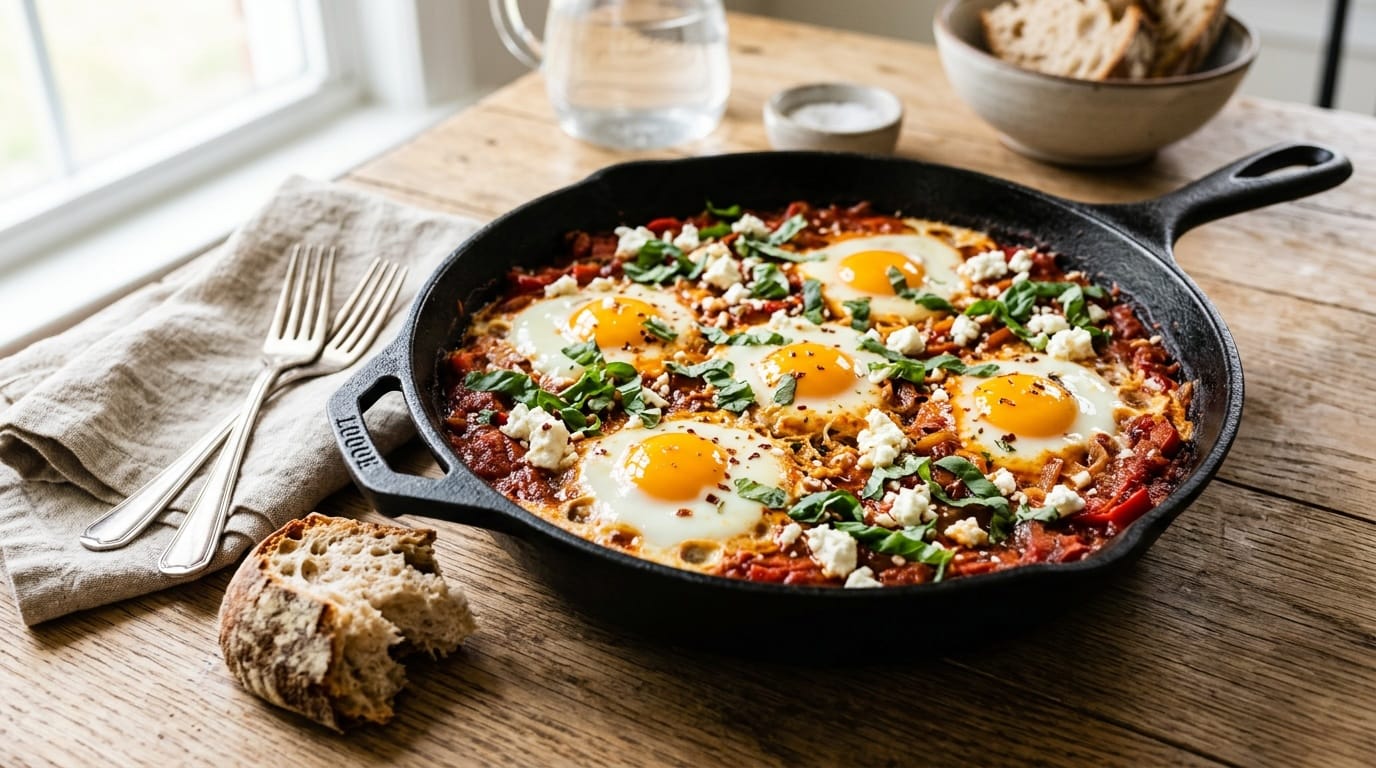
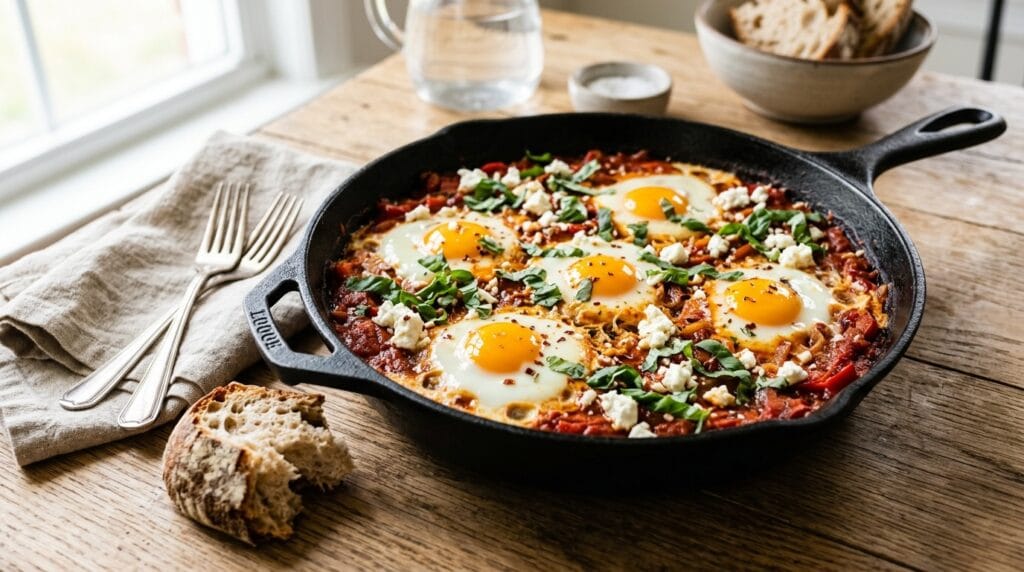
Skillet baked eggs are the dish those tomatoes were made for: cooked down hard in a skillet with sweet peppers and garlic until they collapse into something jammy and deep, then eggs cracked right into the sauce and covered until the whites set and the yolks stay soft. Feta over the top, basil torn on at the last second, bread for scooping.
It is breakfast. It is also lunch, and if you put a glass of something cold next to it, it is dinner, and nobody at the table will feel shortchanged.
Why late-summer tomatoes make this dish work
You cannot fake this in February. A winter tomato has been picked green, gassed to color, and shipped across a continent — it has water and acid and not much else. There is nothing to reduce down to.
An August market tomato is the opposite: sugar-dense, fully ripe, picked yesterday, sometimes that morning. When you cook it hard, the water drives off and what's left is concentrated and sweet enough that you'll wonder what you added. You didn't add anything. That's just what a ripe tomato does.
This is also exactly why the ugly ones are the right ones. A tomato with a split shoulder is a tomato that ripened fully on the vine and kept going. It won't slice prettily for a salad, and it doesn't need to — it's about to be cooked into a sauce. You're buying peak flavor at a discount because it fails a beauty contest that doesn't apply here.
Ask for the seconds crate specifically. Most vendors are delighted — those tomatoes are otherwise headed for the compost pile, and a customer who knows to ask for them is a customer they'll remember.
The one technique that makes skillet baked eggs work
Cook the tomatoes longer than feels reasonable.
That's it. That's the whole recipe, really. Most people pull the sauce off the heat while it's still loose and soupy, and then the eggs sit in liquid, the whites spread out thin, and the whole thing turns watery on the plate.
You want to keep going past that point — ten or twelve minutes of real reduction, pressing the tomatoes with the back of a spoon, until dragging a spoon across the pan leaves a track that holds for a second before it fills back in. That track is the signal. Now the sauce is thick enough to hold the eggs in place, and the flavor has gone from bright and thin to deep and slightly sweet.
The second small thing: cover the pan once the eggs go in. The lid traps steam and cooks the tops of the whites gently while the yolks stay loose underneath. Uncovered, you'll be waiting so long for the whites to set that the yolks go chalky. Start checking at six minutes, because the window between jammy and hard-cooked is about ninety seconds wide.
Where every ingredient comes from
This is a five-stall dish, and it's worth walking the whole market for it.
Tomatoes from whoever has the seconds crate. Sweet peppers — an Italian frying pepper or a Cubanelle is better here than a bell, thinner-walled and sweeter (our farmers market pepper guide covers the whole table if the pepper stall is confusing). Eggs from the egg vendor, because a deep-orange farm yolk is the visual centerpiece of this dish and a pale supermarket yolk simply is not. Feta, if you have a cheese vendor — a real brined sheep's milk feta is a completely different ingredient from the dry crumbles in a tub. Basil from the herb stall, or your windowsill.
Bread from the bakery, obviously, and a note: buy the loaf on market morning and eat this dish that day. It's what a crusty loaf is for.
Make it yours
- Add heat. A sliced Fresno or half a jalapeño with the garlic pushes this toward shakshuka territory. A spoon of hot honey drizzled over at the end is unreasonably good.
- Swap the cheese. Crumbled goat cheese goes tangy and creamy. Fresh mozzarella torn over the top melts into pools. Grated pecorino makes it saltier and sharper.
- Bulk it up. Crumbled sausage or fresh chorizo browned first, then the vegetables cooked in the fat. Or a can of drained white beans stirred in before the eggs, which turns it into genuine dinner.
- Change the greens. A few big handfuls of spinach or chopped chard wilted into the sauce right before the eggs.
- Go herby. Basil is the default, but dill is unexpectedly great with feta, and cilantro takes it in a different and equally good direction.
- Make the sauce ahead. It keeps four or five days in the fridge and freezes well. Reheat in the skillet, crack the eggs in, and you've got a twelve-minute weeknight dinner from a Sunday afternoon of tomato surplus.
If you make this, we want to see the skillet. Tag @butterandsagemarket — especially if you got your tomatoes out of the seconds crate, because that's the kind of shopping that deserves to be bragged about.
And if your market doesn't have an egg vendor, or a cheese vendor, or anyone selling good bread on a Saturday morning, find the makers near you. Somebody within twenty miles is doing all three, and they'd love to meet you.
Skillet Baked Eggs with Blistered Tomatoes and Feta
Late-summer market tomatoes cooked down until jammy, farm eggs baked right into the sauce, and salty feta over the top. One pan, thirty minutes, and it works for breakfast or dinner.
Ingredients
Instructions
- Heat the olive oil in a 10- to 12-inch skillet over medium heat. Add the onion and peppers with a pinch of salt and cook, stirring now and then, until soft and browning at the edges, 8 to 10 minutes.
- Add the garlic, paprika, cumin, and crushed red pepper. Cook until fragrant, about 1 minute.
- Add the tomatoes and the kosher salt. Raise the heat to medium-high and cook 10 to 12 minutes, stirring occasionally and pressing the tomatoes with the back of a spoon, until the sauce is thick and jammy. When a spoon dragged across the pan leaves a track that holds for a second, it is ready. Do not stop early.
- Taste and adjust the salt. Lower the heat to medium-low and scatter half the feta over the sauce.
- Make six wells in the sauce with the back of a spoon. Crack an egg into each one and season the whites lightly with salt and pepper.
- Cover the skillet and cook 6 to 9 minutes, until the whites are just set and the yolks are still soft. Start checking at 6 minutes.
- Take the pan off the heat. Scatter the remaining feta and the torn basil over the top and serve straight from the skillet with plenty of crusty bread.
Notes
For firmer yolks, cook covered 9 to 11 minutes. For very soft yolks, pull at 6.
Variations: add a sliced Fresno or jalapeño with the garlic; swap goat cheese or torn fresh mozzarella for the feta; brown crumbled sausage first and cook the vegetables in the fat; stir in a can of drained white beans before the eggs; wilt in a few handfuls of spinach or chard.

Keep reading
More from the market
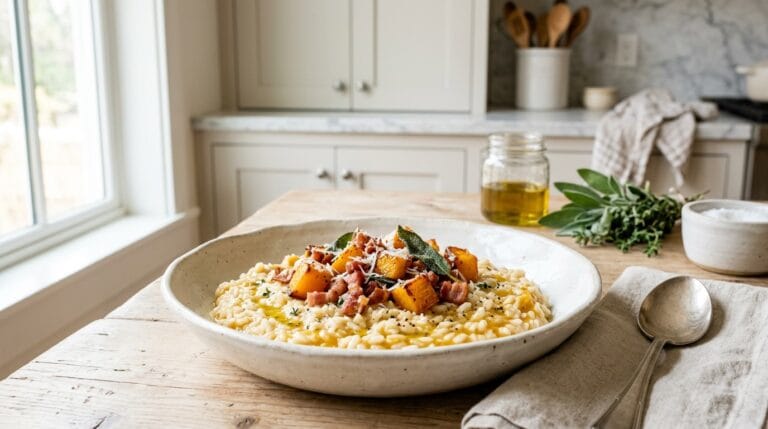
Butternut Squash Risotto with Crispy Pancetta
Half the squash melts into the rice, half stays roasted and whole. The two-texture trick that stops butternut risotto tasting like sweet…
Read more
Savory Sweet Potato and Caramelized Onion Galette with Sage
Sweet potatoes, onions cooked down slow, and fried sage on a free-form crust. A savory galette that turns three cheap market vegetables…
Read more
Kale and White Bean Stew with Sausage
One pot and forty minutes. Sausage, creamy white beans and a whole bunch of market kale, with the vinegar trick that stops…
Read more