

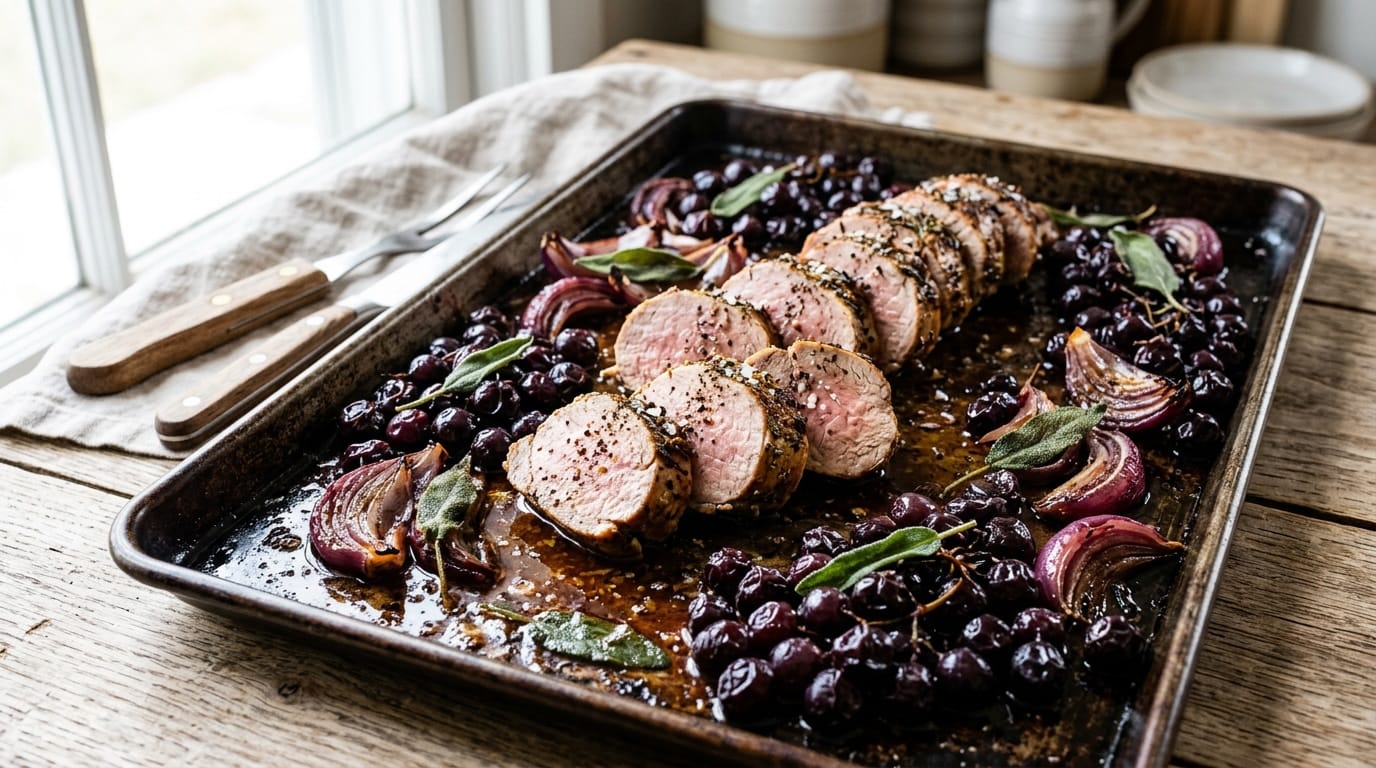
There is a two-week window at the farmers market, usually somewhere in the back half of September, when a grower shows up with flats of Concord grapes and the whole stall smells like grape jelly. Not artificial grape. The real thing, which is what artificial grape has been badly imitating your entire life.
Most people buy them, eat a handful, remember the seeds, and make jam. Which is lovely. But the best thing that has ever happened to a Concord grape in my kitchen was getting shoved onto a hot sheet pan next to a pork tenderloin and roasted until it collapsed.
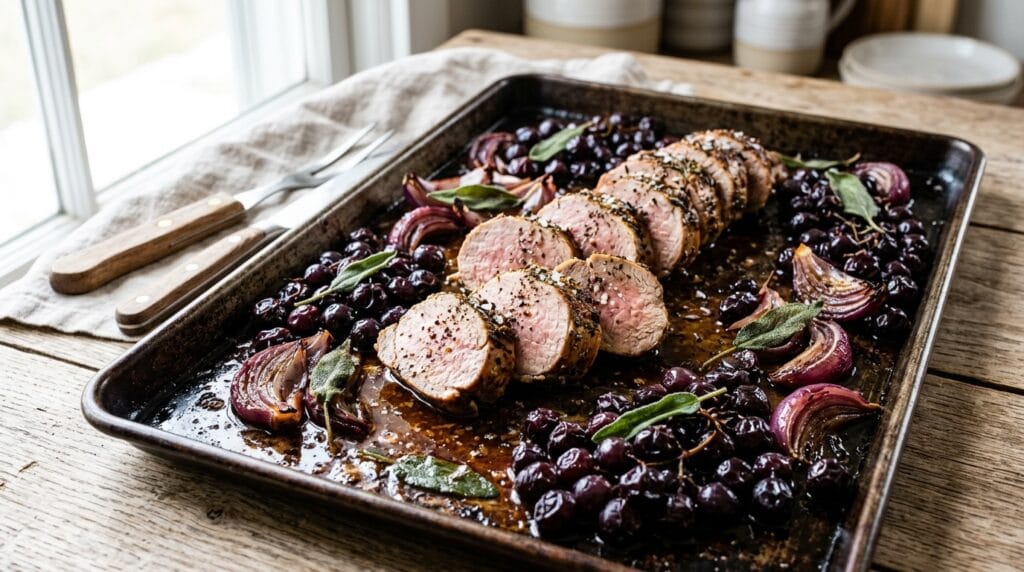
They burst. They go glossy and dark and syrupy. They pick up the pork drippings and the balsamic and turn into a pan sauce you did not have to make. And the sage leaves scattered around them crisp into little savory chips that taste like the best part of Thanksgiving.
Why Concord Grapes and Not Just Any Grapes
You could make this with the red seedless grapes from the grocery store, and it would be a perfectly nice dinner. It would also be a completely different one.
Concords have a flavor that food writers call musky or foxy, which sounds unappealing and is actually the thing you love. It is deep and floral and slightly wild, and it stands up to roasted meat in a way that a mild table grape simply cannot. A seedless grape sweetens the pan. A Concord seasons it.
They are also almost exclusively a farmers market item in most of the country. They bruise easily, they have a short season, and they do not ship well, which is precisely why the grocery store does not bother and why the grower at your market can. If you see them, buy them, because in three weeks they will be gone until next September.
And yes, they have seeds and slip skins. Roasting softens both a great deal, and most people eat straight past them. If that will bother somebody at your table, halve the grapes and flick the seeds out while the oven heats. Ten minutes, no drama.
The Technique That Actually Matters Here
This is a sheet pan dinner, so there is not much to get wrong. But there are two things worth doing properly, and they are both about temperature.

Pat the pork bone dry before it goes anywhere near oil. Wet meat steams instead of browning, and a pale gray tenderloin is a sad thing on a beautiful pan of grapes. Paper towels, thirty seconds, real difference.
Pull it at 145 degrees and then leave it alone for ten full minutes. Pork tenderloin is extremely lean, which means it goes from juicy to dry in the span of about four minutes in the oven. An instant-read thermometer is the entire difference between this recipe being great and being fine, and the ten-minute rest is what keeps the juices in the meat rather than on your cutting board. Slice it early and you will watch a puddle form and know exactly what you lost.
Everything else is toss, nestle, roast.
Make It Yours
This template is forgiving, and it flexes with whatever the market handed you that morning.
- Add something starchy to the pan. Halved fingerling potatoes or thick delicata squash rounds go in at the start and finish right alongside the pork, turning this into a genuinely complete one-pan dinner.
- Swap the herb. Thyme or rosemary both work beautifully. Sage is the one that tastes most like early fall, and it happens to be half our name, so we are biased.
- Change the allium. Shallots roast sweeter and gentler than red onion. A big sweet onion cut into wedges is excellent. Whole peeled garlic cloves scattered in turn jammy and spreadable.
- Push it later into the season. When the grapes are gone, use halved plums, then quartered apples, then pears. Same pan, same method, whole different dinner.
- Different protein. Bone-in chicken thighs are outstanding here. Give them 35 to 40 minutes and start the grapes 15 minutes in so they do not scorch.
What to Buy, and From Whom
This is a five-ingredient dinner, which means each ingredient has nowhere to hide. It is worth walking the market for.
The grapes come from a fruit grower, usually the same one selling apples and pears by now. Ask which variety and whether they are at their peak or on the way out; grapes a few days past prime are actually better for roasting than for eating out of hand, and you may get a deal.
The sage comes from the herb stand, and one bunch will cost you less than the plastic package and last four times as long. The onion comes from whoever has the alliums, and a market red onion in September has an intensity that the year-round grocery version lost somewhere in storage.
The pork is worth asking about. If your market has a livestock producer, a tenderloin from a pasture-raised pig is a noticeably different piece of meat, and buying it puts your money directly into a small farm rather than into a supply chain with eleven links in it.
The Dinner That Marks the Turn
Every year there is one meal that draws the line between summer and fall. It is rarely a big deal. It is usually just the first night you turn the oven back on without resenting it.
This is a good candidate. It uses the last of the market's late fruit, it fills the house with sage and roasting pork, and it comes together on one pan on a Tuesday. Serve it with mashed potatoes or soft polenta or a torn piece of good bread, and make sure whatever is on the plate can catch the juices, because the juices are the point.
If you make this, tag us at @butterandsagemarket. We would love to see what your market handed you. And if you are hunting for Concord grapes, sage, or a good local pork producer, find a farmers market near you before the season turns over for good.
Sheet-Pan Pork Tenderloin with Concord Grapes, Onions, and Sage
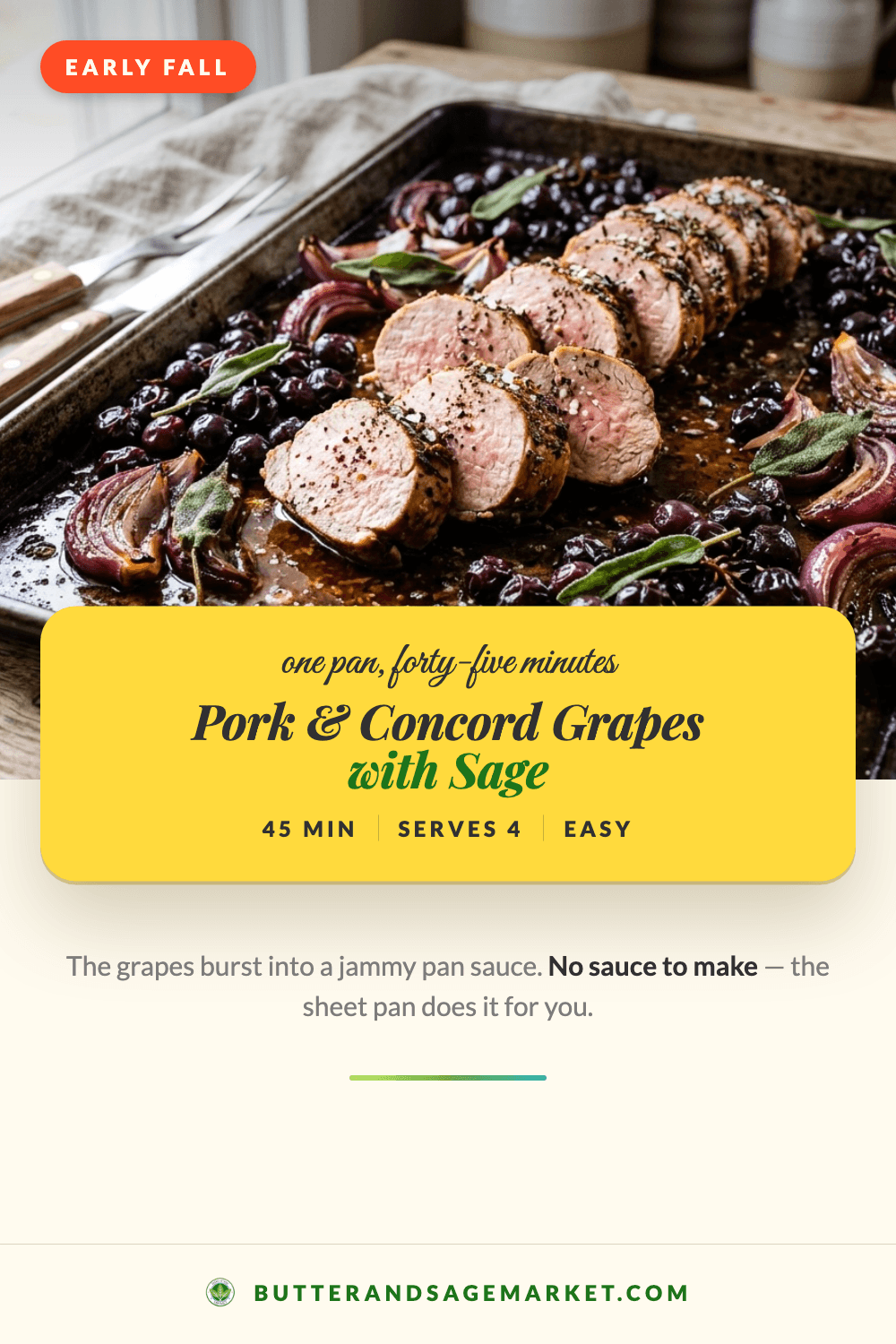
Concord grapes collapse into a glossy, jammy pan sauce around roasted pork and crisped sage leaves. One sheet pan, forty-five minutes, and the whole late-summer market on a plate.
Ingredients
Pork
Sheet pan
To finish
Instructions
Prep
- Heat the oven to 425 degrees F with a rack in the center. Line a rimmed sheet pan with parchment or foil for easier cleanup, though the pan juices are worth a little scrubbing.
- Pat the pork completely dry with paper towels. Dry meat browns; wet meat steams. Rub it all over with 1 tbsp olive oil, then season on all sides with the kosher salt, black pepper, and chopped sage. Let it sit at room temperature while you prep the rest, about 15 minutes.
- On the sheet pan, toss the Concord grapes, red onion wedges, and whole sage leaves with 2 tbsp olive oil, the balsamic vinegar, honey, and 1/2 tsp kosher salt. Spread everything into a single layer, then push it toward the edges to clear a lane down the middle.
Roast
- Nestle the pork tenderloin in the cleared center of the pan. If you are using two small tenderloins, lay them side by side with a little space between.
- Roast for 22 to 28 minutes, until an instant-read thermometer inserted into the thickest part of the pork registers 145 degrees F. Start checking at 20 minutes; tenderloin goes from perfect to dry quickly, and thickness matters more than clock time.
- If the grapes have not burst and gone syrupy by the time the pork is done, transfer the pork to a board and return the pan to the oven for another 5 to 8 minutes on its own.
- Move the pork to a cutting board and let it rest for a full 10 minutes. Do not skip this or slice it early. The juices need time to redistribute, and they will end up on your board instead of in the meat.
Serve
- While the pork rests, scrape the grapes, onions, and all the dark syrupy juices into a bowl and stir. Taste. If it reads sweet, add the extra teaspoon of balsamic to sharpen it.
- Slice the pork against the grain into 1/2 inch medallions. Arrange on a platter, spoon the grapes, onions, and pan juices over the top, and scatter the crisped sage leaves across.
- Finish with a pinch of flaky sea salt and serve immediately, with something to catch the sauce: mashed potatoes, soft polenta, or a torn hunk of good bread.
Notes
NO CONCORDS? Red seedless grapes work and require no prep at all. You lose the deep, musky, grape-jelly perfume that makes Concords special, so add an extra teaspoon of balsamic to compensate for the flatter flavor.
DONENESS: 145 degrees F with a 10 minute rest gives you a faintly rosy center, which is safe and correct for pork. If your family prefers no pink at all, pull at 150, but know that you are trading juiciness for it.
SUBSTITUTIONS: Fresh thyme or rosemary can stand in for the sage. Shallots or a sweet onion work in place of red onion. A boneless pork loin roast works too, but add 20 to 30 minutes and tent it with foil if the grapes start to scorch.
MAKE IT A FULL PAN: Add halved fingerling potatoes or thick delicata squash rounds to the pan at the start. They take about the same time as the pork and turn this into a complete one-pan dinner.
LEFTOVERS: Sliced cold pork with the grape jam on a sandwich the next day is arguably better than the original dinner. Store the pork and the grape mixture separately, up to 3 days.

Keep reading
More from the market
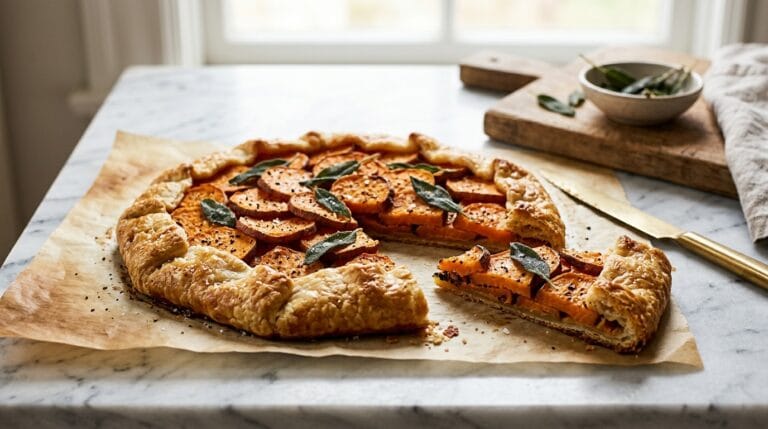
Savory Sweet Potato and Caramelized Onion Galette with Sage
Sweet potatoes, onions cooked down slow, and fried sage on a free-form crust. A savory galette that turns three cheap market vegetables…
Read more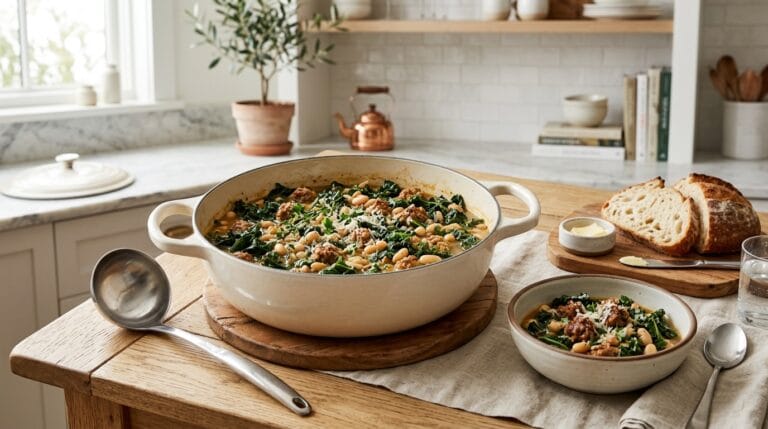
Kale and White Bean Stew with Sausage
One pot and forty minutes. Sausage, creamy white beans and a whole bunch of market kale, with the vinegar trick that stops…
Read more
Skillet Baked Eggs with Blistered Tomatoes and Feta
One skillet, thirty minutes, and the best possible use of late-summer market tomatoes and farm eggs. Breakfast, lunch, or a very good…
Read more