
The Farmers Market Pepper Guide: Which to Buy for Roasting, Stuffing, and Real Heat
Late summer is peak pepper season and the table is confusing. Here's which peppers to buy for roasting, stuffing, frying, and heat, plus how to store them.
 1 min read
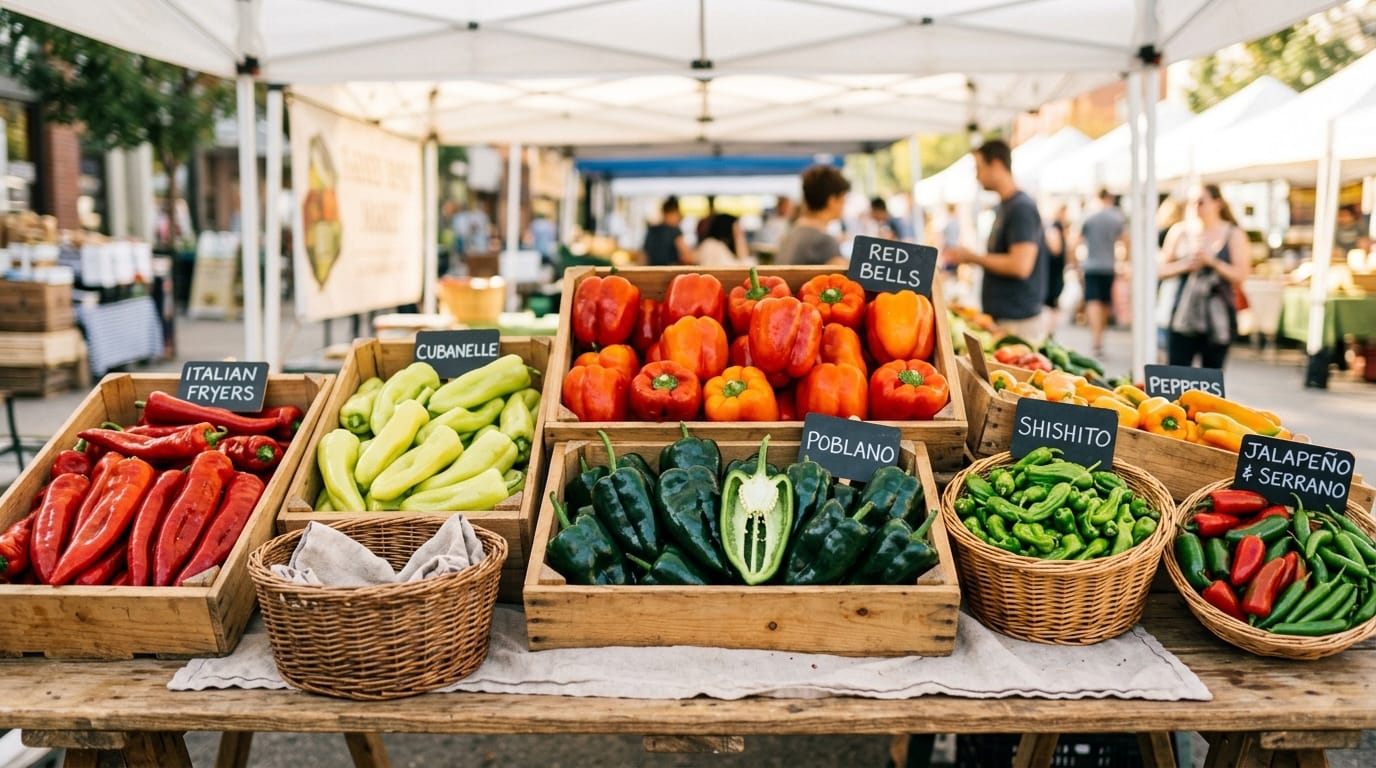
There is a moment in late August when the pepper table at the farmers market becomes the most beautiful and most confusing thing there. Glossy reds, deep purples, pale yellow-green things shaped like commas, wrinkled little chiles in a basket with a handwritten sign that just says HOT.
Most people buy a bell pepper and walk away, which is a bit like going to a bakery and buying a dinner roll. Farmers market peppers are the best value on the table right now — cheap, abundant, and at their absolute sweetest, because pepper flavor develops with ripeness and this is the moment.
Here's how to read that table.
The sweet peppers, and what each one is for
Bell peppers. The familiar ones. Worth knowing: green bells are simply unripe — they're the same fruit picked early, which is why they taste grassy and slightly bitter. Red, orange, and yellow bells are fully ripened and dramatically sweeter. Green is great in a chili or a sofrito where you want that vegetal edge. Red is what you want raw, roasted, or anywhere sweetness is the point.
Italian frying peppers (Corno di Toro, Carmen, Jimmy Nardello, Marconi). Long, tapered, thin-walled, and honestly the best sweet pepper on the table. Jimmy Nardellos in particular fry into something close to candy. Thin walls mean they cook fast in a hot pan. If your market has these, buy them over bells every time.
Cubanelle. Pale yellow-green, mild, thin-walled. The workhorse frying pepper. Excellent with sausage and onions.
Poblano. Dark, glossy, heart-shaped, thick-walled, and mild with just enough warmth to be interesting. The stuffing pepper. Also the roasting pepper — the thick flesh holds up when the skin chars off. (Dried, this is an ancho.)
Shishito and Padrón. Small, wrinkled, thin-skinned, sold by the handful. Blister them whole in a screaming hot skillet with oil and salt and eat them with your fingers. Roughly one in ten is unexpectedly hot, which is the entire game.

Pimento and cheese peppers. Squat, red, intensely sweet, thick-fleshed. Made for roasting and for the pimento cheese you should absolutely make.
The hot ones, in rough order
Heat is not just about the variety — growing conditions matter, and a stressed, drought-hit plant makes hotter fruit than a well-watered one. Same variety, same farm, different week, different heat. Ask.
- Anaheim / Hatch — barely warm, mostly flavor. Roast them, peel them, put them in everything. Hatch season is right now and it's worth the fuss.
- Jalapeño — moderate and dependable. The white lines you sometimes see on the skin (called corking) mean a more mature, generally hotter pepper. Red jalapeños are fully ripe: sweeter and hotter at once.
- Fresno — looks like a red jalapeño, fruitier and a touch hotter. Excellent in hot honey.
- Serrano — noticeably hotter than a jalapeño, thin-walled, great raw in salsa where you want clean heat.
- Cayenne and Thai chiles — hot and sharp. Dry them; they last all winter.
- Habanero and Scotch bonnet — a large step up, and worth it for the fruity, apricot-like flavor underneath. Use gloves. Actually use gloves.
The blunt honesty: if a farmer tells you something is hot, believe them. They eat these for a living and their scale is calibrated differently than yours.
How to pick the best farmers market peppers
- Heavy for its size. Weight means thick, juicy walls. A light pepper is a hollow, tired pepper.
- Taut, glossy skin. Wrinkles mean it's been off the plant a while — except on shishitos and Padróns, where wrinkles are just how they look.
- Firm all over. Press gently. Soft spots near the stem or the shoulders spread fast.
- Green, fresh stem. A dry, shriveled, brown stem is the clearest age tell on the whole fruit.
- Color is ripeness, not variety. Deeper color means sweeter and more developed flavor, nearly always.
- Odd shapes are fine. Field peppers curl and lean. It has zero to do with flavor and it usually gets you a better price.
Storing your haul
Sweet peppers: unwashed, in the crisper, loosely bagged or in an open container. One to two weeks. Do not wash until you use them — surface moisture is what starts the soft spots.
Hot peppers: the same, and they last longer, often three weeks or more.
To freeze: peppers are one of the few vegetables that need no blanching at all. Slice or dice, spread on a sheet pan, freeze solid, then bag. They come out soft, so they're for cooking, not salads — but a bag of diced market peppers in February is a genuinely wonderful thing to own.
To roast and keep: char them whole over a gas flame or under a broiler until blackened all over, steam them in a covered bowl for ten minutes, then slip the skins off. Pack in olive oil in the fridge for a week, or freeze for months. This is the single highest-return thing you can do with a pepper glut.
To dry: thin-walled hot peppers dry beautifully. String them on a thread, hang somewhere warm and airy, and grind them when they're brittle. Thick-walled peppers will mold before they dry — use a dehydrator or a very low oven for those.
What to do with them this week
Blister shishitos in a hot pan with good oil and flaky salt, five minutes, done. Fry Italian peppers with onions and pile them on bread. Stuff poblanos with rice and cheese. Roast a whole sheet pan of red peppers with tomatoes and blend into soup. Make a small batch of hot honey with a couple of Fresnos — it keeps for months and it's the best thing to put on a market cheese.
And if the pepper vendor also sells eggs, buy both: skillet baked eggs with blistered tomatoes is the best possible use of a late-summer market haul and takes about half an hour.
One more thing. Ask your pepper grower which variety they're most excited about this year. Pepper people are enthusiasts — they'll hand you something you've never heard of, tell you exactly what to do with it, and it will be the best thing you cook all month. That conversation is free and it's the whole reason to shop at a market instead of a store.

Keep reading
More from the market
What’s at the Farmers Market in November? Your Late-Fall Shopping Guide
November farmers markets are smaller, colder, and sweeter than you expect. Here is what is in season, what frost improves, and what…
Read more
How to Survive a Slow Market Day (And Get Something Out of It)
Four hours, eleven customers, a full table. What to do with a dead market instead of scrolling, and how to leave with…
Read more
Cold-Weather Booth Setup: Wind, Light, and Days That End at Four
A booth built for August falls apart in November. What to change for wind, cold and a market that ends after dark…
Read more