
How to Freeze Your Farmers Market Haul (Without a Freezer Full of Regret)
No canner, no jars, no boiling water bath. What to blanch first, what to freeze raw, what to skip entirely, and how to label so you actually eat it.
 1 min read
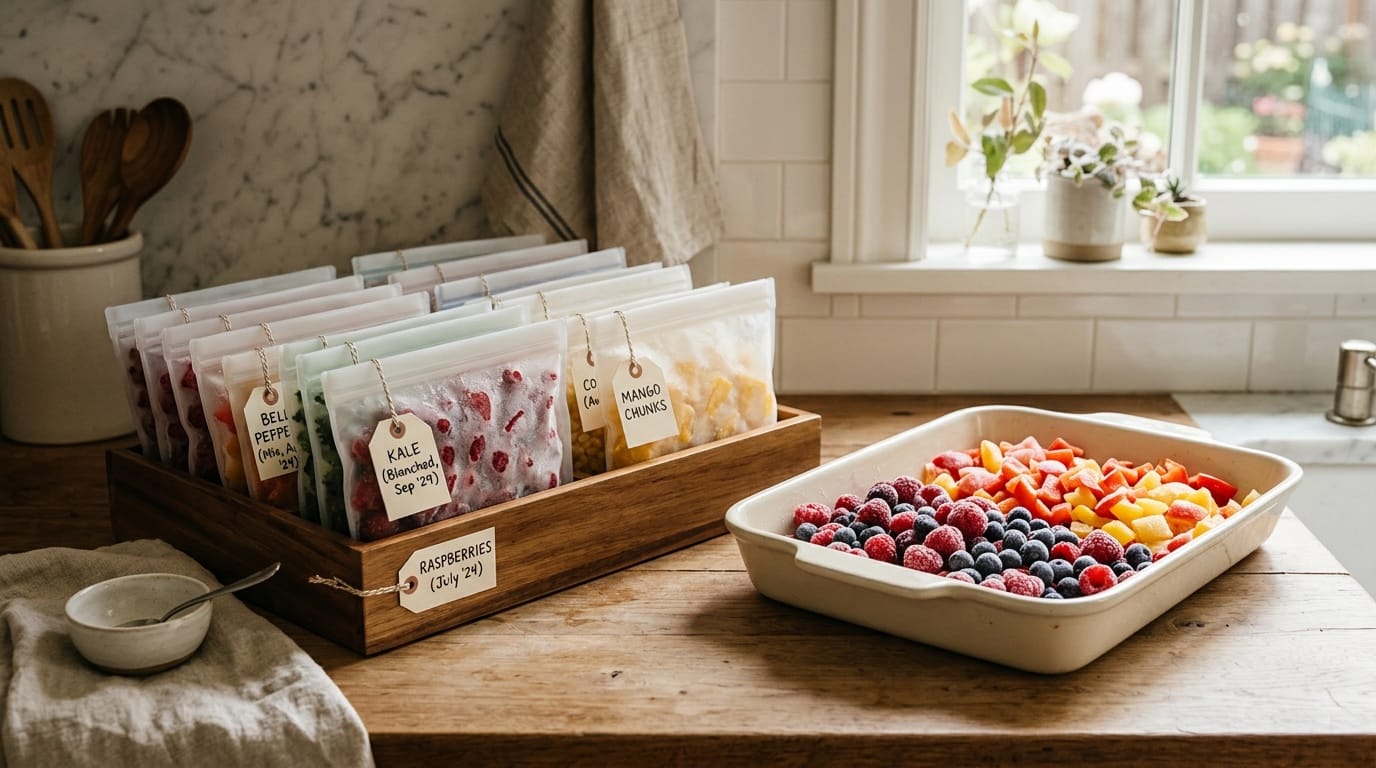
Canning is a lovely skill and a Saturday-sized commitment. Freezing takes twenty minutes, needs nothing you do not already own, and is the reason you can eat local tomatoes in January.
It also has a bad reputation, entirely earned by bags of grey mystery vegetables found at the back in March. That is a labelling and technique problem, not a freezing problem, and both are easy to fix.
Blanch the vegetables. Most of them. Briefly.
This is the step people skip and the reason frozen vegetables go off-colour and taste like the freezer.
Vegetables are still alive when you pick them, and enzymes keep working even at freezing temperatures — slowly wrecking colour, texture and flavour over a few months. A short plunge in boiling water switches those enzymes off.
The method: big pot of boiling water, drop the vegetables in, start timing when the water returns to the boil, then straight into a bowl of iced water to stop the cooking. Drain very well, dry on a tea towel, then freeze.
Rough timings: green beans 3 minutes, broccoli and cauliflower florets 3 minutes, carrots sliced 2 minutes, corn off the cob 4 minutes, greens like kale, chard and spinach 2 minutes, peas 90 seconds.
The exceptions that do not need blanching: onions, peppers, berries, herbs, and tomatoes if you are freezing them for cooking.
Freeze it flat, and freeze it loose first
Two small habits that make the difference between a usable freezer and a solid brick.
Open-freeze anything you want to pour. Spread berries, beans or corn in a single layer on a lined tray, freeze until solid, then tip into a bag. They stay separate, and you can take out a handful in February instead of chiselling at a block.
Freeze bags flat. Fill, press the air out, seal, lay flat on a tray until solid. Flat bags stack like files, thaw in minutes rather than hours, and roughly double what fits in the freezer.
Air is the enemy — freezer burn is just dehydration. Press it out, or use a straw to suck the last of it from a zip bag.
What to do with the specific things you over-bought
Tomatoes — the easiest of all. Wash, core, freeze whole on a tray, bag them. The skins slip off under warm water when you use them. For sauce, roast them first and freeze the sauce flat.
Peppers — slice or dice raw, open-freeze, bag. No blanching. They go soft on thawing, so they are for cooking, not salads.
Corn — cut off the cob, blanch 4 minutes, dry, open-freeze.
Greens — blanch 2 minutes, squeeze out the water hard, then freeze in portion-sized balls. Squeezing is the whole job; wet greens freeze into a slab.
Herbs — chop, pack into an ice cube tray, top with olive oil or water, freeze, then bag the cubes. Drop one straight into a pan.
Berries — open-freeze on a tray, no sugar needed.
Squash and pumpkin — roast, scoop, purée, freeze flat in measured amounts. Far better than freezing it raw.
Apples — peel and slice, toss with a squeeze of lemon, open-freeze. Best used for baking later.
What not to bother freezing
Anything with a high water content you want to eat raw. Lettuce, cucumbers, radishes, celery and whole tomatoes for slicing all come back limp, and no technique fixes it. Potatoes go grainy raw — cook them first if you must. Soft cheeses split.
Freezing preserves what you put in; it does not improve it. Something slightly past its best goes in slightly past its best and comes out worse.
Label it like you will not remember, because you will not
What it is, how much, and the date. In that order, on the flat side, with a marker that survives frost.
"Tomatoes" is not enough. "Roast tomato sauce, 2 cups, Oct 26" is a meal you will actually cook, because you know what it is and how much of it there is without thawing anything.
Most vegetables are at their best within eight to twelve months, which in practice means this fall's haul should be eaten before next fall's arrives. Keep a scrap of paper on the freezer door listing what went in, and cross things off. It sounds fussy and it is the single difference between a freezer that saves you money and one that quietly stores compost.
What is the one thing you freeze every single year without fail? Mine is roasted tomatoes, and I have never once regretted the October afternoon it costs.

Keep reading
More from the market
How to Accept SNAP and EBT at Your Farmers Market Booth
SNAP at a market usually runs through the market itself, not your card reader. What qualifies, how tokens work, how you get…
Read more
How to Get Your Baked Goods to Market Without Wrecking Them
Cakes slide, frosting sweats, cookies go soft in the car. The crates, timing and packing order that get your bakes to the…
Read more
How to Store Root Vegetables and Winter Squash So They Last Until Spring
Potatoes, squash, carrots and onions will keep for months if you get a few things right. What each one wants, and the…
Read more