Buying Ingredients in Bulk Without Wasting Money
The bulk bag is only a saving if you use it in time. How to work out your true break-even, which ingredients keep, and the ones that quietly cost you money.
 1 min read
Someone in a Facebook group posts a photo of a fifty-pound bag of flour and the price per pound, and it is roughly a third of what you pay at the supermarket, and you start doing maths at eleven at night.
Bulk buying is usually a good idea. It is also the most common way small food businesses tie up cash in something that goes rancid in the garage, so it is worth doing the boring arithmetic first.
The only calculation that matters
Not price per pound. How long it will take you to use it.
Work out roughly how much of the ingredient you get through in a month. Divide the bulk quantity by that. If the answer is longer than the ingredient's shelf life, the saving is imaginary — you are buying a discount on the part you use and paying full price to throw the rest away.
An example. You use about four pounds of butter a month. A restaurant supplier sells thirty-six pounds at a 30% saving. That is nine months of butter, and butter is good refrigerated for a few months. Unless you have freezer space, the real outcome is a saving on four months and a loss on five.
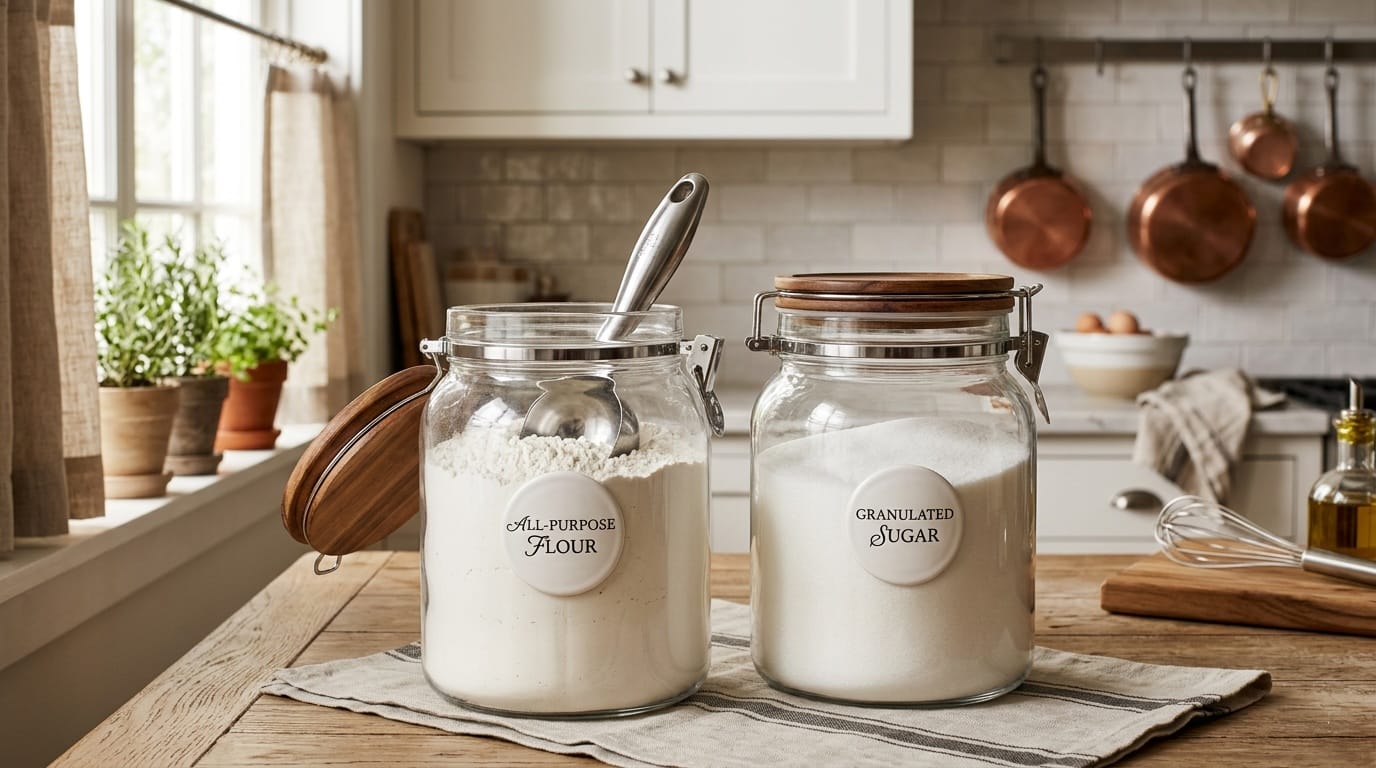
Flip it and the same maths says yes. You use eight pounds of flour a week — a fifty-pound bag is six weeks, comfortably inside its shelf life, stored properly. Buy it.
What actually keeps, and for how long
Buy big, these are forgiving: white sugar and salt keep more or less indefinitely if dry. White flour is good six to eight months in a cool, sealed container. Honey does not spoil. Dried beans, rice and oats keep for a year plus. Packaging — jars, boxes, labels, ribbon — does not expire at all, and is usually where the steepest bulk discounts are.
Be careful: whole-grain and nut flours contain oil and go rancid in a few months at room temperature — the freezer roughly doubles that. Nuts are the same, and rancid nuts are the flavour fault most likely to go out the door without you noticing, because it creeps. Baking powder loses strength within about a year. Spices do not spoil but they fade fast; a three-year-old bag of cinnamon is brown dust.

Rarely worth it: butter and dairy without freezer space, fresh eggs, anything with a preservative-free label and a short date, and any ingredient you use in one product that has not proven it sells yet.
The costs people forget to count
Storage. Fifty pounds of flour needs a food-grade, airtight, pest-proof container and somewhere cool to put it. If the honest answer is "the garage floor", the saving is going to pests and humidity.
Cash. Three hundred dollars of ingredients in the pantry is three hundred dollars not available for a market fee, a repair, or the packaging you actually ran out of. For a small business, cash flexibility is worth real money.
Your own consistency. Bulk flour from a different mill behaves differently. Test a batch before you commit to a season's worth of it, and do not switch your flour in the same week you have a big order.
Where to buy, in rough order of hassle
A restaurant supply store is the easiest first step — open to the public in most places, no membership, and they sell in the sizes commercial kitchens use.
A local mill or farm often sells fifty-pound bags directly, and the flour is better and more interesting than commodity flour. Worth asking at your own market.
A co-op order with other vendors is how most people get the good pricing. Four bakers splitting a supplier minimum each get the discount and none of them store a year of anything. This is the most underused option going, and the people to ask are standing three booths down.
Packaging suppliers almost always have a price break at 500 or 1,000 units that is dramatically better than at 100. Since jars and boxes do not expire, this is the safest bulk buy you can make.
Then put the saving somewhere you can see it
If your ingredient cost drops 30%, that is not a windfall to absorb quietly — it is either margin you should record or room to hold your price while everything else goes up.
Update your recipe costings when your buying changes. Otherwise you are pricing on last year's numbers, which is the most common reason a busy vendor finds they worked a whole season for very little.

What is the one thing you buy in bulk and would never go back on? And the one you tried once and still have half of?

Keep reading
More from the market
How to Freeze Your Farmers Market Haul (Without a Freezer Full of Regret)
No canner, no jars, no boiling water bath. What to blanch first, what to freeze raw, what to skip entirely, and how…
Read more
How to Accept SNAP and EBT at Your Farmers Market Booth
SNAP at a market usually runs through the market itself, not your card reader. What qualifies, how tokens work, how you get…
Read more
How to Get Your Baked Goods to Market Without Wrecking Them
Cakes slide, frosting sweats, cookies go soft in the car. The crates, timing and packing order that get your bakes to the…
Read more