

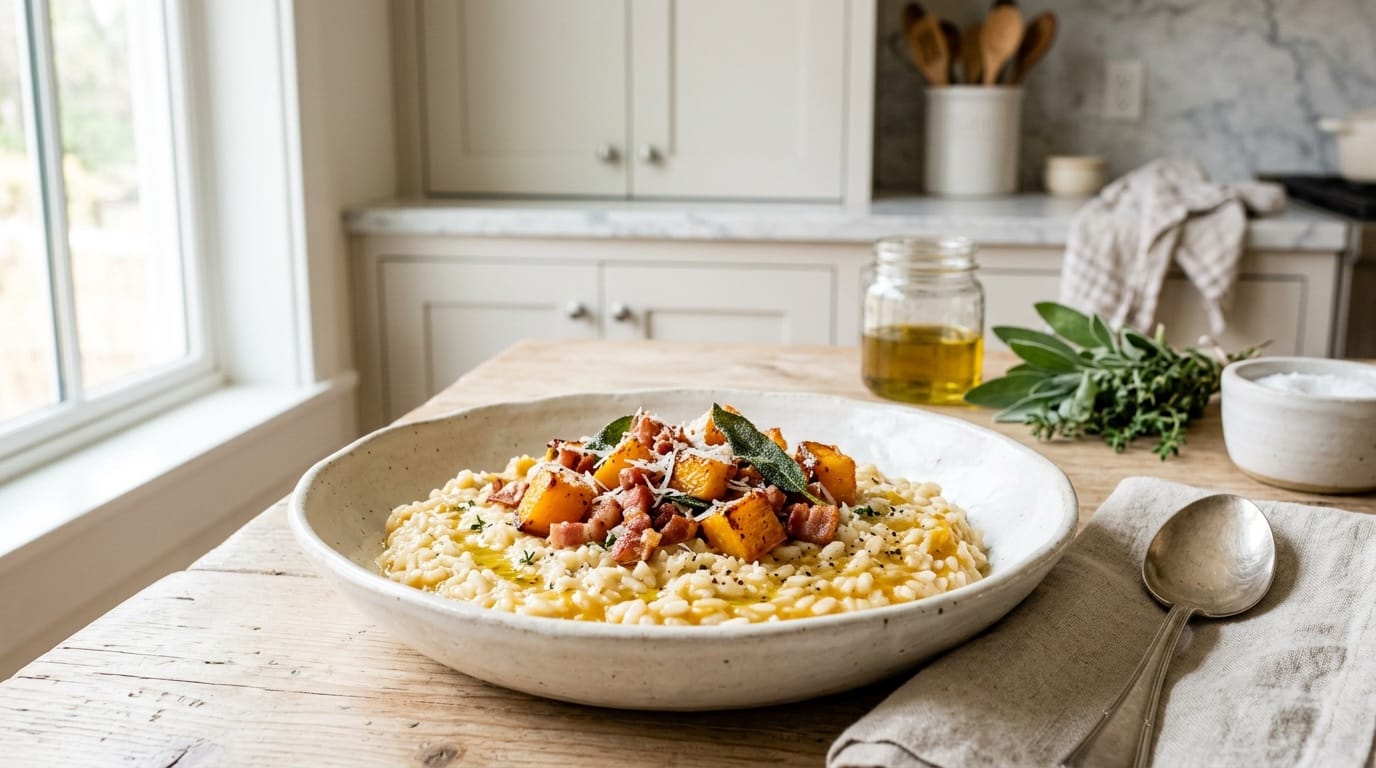
Butternut squash risotto has a reputation problem, and it is deserved. Done carelessly it is a bowl of sweet orange porridge — uniformly soft, uniformly sweet, and about four spoonfuls before you have had enough.
The fix is not a different recipe. It is using the squash twice.
Half in, half on
Half the squash goes in raw with the onion at the start, and over twenty-odd minutes of stirring it collapses completely into the rice. That is where the colour comes from, and the sweetness, and the body — it does the job cream would do in a worse dish.
The other half gets roasted hard on a sheet pan while you cook, so the pieces keep their edges, go brown and nutty, and stay recognisably squash. Those go in at the end and on top.
The result is a risotto where every spoonful has two textures and two kinds of squash flavour, and where the sweetness is interrupted rather than relentless. It is one extra pan and it is the whole difference.
What to buy at the market, and what to ask
Butternut is the right squash here — dense, low-moisture, and it holds together when roasted. Look for one that feels heavy for its size with a matte, firm skin. Shiny skin usually means it was picked young and will be watery.
Ask your grower whether it has been cured. Squash that has sat for a week or two after harvest is sweeter and drier than squash straight off the vine, and it makes a noticeably better risotto. Most good growers cure as a matter of course and will be pleased to be asked.
A long-necked one is worth seeking out — the neck is solid flesh, and you get far more usable dice per squash than from a round-bellied one full of seed cavity.
The three things that go wrong
Cold stock. Keep it at a bare simmer in a pan next to you. Every ladle of cold stock drops the temperature of the rice and stalls the cooking, which is why some people's risotto takes forty-five minutes and tastes chalky.
Not enough stirring, or too much. Stirring rubs the grains together and releases the starch that makes risotto creamy. It does not need constant frantic attention, but it does need regular, firm attention — every thirty seconds or so, not once a ladle.
Serving it too stiff. Risotto should be loose enough to spread slowly when it hits the plate — all'onda, on the wave. A mound that holds its shape has gone too far. Keep a little stock back and loosen it at the last second, because it firms up fast off the heat.
And beat the butter and Parmesan in hard at the end, off the heat. That final vigorous stir is what turns it glossy.
Make it yours
No pancetta. Vegetable stock, and finish with toasted hazelnuts or sage leaves crisped in butter for the crunch the pancetta was providing.
Different squash. Delicata needs no peeling and is lovely roasted for the topping half. Kabocha is sweeter and drier. Avoid spaghetti squash, for reasons that will be obvious.
Add a green. A few handfuls of chopped kale or chard stirred in with the last ladle of stock, or peas if you have some in the freezer from summer.
Make it richer. A spoonful of mascarpone with the butter at the end, or crumbled blue cheese over the top instead of the Parmesan.
And the leftovers are arguably the point. Cold risotto shaped into patties and fried in butter until crisp on both sides is better than most things you could make on purpose.
If you make it, tag @butterandsagemarket — and if the squash came from someone whose name you know, tell us. Those are the people worth naming.
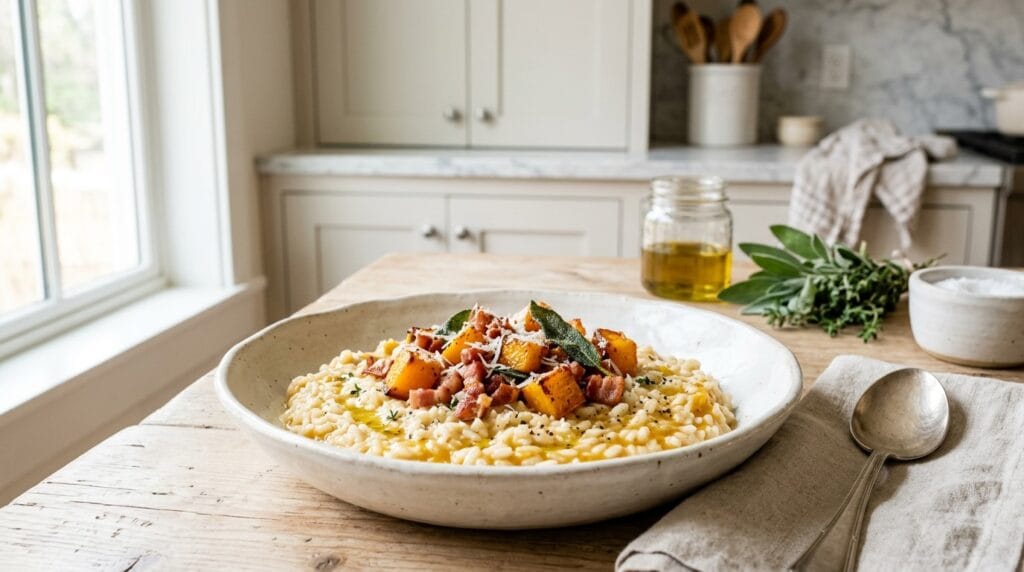
Butternut Squash Risotto with Crispy Pancetta
Butternut squash used two ways — half roasted in pieces, half cooked down into the rice — with crisp pancetta and plenty of Parmesan.

Ingredients
Instructions
- Heat the oven to 425°F. Toss half the diced squash with 2 tbsp of the olive oil and 1/2 tsp salt, spread on a sheet pan in a single layer, and roast 25 to 30 minutes until browned at the edges. Set aside — this is the half that stays in pieces.
- Meanwhile, put the stock in a saucepan and bring to a bare simmer. Keep it hot. Cold stock added to risotto stops the cooking each time and is the usual reason it takes forever.
- In a wide heavy pan over medium heat, cook the pancetta in the remaining 1 tbsp oil until crisp, 6 to 8 minutes. Lift out with a slotted spoon onto paper towel, leaving the fat in the pan.
- Add 1 tbsp of the butter, the onion and the remaining 1/2 tsp salt to the same pan. Cook 5 minutes until soft and translucent. Add the second half of the raw squash and cook 5 minutes more — this is the half that will break down into the rice.
- Add the rice and stir for 2 minutes, until the grains look glassy at the edges. Pour in the wine and stir until it has almost entirely disappeared.
- Add the hot stock one ladleful at a time, stirring often and waiting until each is nearly absorbed before adding the next. After 18 to 22 minutes the rice should be tender with a little resistance at the centre and the squash should have collapsed into the sauce. You may not need all the stock.
- Off the heat, beat in the remaining 3 tbsp butter and the Parmesan hard — this is what makes it glossy. Stir in the thyme and most of the roasted squash. Loosen with a splash of stock; risotto should spread slowly on the plate, not stand up in a mound.
- Taste and adjust with salt, plenty of black pepper and a small squeeze of lemon. Serve topped with the crisp pancetta and the remaining roasted squash.
Notes

Keep reading
More from the market

Savory Sweet Potato and Caramelized Onion Galette with Sage
Sweet potatoes, onions cooked down slow, and fried sage on a free-form crust. A savory galette that turns three cheap market vegetables…
Read more
Kale and White Bean Stew with Sausage
One pot and forty minutes. Sausage, creamy white beans and a whole bunch of market kale, with the vinegar trick that stops…
Read more
Skillet Baked Eggs with Blistered Tomatoes and Feta
One skillet, thirty minutes, and the best possible use of late-summer market tomatoes and farm eggs. Breakfast, lunch, or a very good…
Read more