
How to Price CSA Shares So the Farm Actually Gets Paid
How to price CSA shares from your real costs: a worked season budget with your own pay, packaging, card fees and a crop-loss cushion, plus signs it's working.
 5 min read
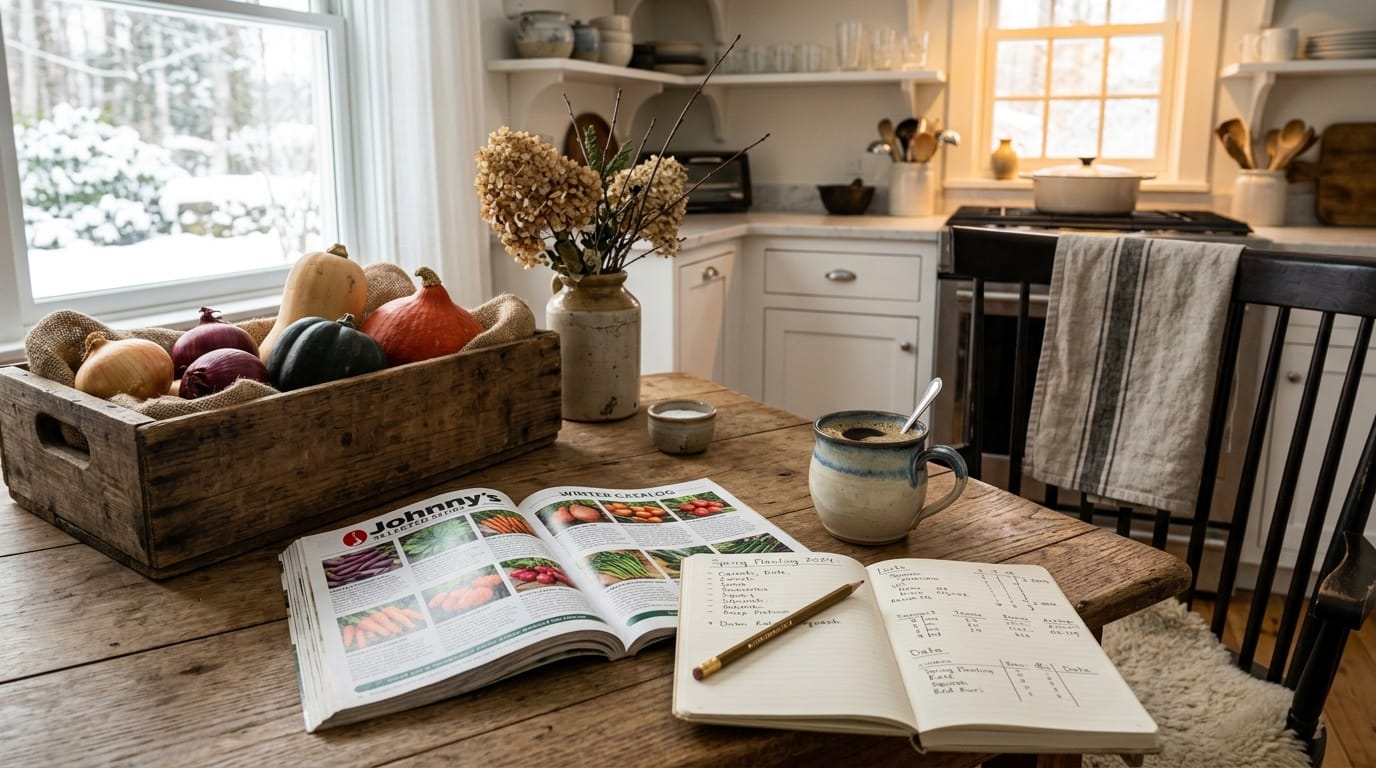
Most share prices get set the same way. It is January, the seed catalogs are on the table, and someone looks up what the farm across the county charged last year and knocks twenty dollars off the total. It feels safe. It is also the fastest route to a season where the boxes go out full and the farmer’s paycheck does not. If you want to know how to price CSA shares so the money actually covers the work, you have to start from the farm’s own costs.
Our CSA guide covers the basic idea of dividing your budget by your shares. This post goes further, with a worked example, the costs people forget, and how to tell afterward whether you got it right.
Why the neighbor’s price is the wrong starting point
Utah State University Extension describes three ways to price a share: cost-plus, competition-based and customer-based. All three are useful, but only one of them tells you whether the farm survives. The neighbor’s price says nothing about your land payment, your crew or your fuel bill.
North Carolina State Extension is blunt about the stakes: its CSA guide for farmers calls setting the share price too low the biggest contributing factor to CSA burnout and failure. So build the cost floor first, then use the market to check it.
Step one: a season budget with nothing left out
The USU fact sheet groups costs into fixed costs, variable costs and marketing. In practice, a CSA budget needs every one of these lines:
- Seed, transplants, soil amendments, water and fuel
- Hired labor, including payroll taxes
- A real salary for the farmer, written down as a number
- Packaging: boxes, bags, liners, labels, ice
- Distribution: pickup site rent, delivery mileage, a cooler at the drop site
- Insurance, marketing, bookkeeping and software
- A share of equipment repair and replacement
- Card processing fees on member payments
The salary line is the one that goes missing. The USU authors note that many growers underestimate their own worth when they build a budget. If your pay is whatever is left over, the price is not finished.
How to price CSA shares: a worked example
Here is an illustration with made-up but plausible round numbers for a 20-week season. Swap in your own figures; the method is what matters.
The season budget. Seed, transplants and amendments $4,000. Hired labor $9,000. Farmer’s pay $15,000. Packaging $1,000. Fuel and pickup-site costs $1,500. Insurance, marketing and bookkeeping $2,000. Equipment repair and replacement $2,500. Total: $35,000.
The member count. Say the crop plan can reliably fill 50 full-share equivalents. Count two half shares as one full share for this step, since your fields cannot tell the difference.
The floor. $35,000 divided by 50 is $700 per full share.


The crop-failure cushion. A CSA promises a season, not a list, but you still need room for a bad hailstorm. Adding 10 percent takes the price to $770.
The payment fees. If your card processor takes around 3 percent, a $770 payment leaves you about $747. To net $770, divide by 0.97 and you land near $795. Check your own processor’s rate and use that.
The weekly check. $795 over 20 weeks is about $40 a week. Now compare that with what the same box would cost at your market stall. If a typical week’s box would sell for $40 or more at retail, members are getting fair value.
When the number comes out too high
The example lands above the $400 to $700 range NC State cites as typical for a full season. That is not a reason to panic. It is information, and you have real levers to pull.
Add members, if the crop plan supports them. Many costs do not double when membership does. Going from 50 to 60 shares spreads the fixed lines thinner. Only do this if your fields and your packing shed can actually deliver.
Lengthen the season. A few extra weeks of storage crops can raise the share value without raising costs by the same proportion.
Offer add-ons. Eggs, flowers, bread or honey from a neighbor add income without stretching your vegetable budget.
Tell members what the price covers. People who join a CSA usually want to know the farm is paying its people. A short line explaining that your price includes fair wages tends to land well with the kind of member who renews for years.

Sign-up season without the spreadsheet
We are building CSA tools with a small group of founding farms: share sizes, payment plans and deposits, with members paying straight into the farm’s own account. Pricing goes to founding farms first.
Join the founding farms
Fresh. Local. Sustainable.
Half shares, early-bird pricing and payment plans
NC State notes that half shares usually cost more than half a full share. That is sound: a half box takes nearly the same packing time, the same box and the same pickup slot. Price your half share from its own costs, not by cutting the full price in two.
The USU fact sheet describes common payment policies: a discount for paying up front, a price that rises after a set date, and installment plans that start with a deposit. Each one has a cost. An early-bird discount is worth it when the cash arrives in time to buy seed. An installment plan widens who can join, but price it so the later payments cover the risk of a member who stops paying.
If the farmer’s pay is whatever is left over, the price is not finished.Butter & Sage Market
How to tell if you priced it right
The season itself gives you the answer. NC State points to two signals: a waiting list suggests members would pay more, and members complaining about too much food, or splitting shares, suggests the share is too big for the price.
Keep records through the season so next year’s budget is built on real numbers instead of guesses. Our bookkeeping guide was written for food makers, but the habit of tracking every cost against every sale works just as well on a farm. If you also sell at a market stall, the simple pricing formula will help you keep those prices in line with your share.
For tax questions about collecting a season’s income up front, talk with an accountant or check the IRS guidance for farmers. That part is worth a professional’s hour.

Keep reading
More from the market

Can You Sell Homemade Cookies? What Is Allowed, What Is Not, and Decorated Sugar Cookies
Can you sell homemade cookies? Almost everywhere, yes. Here is what makes frostings and fillings risky, how states treat royal icing, and…
Read more
How to Start a Farmers Market in Your Town: Sponsor, Site, Vendors and Budget
Here is how to start a farmers market in your town: find a sponsor, pick a site, line up vendors and write…
Read more
What’s in a Winter CSA Share, and Is It Worth Joining?
What a winter CSA share really holds, from storage roots and squash to tunnel-grown greens, how pickup changes after frost, and the…
Read more