
There is a specific weekend in September when you walk into the market and the whole mood has changed. The tomato tables have shrunk. There is cider now, in unlabeled gallon jugs, still cloudy. Somebody has cabbages the size of a bowling ball, and the apple guy has a line.
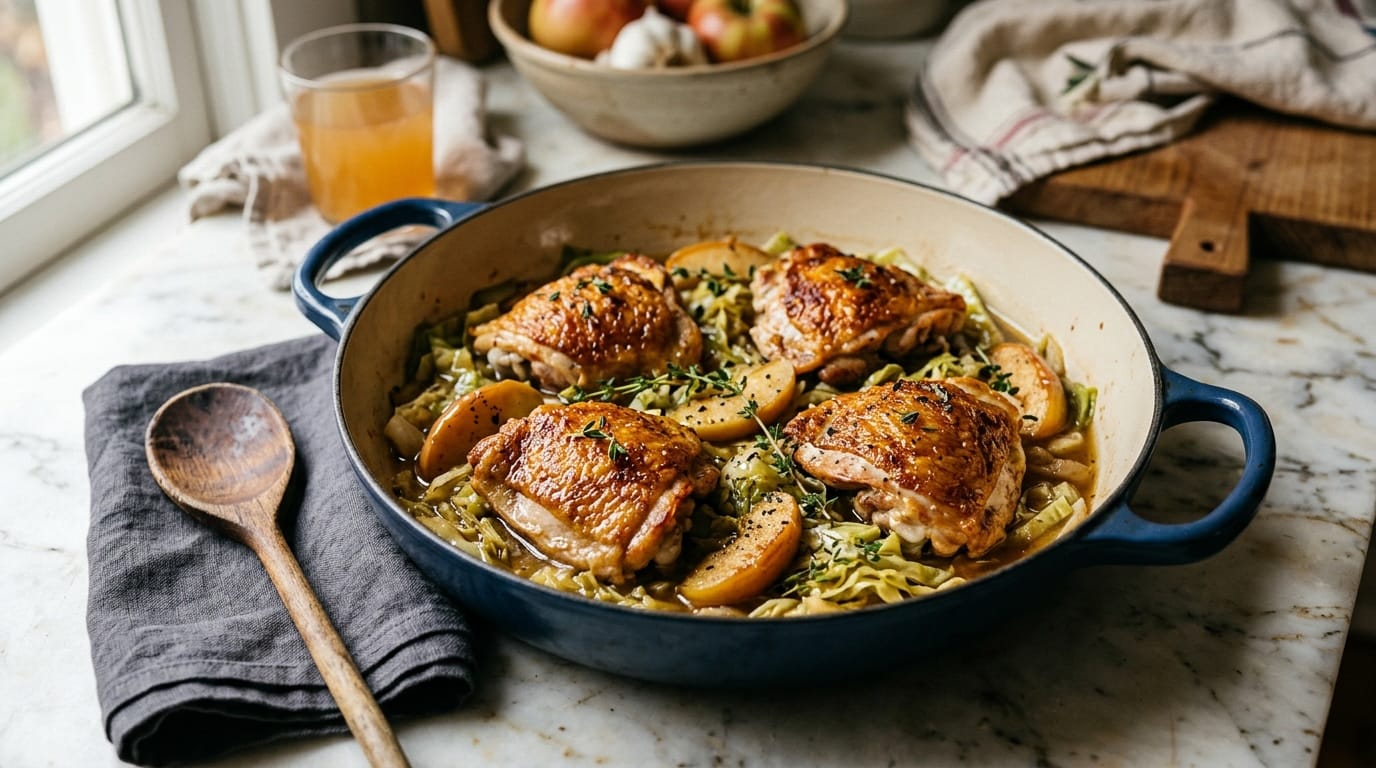
This is the dinner for that weekend. One pan, six things from the market, an hour on the stove that is almost entirely unattended, and a house that smells like the reason people put up with winter.
Why cider, cabbage and chicken thighs belong in the same pan
Fresh cider is not apple juice. It is unfiltered, barely sweet, faintly tannic, and it has enough acid to cut through fat — which is exactly what you want when you are braising a fatty cut. As it reduces, its sugars concentrate and the pan sauce goes glossy and slightly sweet-tart without you adding a single thing.
Cabbage is the sleeper. Braised slowly in fat and liquid it stops being cabbage and turns silky and sweet, closer to caramelized onion than to coleslaw. It also drinks up the cider and renders chicken fat and becomes, arguably, the best thing in the pan.
And thighs, not breasts. Braising a chicken breast is a way of making an expensive piece of chicken dry. Thighs have the fat and connective tissue that a long moist cook actually improves, and their skin crisps hard in a hot pan and then holds up because you are keeping it above the liquid line.
The technique that makes or breaks it: sear hard, then keep the skin dry
Two things, and they are the whole recipe.
First, dry the chicken thoroughly and salt it at least fifteen minutes before it hits the pan. Wet skin steams instead of browning, and browning is where most of the flavor of the finished dish is manufactured. Start the thighs skin-side down in a barely oiled pan over medium heat — not screaming hot — and leave them alone for a full eight to ten minutes. They will release when they are ready. Prying at them early tears the skin and costs you the crust.
Second, when the thighs go back into the braise, nest them on top of the cabbage with the skin above the liquid. If the skin goes under, everything you did in step one dissolves. A wide, shallow pan with the lid slightly ajar, or an uncovered pan in the oven, does this best.
The rendered fat left in the pan after searing is not grease to be poured off — it is the cooking fat for the cabbage and onions and it carries most of the savory backbone of the dish. Leave it.
Make it yours
Swap the apple. A firm tart apple — Granny Smith, Northern Spy, Braeburn, Winesap — holds its shape and balances the cider. A soft sweet apple will melt into the sauce, which is not a failure, just a different dish. Ask your apple vendor which of theirs cooks up firm.
Add mustard or cream. A tablespoon of grainy mustard stirred into the sauce at the end sharpens everything. A splash of cream instead makes it richer and more Norman. Both is also allowed.
Sausage instead of chicken. Brown local pork sausage in place of the thighs for a faster weeknight version. Fifteen minutes shorter, nearly as good.
Add a root. Sliced carrots, parsnips or a small waxy potato go in with the cabbage and turn it into a full one-pan meal with no side dish required.
Herbs. Thyme and sage are the obvious ones. A single bay leaf and a few juniper berries, if you have them, make it taste like it took much longer than it did.
Shopping this at the market
Everything here comes from one lap around a September or October market. Chicken thighs from a poultry vendor — ask for skin-on, bone-in, and buy the pack that looks like too much, because leftovers of this are excellent. Cider from whoever has it in jugs, ideally pressed that week and unfiltered. A firm apple from the apple table, and a cabbage. Onions and thyme from anybody.
If you want a hand deciding which apple, our farmers market apple guide sorts the common varieties by what they do under heat.
Serve it simply
Mashed potatoes, buttered egg noodles, or nothing but a thick slice of bread from the market baker to drag through the sauce. A crisp green salad if you feel strongly about vegetables, though the cabbage has already handled that.
Leftovers reheat better than the original, which is rare and worth knowing. The cabbage keeps softening, the sauce keeps concentrating, and Tuesday's version is arguably the best one.
If you make this, tag @butterandsagemarket — we want to see the pan. And if your cider, your chicken and your cabbage all came from the same market on the same morning, tell us who grew them. Those are the people worth naming.
Apple Cider Braised Chicken Thighs with Cabbage and Apples
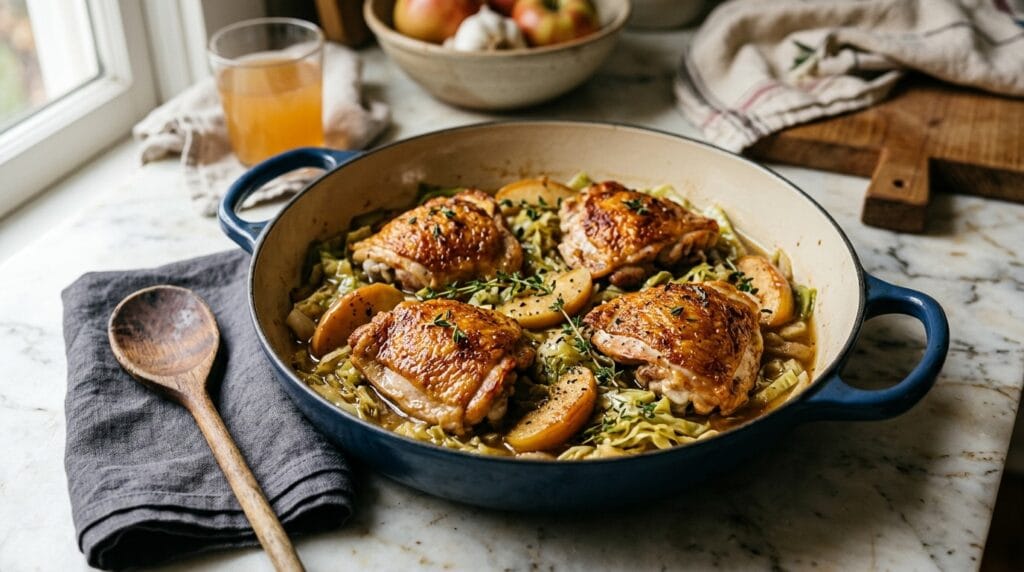
Crisp-skinned chicken thighs braised over silky cabbage and tart apples in fresh cider. One pan, mostly unattended, and built entirely from an early-fall market haul.

Ingredients
Instructions
- Pat the chicken thighs completely dry with paper towels, then season all over with the salt and pepper. Let them sit at room temperature at least 15 minutes — dry, salted skin is the whole difference between crisp and rubbery.
- Heat the oil in a large wide skillet or braiser over medium heat. Add the thighs skin-side down and cook without moving them for 8 to 10 minutes, until the skin is deep golden and releases easily from the pan. Do not pry at them early or you will tear the skin. Flip, cook 2 minutes more, and transfer to a plate skin-side up.
- Pour off all but about 2 tablespoons of the rendered fat — keep that fat, it is most of the flavor. Add the onion and a pinch of salt and cook over medium heat, scraping up the browned bits, until softened and lightly golden, 6 to 8 minutes.
- Add the cabbage in batches, letting each addition wilt before adding more, about 6 minutes total. Stir in the garlic and apple wedges and cook 2 minutes more.
- Pour in the cider, stock and vinegar. Add the thyme and bay leaf and bring to a simmer, scraping the bottom of the pan clean.
- Nest the chicken thighs on top of the cabbage, skin-side up, keeping the skin above the liquid line. This matters — submerged skin goes soft and you lose the crust you just built.
- Reduce to a bare simmer, cover with the lid slightly ajar, and cook 30 to 35 minutes, until the chicken reaches 175°F at the bone and the cabbage is silky. Alternatively, transfer uncovered to a 375°F oven for 30 minutes.
- Move the chicken to a platter. Fish out the thyme stems and bay leaf. If the sauce is thin, simmer it uncovered 3 to 5 minutes to concentrate.
- Off the heat, stir in the mustard and swirl in the cold butter until glossy, if using. Taste and adjust salt and vinegar. Spoon the cabbage and apples onto plates, set the chicken on top, and rest 5 minutes before serving.
Notes
APPLES: Firm tart varieties hold their shape. Soft sweet apples melt into the sauce — still good, just a different dish. Ask your apple vendor which of theirs cooks up firm.
CRISP SKIN: The two rules are dry, salted skin before searing and keeping the skin above the liquid during the braise. Everything else is forgiving.
VARIATIONS: Swap browned local pork sausage for the chicken and cut 15 minutes off the cook. Add sliced carrots, parsnips or waxy potatoes with the cabbage for a full one-pan meal. A splash of cream instead of the mustard makes it richer and more Norman. A bay leaf and a few crushed juniper berries add depth.
SERVING: Mashed potatoes, buttered egg noodles, or good bread for the sauce.
LEFTOVERS: Refrigerate up to 4 days. This reheats better than it started — the cabbage keeps softening and the sauce concentrates. Reheat gently, covered, and crisp the skin under the broiler for 2 minutes if you care about it.



0 Comments