

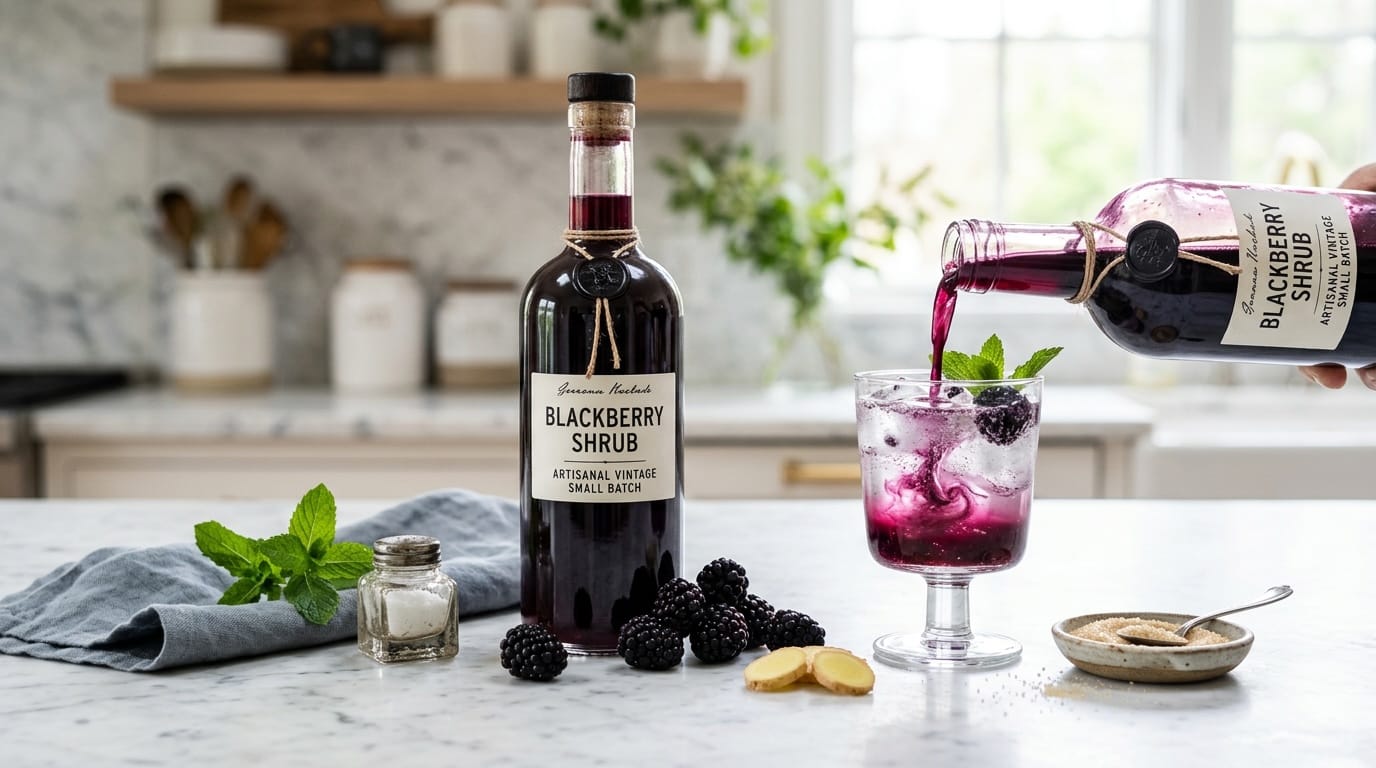
There is a moment at the end of August when the blackberry grower starts making eye contact. The berries are perfect and there are too many of them, and by Sunday they will be jam or they will be compost. That is usually when you can buy a flat for what a pint cost in July.
Take the flat. Then make a shrub.
What a Shrub Actually Is
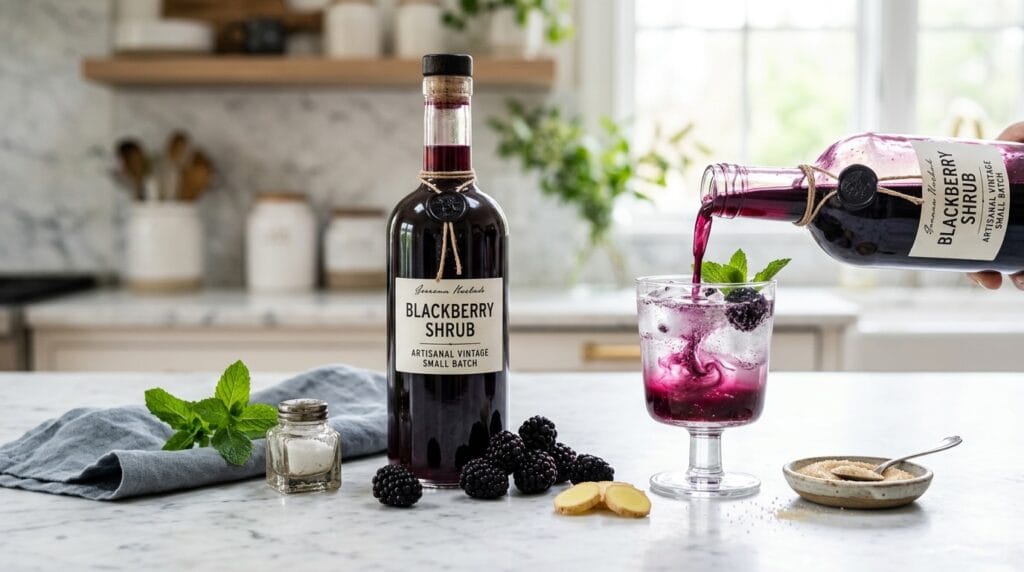
A shrub is a drinking vinegar — fruit, sugar, and vinegar, left alone until they turn into something bright and tangy and completely unlike any of the three things you started with. It is an old preservation trick, older than refrigeration, and it is having a genuine moment right now as people look for something interesting to drink that is not another seltzer.
An ounce over ice with sparkling water tastes like a fruit soda that grew up and got a personality. It is also a bartender's secret weapon, a shockingly good salad dressing, and the thing you deglaze a pan with when you want to feel like you know what you are doing.
If you have not run into shrubs at your market yet, you will. We wrote about the drinking vinegar trend earlier this year, and the number of vendors pouring samples has climbed steadily since.
Why Late-Summer Blackberries, and How to Pick Them
Blackberries are the right fruit for this because they are assertive. A delicate berry gets flattened by vinegar; a blackberry pushes back and gives you that deep wine-purple color that makes a bottle look expensive on a table.
At the market, look for berries that are fully matte black, not shiny. Shine means underripe, and underripe blackberries are sour in a flat, unhelpful way. Check the bottom of the container for staining — a little means ripe, a lot means they have been sitting. And ask the grower whether they picked this morning. Blackberries do not travel or wait well, which is exactly why the market version is worth the trip and the grocery store version is usually a disappointment.
The ginger is doing real work here too. It keeps the whole thing from reading as dessert and adds a warm bite on the finish, which is the difference between a shrub you like and a shrub you keep going back to.
The One Technique That Matters: Cold Process
You will find shrub recipes that tell you to cook the fruit and sugar into a syrup. Those work, and they are faster. But the cold process — just fruit, sugar, and time in the refrigerator — makes a noticeably better shrub, and it is somehow even less effort.
Here is why it works. Sugar is hygroscopic, which is a fancy way of saying it pulls water toward itself. Left alone with cut fruit for two days, it draws the juice straight out of the berries and dissolves into it, no heat required. Because you never cook it, you keep the fresh, bright, almost floral top notes that boiling drives off. The result tastes like the fruit instead of like jam.
The only thing you have to get right is patience. Two days in the fridge to macerate, then at least a week after you add the vinegar. That first week is not optional — a freshly mixed shrub tastes like a salad dressing accident. Give it seven days and it turns into something else entirely.
Make It Yours
Swap the fruit. Raspberries, Concord grapes, peaches, plums, and blackcurrants all work. Whatever the grower is trying to move at the end of the day is usually the right answer.
Swap the aromatic. A split vanilla bean makes it dessert-adjacent. Rosemary makes it savory and grown-up. Lemon peel makes it brighter. And half a jalapeño, seeds removed, makes a sweet-heat version that will disappear from your booth first — the swicy crowd finds these things.
Swap the vinegar. Apple cider vinegar is the friendly default. Champagne vinegar makes a cleaner, more delicate shrub. Balsamic is too dominant for blackberry but is wonderful with strawberry or fig.
Adjust the sharpness. The classic ratio is equal parts fruit, sugar, and vinegar by weight. This version pulls the vinegar back a little because a first-timer's palate needs an on-ramp. If you are making it for yourself and you already love the style, push it back up.
If You Are Thinking About Selling It
Shrubs are one of the better market products going right now, and the economics are friendly. The ingredients cost very little, the perceived value is high because most shoppers have never seen one, and it samples instantly — one small cup with sparkling water and you have made the sale. It also gives you something to sell in a category almost nobody at your market is in.
Two practical notes before you jar anything up. First, this is a refrigerated product, not a shelf-stable one, so label it clearly with a made-on date and keep it cold at your booth. Second, acidified and vinegar-based products are handled differently from baked goods and jams under some state cottage food rules, so check your state's list before you put it on the table. It is a five-minute check that saves a very bad conversation with an inspector.
If small-batch sellable jars are your thing, our small-batch hot honey guide covers the same ground for the other end of the flavor spectrum, and the two of them side by side make a genuinely good booth.

Make a batch, wait the week, and then tell us what you put it in. Tag @butterandsagemarket when you pour the first glass — and if you are making it to sell, we want to see the label.
Blackberry Ginger Shrub
A cold-process drinking vinegar that turns late-summer blackberries into a bright, tangy syrup for sparkling water and cocktails — and one of the most sellable jars a cottage food vendor can make.
Ingredients
To Serve
Instructions
Macerate
- Combine the blackberries, sugar, ginger coins, and salt in a large nonreactive bowl — glass, ceramic, or stainless steel. Never aluminum or cast iron, which react badly with acid.
- Press the berries lightly with a potato masher or the back of a wooden spoon. You want them broken open, not pulverized. Over-mashing makes the finished shrub cloudy and hard to strain.
- Cover tightly and refrigerate for 48 hours, stirring once a day. The sugar will pull the juice out of the fruit and dissolve into a deep purple syrup. This is the whole trick, and it happens without any heat at all.
Strain and Acidify
- Set a fine-mesh strainer over a large measuring cup and pour the fruit mixture through it. Press gently with a spoon to release the syrup, then stop — pressing hard forces pulp through and clouds the finished shrub.
- Discard the ginger. Save the berry pulp for pancakes, yogurt, or oatmeal. It is still delicious and there is no reason to throw it away.
- Whisk the apple cider vinegar into the strained syrup until fully combined. It will smell aggressively sharp right now. That is normal and it does not last.
Rest and Bottle
- Pour into clean glass bottles or jars, seal, and refrigerate for at least one week before drinking. The vinegar edge softens and the fruit and ginger come forward. Two weeks is better than one.
- To serve, pour 1 ounce of shrub over ice, top with 6 ounces of chilled sparkling water, and stir. Adjust to taste — some people like it closer to 1 to 4.
Notes
RATIO: The classic shrub ratio is equal parts fruit, sugar, and vinegar by weight. This version runs slightly lower on vinegar for a friendlier, more approachable first sip. Scale the vinegar up if you like it sharper.
SUBSTITUTIONS: Works beautifully with raspberries, blackcurrants, Concord grapes, or peaches. Swap the ginger for a split vanilla bean, a few strips of lemon peel, a sprig of rosemary, or a jalapeño half if you want to lean into the sweet-heat trend.
BEYOND DRINKS: Whisk 1 part shrub with 3 parts olive oil for an outstanding salad dressing. Use it to deglaze a pan after searing pork or duck. Add half an ounce to a bourbon or gin cocktail in place of simple syrup and citrus.
SELLING IT: Shrubs are a strong farmers market product — high perceived value, low ingredient cost, and instantly sampleable. Label it as a refrigerated product with a made-on date, and check your state cottage food rules before selling, since acidified and vinegar-based products are handled differently from jams and baked goods in some states.

Keep reading
More from the market
Butternut Squash Risotto with Crispy Pancetta
Half the squash melts into the rice, half stays roasted and whole. The two-texture trick that stops butternut risotto tasting like sweet…
Read more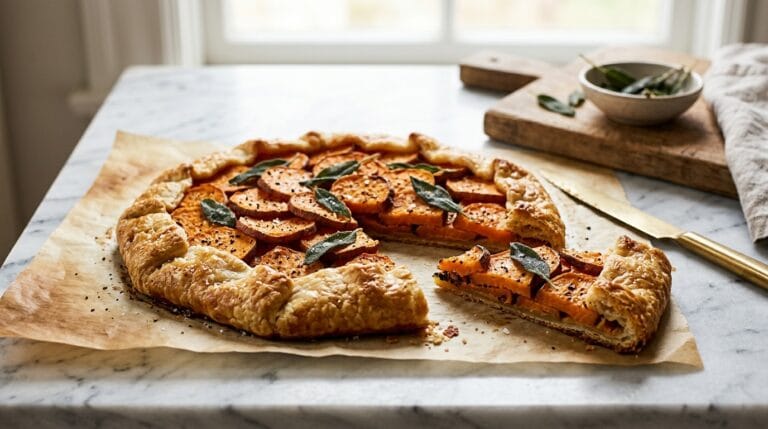
Savory Sweet Potato and Caramelized Onion Galette with Sage
Sweet potatoes, onions cooked down slow, and fried sage on a free-form crust. A savory galette that turns three cheap market vegetables…
Read more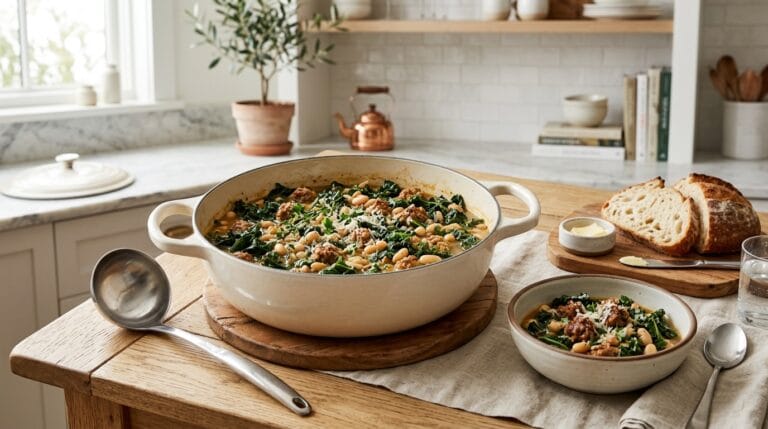
Kale and White Bean Stew with Sausage
One pot and forty minutes. Sausage, creamy white beans and a whole bunch of market kale, with the vinegar trick that stops…
Read more