Cottage Food Insurance: What You Actually Need Before Holiday Market Season
Most holiday markets ask for proof of insurance before handing you a booth. Here is what cottage food insurance covers, what it costs, and when to buy it.
 1 min read
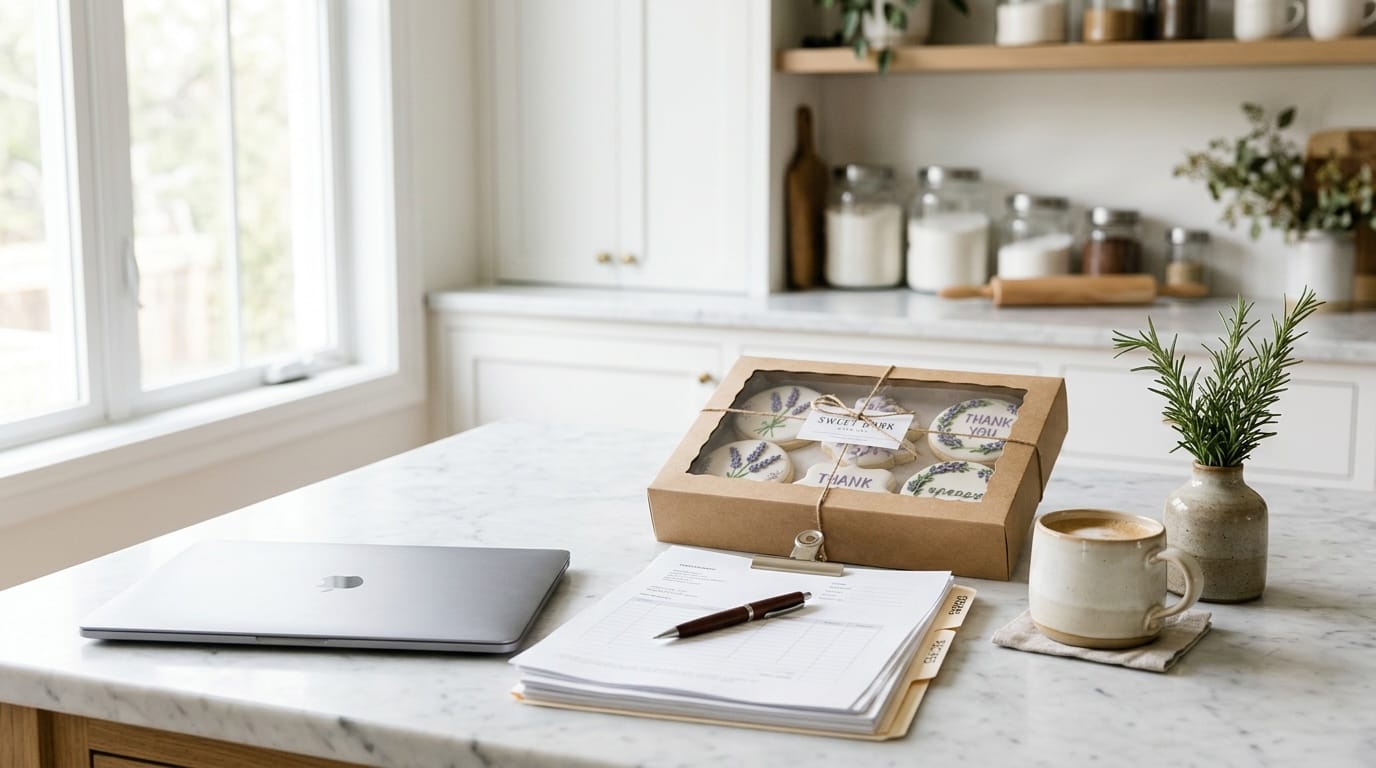
You finally got the email. The one that says your application to the November holiday market has moved to the next round, and all they need from you is a certificate of insurance naming the market as additional insured by the fifteenth.
And you sit there thinking: a certificate of what, now?
If that is you right now, take a breath. You are not behind, and you are not doing anything wrong. Almost every cottage food vendor hits this wall at exactly the same moment — the first time they apply to a market big enough to have a legal department. Here is the plain-English version of what cottage food insurance actually is, what it costs, and how to get it handled in an afternoon instead of losing a week to worry.
What Cottage Food Insurance Actually Covers
When a market asks for "insurance," they are almost always talking about general liability insurance. It is the boring, foundational kind, and it covers the two things that keep market managers up at night.
The first is bodily injury and property damage at your booth. Your tent gets caught by a gust and takes out the pottery vendor's table. A customer trips on your cooler and breaks a wrist. Someone's toddler pulls your display tower down. These are not exotic scenarios — ask any market manager and they will tell you about the year the wind came through.
The second is product liability, which is the piece that matters most for food. If someone gets sick and points at your jam, product liability is the coverage that pays for the defense and the claim. For cottage food vendors this is usually bundled into the general liability policy, but it is worth confirming out loud with whoever sells you the policy, because a general liability policy written for a landscaping company does not necessarily include it.
What it does not cover is worth knowing too. It will not cover your own equipment if your mixer dies or your car is broken into. It will not cover lost income if you cannot bake. And it will not paper over a food safety problem you already knew about. Insurance is a backstop for accidents, not a substitute for careful work.
Do You Legally Have to Have It?
In most states, no. Cottage food laws generally do not require you to carry insurance to sell from your home kitchen. That is the honest answer, and it is why so many vendors go their first year or two without it.
But "not legally required" and "not required" are two very different sentences. The people who will require it are:
- Farmers markets and craft fairs — increasingly standard, especially at established markets and anything run by a municipality or a nonprofit board
- Holiday and seasonal markets — nearly universal, because these are the highest-traffic, highest-liability events of the year
- Church, school, and community center venues — their own insurance usually requires it of anyone using the space
- Corporate and wholesale buyers — if you are chasing gift orders, expect this to come up early
- Some event venues for pop-ups and private orders
So the practical answer is that if you plan to sell anywhere other than your own front porch, you will need it eventually. Fall is when eventually arrives, because that is when the holiday market applications open.

What It Costs, and What "Additional Insured" Means
For a typical cottage food vendor selling shelf-stable products at a handful of markets, general liability coverage generally runs somewhere in the range of a couple hundred dollars a year — often quoted around $200 to $500 annually, depending on your state, your sales volume, your product mix, and the coverage limits you choose. Most markets ask for $1 million per occurrence and $2 million aggregate, which sounds enormous and is actually the standard entry-level policy.
Some vendors buy annual policies. Others buy event-by-event coverage for a single weekend, which can make sense if you only do two shows a year. If you are doing more than three or four events, the annual policy almost always wins on math.
"Additional insured" is the phrase that trips everyone up. It simply means the market wants their own organization listed on your policy so that your coverage extends to them if something at your booth turns into a claim. You call your insurer, give them the market's exact legal name and address, and they issue an updated certificate. It is usually free or close to it, and it usually takes a day or two — which is exactly why you do not want to start this process the week before the deadline.
How to Handle It Without Losing a Weekend
Here is the order of operations that keeps this simple.
Gather your numbers first. Annual gross sales (or your honest projection), the products you make, where you sell, and whether you ship. Having this ready turns a forty-minute call into a ten-minute one.
Get three quotes. There are insurers who specialize in food artisans, cottage bakers, and market vendors, and there are also plenty of general small business insurers. Your own home and auto agent is worth a call too — sometimes there is a small business rider that costs less than a standalone policy. Prices for identical coverage vary more than you would expect.
Ask two specific questions. Does this include product liability for food I make in a home kitchen? And how do I request a certificate with an additional insured listed? If the person on the phone hesitates on either one, keep shopping.
Buy it in September, not November. Holiday market applications close early, and the certificate request adds days you will not have. Every year, good vendors lose good booths over a piece of paper.
Save the PDF somewhere you can find it from your phone. You will be asked for it at odd moments, usually while your hands are covered in flour.
The Part Nobody Tells You
Buying insurance is one of those small, unglamorous moments where your business stops being a hobby and starts being a business. It does not feel like a milestone. It feels like a chore with a receipt. But it changes which doors are open to you — bigger markets, corporate gift orders, wholesale conversations, the fancy holiday show that always seemed out of reach.
You are not buying peace of mind, exactly. You are buying eligibility. And in a season where the best booths get claimed in September, eligibility is worth a couple hundred dollars.
One honest caveat before you go: we are marketers and food people, not insurance agents or attorneys. Requirements vary by state, by market, and by what you make, so use this as a map and let a licensed agent draw the final route. And if you are also sorting out getting into a farmers market or selling at fall festivals and craft fairs, those two pieces pair well with this one.

What did your market ask you for this year? Drop it in the comments — the more vendors compare notes on this, the fewer of us get blindsided in October.

Keep reading
More from the market
What’s at the Farmers Market in November? Your Late-Fall Shopping Guide
November farmers markets are smaller, colder, and sweeter than you expect. Here is what is in season, what frost improves, and what…
Read more
Cold-Weather Booth Setup: Wind, Light, and Days That End at Four
A booth built for August falls apart in November. What to change for wind, cold and a market that ends after dark…
Read more
Selling from a Farm Stand: What It Takes and What It Makes
A stand at the end of the drive has no booth fee and no set hours. What to check before you build…
Read more