How to Grow Lavender at Home (And Why Your Kitchen, Your Booth, and Your Neighbors Will Thank You)
Lavender is the most versatile plant in the cottage garden — beautiful, low-maintenance once established, and the source of honey, syrup, shortbread, and salt that are trending hard at farmers markets right now.
 1 min read
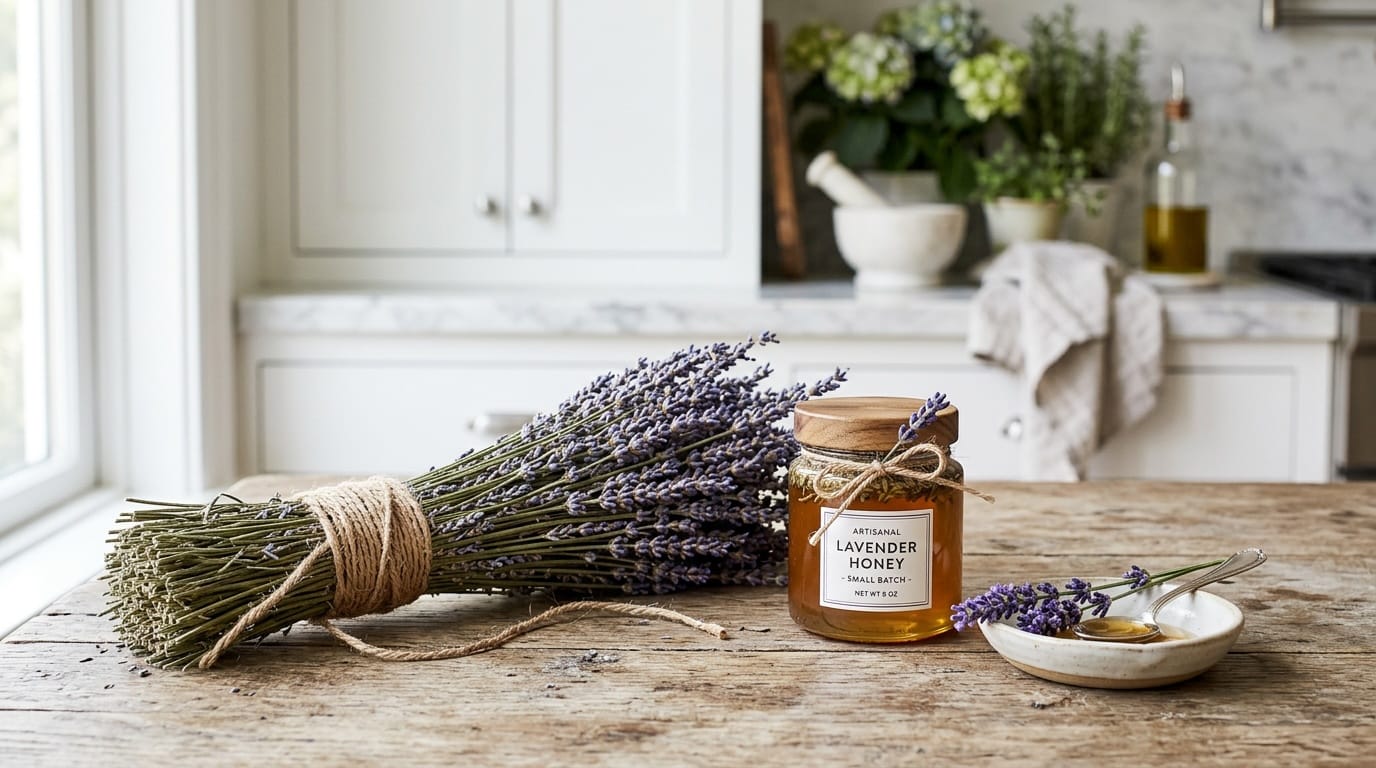
If you've ever walked past a lavender plant in full bloom, you know the feeling — that wave of fragrance that stops you mid-stride and makes you want to stand there a minute longer than makes sense. Lavender does that to people. And the good news is you don't need a Provence hillside to grow it. A sunny spot in your backyard — even a large container on a patio — is enough.
Lavender is also one of the most versatile plants you can grow for a kitchen garden. It moves between savory and sweet in ways that few herbs can. And for cottage food vendors, it opens doors to an entire product category — lavender honey, lavender shortbread, lavender syrup, lavender salt — that's having a serious moment with farmers market shoppers right now.
Why Lavender Is Worth the Garden Space
Most herbs you grow, you eat. Lavender you eat, smell, display, infuse, and sell. It earns its space in multiple ways at once.
In the kitchen, dried lavender buds add a floral, slightly herbaceous note to baked goods, syrups, honey, and savory dishes. A pinch in shortbread makes them taste like they came from a French bakery. A few sprigs steeped in simple syrup becomes the base for lavender lemonade, lavender cocktails, and lavender iced tea — all trending hard with buyers who've discovered just how good floral flavors can be.
In the garden, lavender is a pollinator magnet, a deer deterrent, and one of the most drought-tolerant plants you can grow once it's established. It earns its spot even when you're not actively harvesting.
Choosing Your Lavender
English lavender (Lavandula angustifolia) is the best choice for cooking. Varieties like 'Hidcote,' 'Munstead,' and 'Vera' have sweeter, more complex flavor — less camphor, more floral — and are the most cold-hardy, surviving winters down to Zone 5.
'Phenomenal' is a hybrid that's become popular for outstanding disease resistance and good kitchen flavor. If you're in a humid climate — Southeast, mid-Atlantic, Midwest — seek this one out. Most lavender struggles with humidity; 'Phenomenal' handles it better than most.
French lavender (Lavandula dentata) blooms longer and looks beautiful, but has a stronger, more medicinal flavor that's less versatile in the kitchen. Lovely garden plant, less practical herb.
How to Get Lavender Started
Lavender is genuinely easier to start from a nursery transplant than from seed. Seeds are slow, inconsistent, and take an extra season to get to a useful size. A $6 to $8 plant saves significant frustration.
If you already have lavender and want to expand, propagation by cuttings is easy. Take a 3 to 4 inch cutting of non-flowering stem in late spring or early fall, strip lower leaves, dip in rooting hormone, and plant in well-draining potting mix. You'll have roots in four to six weeks.


Where and How to Plant
Full sun, all day. Lavender needs at least six hours of direct sunlight daily, preferably eight or more. In partial shade, it grows leggy and weak and is prone to disease.
Drainage over everything. The most common way to kill lavender is overwatering or planting it in soil that holds moisture. Lavender is native to the rocky, well-drained hillsides of the Mediterranean — it wants to be dry between waterings. If your soil is heavy clay, amend with sand and gravel before planting, or grow in raised beds or containers.
Slightly alkaline soil. Lavender prefers a pH of 6.5 to 7.5. If your soil is acidic, a handful of garden lime in the planting hole helps.
Spacing. Space plants 18 to 24 inches apart — good airflow reduces fungal disease risk.
Caring for Your Lavender
Once established, lavender is remarkably low-maintenance. Water deeply but infrequently — every 10 to 14 days in the first growing season, less once it's settled in. Established lavender often survives on rainfall alone in all but the driest climates.
Prune after the first flush of flowers fades in early summer, cutting back about a third of the plant into a mound. This encourages a second bloom and prevents it from getting woody and leggy. Never cut back into old wood with no leaves — lavender won't regrow from bare wood.
In cold climates (Zone 6 and below), a light mulch of straw around the base — but not touching the stems — protects roots through winter. Remove in early spring.
How to Harvest and Dry Lavender
Harvest when about a third to half of the buds on each stem have opened. Cut in the morning after dew dries but before midday heat. Bundle 10 to 15 stems together with a rubber band and hang upside down in a warm, dark, well-ventilated spot for two to four weeks. Strip dried buds by running fingers down the stems into a bowl. Store in an airtight jar away from light for up to a year.
What to Make With Your Lavender
Lavender simple syrup. Steep two tablespoons of dried lavender in one cup of hot simple syrup for 20 minutes. Strain and refrigerate. Use in lemonade, iced tea, sparkling water, or cocktails.
Lavender honey. Warm raw honey gently with lavender sprigs, steep several hours, strain, and jar. One of the most popular products at farmers markets right now — floral honey is having a serious moment.
Lavender shortbread. Add a teaspoon of finely ground dried lavender buds to your standard shortbread recipe. Delicate, floral, and quietly impressive — the kind of cookie that makes people ask what your secret is.
Lavender salt. Pulse two tablespoons of dried lavender buds with a cup of flaky sea salt until combined. Use as a finishing salt on roasted vegetables, grilled fish, or chocolate desserts. A beautiful, simple cottage food product.
Lavender is patient. It takes a season to establish, rewards you with years of harvests, and fills your garden with something that smells impossibly good on a warm summer evening. Plant it once and you'll wonder why you waited.
Selling lavender products at the farmers market? Open your Butter & Sage Market shop to reach customers beyond your local market — floral cottage food is one of the fastest-growing categories right now. Fresh. Local. Sustainable.

Keep reading
More from the market
How to Put Your Garden to Bed for Winter (And Make Next Spring Easier)
What to pull, what to leave for the birds, and why covering bare soil now is the single best thing you can…
Read more
How to Save Seeds from Your Best Tomatoes and Peppers
The best tomato in your garden this year can be next year's whole crop, for free. Here's how to save tomato and…
Read more
How to Grow Basil at Home (And Never Buy a Sad Plastic Clamshell Again)
How to grow basil at home — from starting plants to the pinching technique that keeps them producing all summer. A beginner-friendly…
Read more