
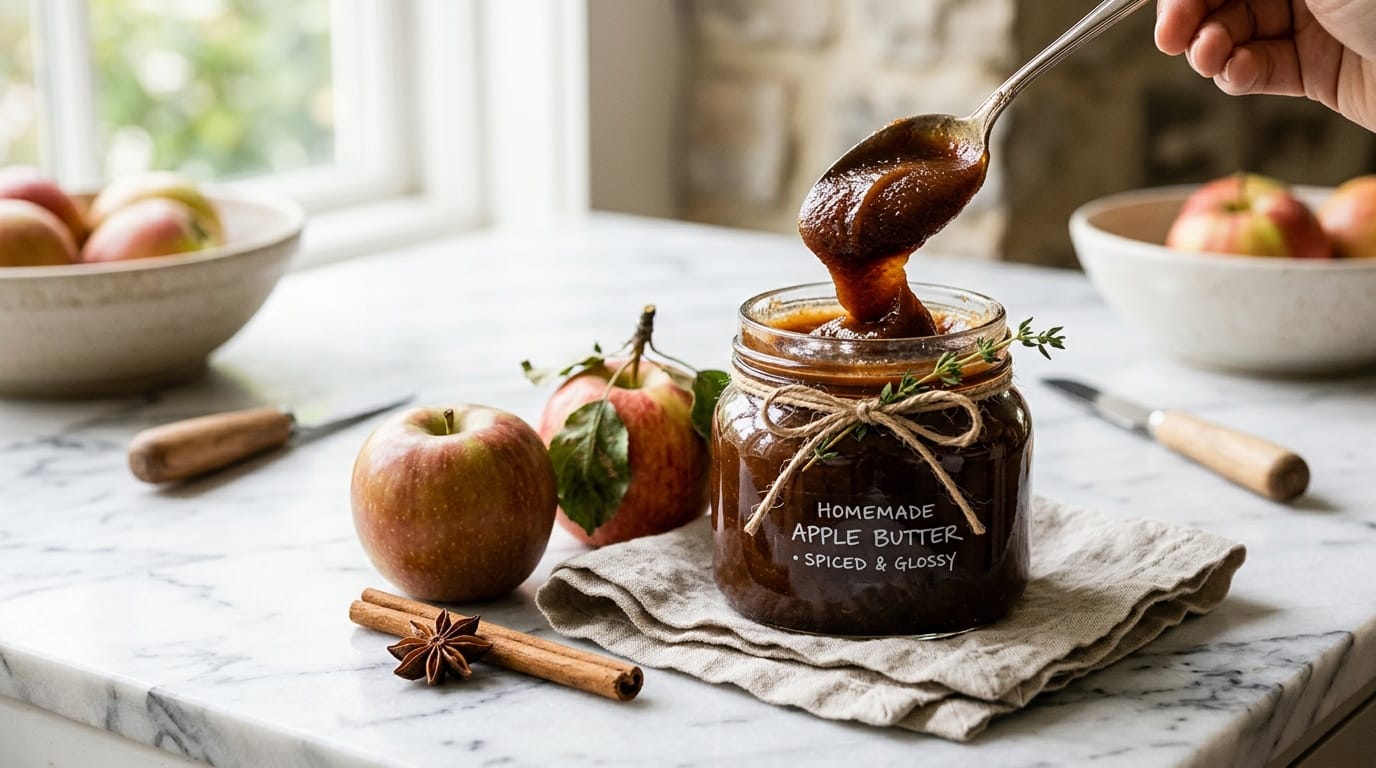
Somewhere under the apple table at your farmers market, there is usually a crate you have to ask about. Seconds. Bruised, scabbed, oddly shaped apples that will never make it onto the display, sold for a fraction of the price because the orchard would rather they go home with you than into the compost.
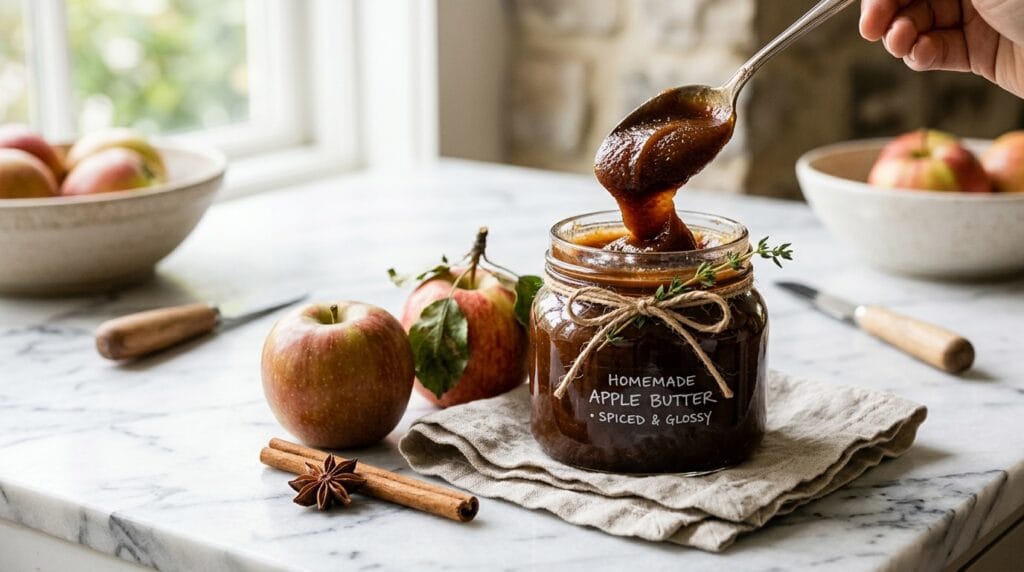
Those apples make the best apple butter you will ever eat. Every flaw disappears in the pot. What comes out is dark, thick, spiced, and glossy — closer to a spread than a sauce, with all the water cooked out and all the flavor left behind.
Why the Slow Cooker Is the Right Tool
Apple butter is not complicated. It is just apples cooked down for a very long time until the sugars caramelize and the whole thing turns brown and thick. On a stovetop, that means hours of stirring and a real risk of scorching the bottom while you are distracted.
A slow cooker solves both problems. Low, even, indirect heat means nothing catches, and you can genuinely walk away — start it in the evening and wake up to a house that smells like October. The only active work is running it through a blender at the end and, if you want, cooking off the last bit of moisture with the lid propped open.
You also do not need to peel anything. The skins soften completely, they carry a good amount of the apple's pectin and color, and a blender at the end makes them vanish. Anyone who tells you to peel four pounds of apples first is not your friend.
Which Apples to Use
Use a mix. This is the one place where a single beautiful variety is actually the worse choice — apple butter cooks for so long that you want complexity, and a blend of tart and sweet gives you a finished flavor that no single apple can.

The apples that break down fastest are the ones you want: McIntosh, Cortland, Gravenstein, Jonathan. Anchor those with something firmer and tarter — Northern Spy, Winesap, Granny Smith — so the finished butter is not one-note sweet. If you are buying a bag of mixed seconds, you very likely already have exactly this.
Whatever you do, taste one raw first. Apples vary enormously in sweetness year to year, and how much sugar you add should depend on that, not on a number in a recipe.
Getting the Texture Right
The line between applesauce and apple butter is water. Apple butter is done when a spoonful mounded on a cold plate holds its shape and does not weep a ring of liquid around the edge. If it weeps, keep cooking with the lid off.
Color is your other signal. It should go from pale gold to a deep mahogany brown. That color is caramelization, and it is where the flavor lives — a light-colored apple butter is an underdone apple butter.
The immersion blender is not optional if you want that silky, spreadable texture. A regular blender works too; just fill it no more than half full and vent the lid, because hot apple butter under pressure is a genuinely alarming thing to clean off a ceiling.
Make It Yours
- Cider instead of water. Replace the liquid with fresh-pressed cider for a noticeably deeper apple flavor.
- Lean into cinnamon. Warm cinnamon-forward spicing has been outpacing pumpkin spice for a few seasons now, and it suits apple far better anyway.
- Add a splash of bourbon or dark rum in the last hour. Cooks off, leaves warmth behind.
- Salted caramel apple butter. Swap half the sugar for dark brown sugar and finish with flaky salt.
- Savory version. Cut the sugar way back, add a spoonful of Dijon and a splash of cider vinegar, and serve it with pork or on a cheese board.
- Pear butter. Same method, same times. Add vanilla bean instead of clove.
Storing It — and Selling It
Apple butter keeps in the refrigerator for about three weeks and freezes beautifully for a year. If you want it shelf-stable, it is a high-acid preserve and processes safely in a water bath, but follow a tested canning recipe for times and headspace rather than improvising — that part is not the place for creativity.
And if you are reading this thinking that a shelf of these jars would look awfully good on a market table, you are right. Apple butter is one of the best-margin products a cottage food vendor can make in the fall: cheap raw material, long shelf life, and it doubles as a gift item straight through December. Just check your state's rules on canned goods before you scale up.

Make a batch this weekend while the seconds crate is still full. Tag @butterandsagemarket if you do — we want to see the color you got.
Slow Cooker Apple Butter
Deep, dark, spiced apple butter made in the slow cooker with no peeling and no pectin. Uses bruised farmers market seconds and cooks down overnight into something thick enough to spread.
Ingredients
Instructions
- Wash, quarter, and core the apples. Do not peel — the skins soften completely and add color, body, and pectin. Chop into rough 1-inch pieces.
- Add the apples to a 6-quart slow cooker along with both sugars, the cider, vinegar, cinnamon, allspice, cloves, nutmeg, and salt. Stir to combine. The cooker will be very full; it cooks down by more than half.
- Cover and cook on LOW for 8 to 10 hours, or on HIGH for 4 to 5 hours. Stir once or twice if you are around. The apples should be completely collapsed and the mixture should be a deep golden brown.
- Blend until completely smooth using an immersion blender directly in the pot. If using a countertop blender, work in batches no more than half full and vent the lid — hot purée builds pressure fast.
- Taste and adjust. Add more sugar if your apples were tart, more cinnamon if it tastes flat, or a little more vinegar if it tastes too sweet.
- Cook uncovered on LOW for another 1 to 2 hours to drive off the remaining moisture, stirring occasionally. Prop the lid with a wooden spoon if your cooker has no vent. The butter is ready when it has darkened to a deep mahogany and a spoonful mounded on a chilled plate holds its shape without weeping liquid at the edges.
- Stir in the vanilla off the heat. Ladle into clean jars, leaving headspace, and cool completely before covering.
Notes
Storage: refrigerate up to 3 weeks, or freeze up to 1 year in freezer-safe containers with headspace.
Canning: apple butter is a high-acid preserve and can be processed in a water bath, but follow a tested canning recipe for processing times and headspace for your altitude. Do not improvise this part.
Variations: swap the water for fresh-pressed cider for deeper flavor; add 2 tbsp bourbon in the last hour; use all dark brown sugar and finish with flaky salt for a salted-caramel version; substitute pears and use vanilla bean instead of clove.
Too thin? Keep cooking uncovered. Too thick? Stir in cider a tablespoon at a time.

Keep reading
More from the market
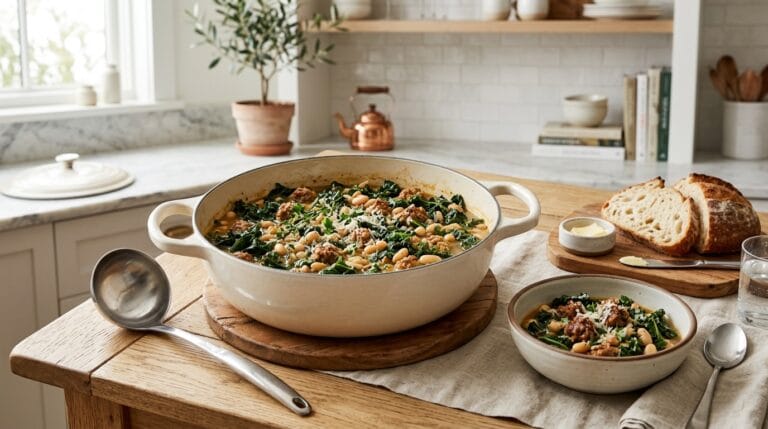
Kale and White Bean Stew with Sausage
One pot and forty minutes. Sausage, creamy white beans and a whole bunch of market kale, with the vinegar trick that stops…
Read more
Skillet Baked Eggs with Blistered Tomatoes and Feta
One skillet, thirty minutes, and the best possible use of late-summer market tomatoes and farm eggs. Breakfast, lunch, or a very good…
Read more
Overnight Sourdough Cinnamon Rolls (Soft, Tangy, and Market-Ready)
Soft, tangy overnight sourdough cinnamon rolls. The cold rise does the work while you sleep — and they hold up beautifully on…
Read more