
How to Set Up Local Pickup and Delivery for Your Cottage Food Orders (Before the December Rush)
Porch pickup, market handoffs, and local delivery, done in a way that does not eat your December. A cottage food vendor guide to order fulfillment that scales.
 1 min read
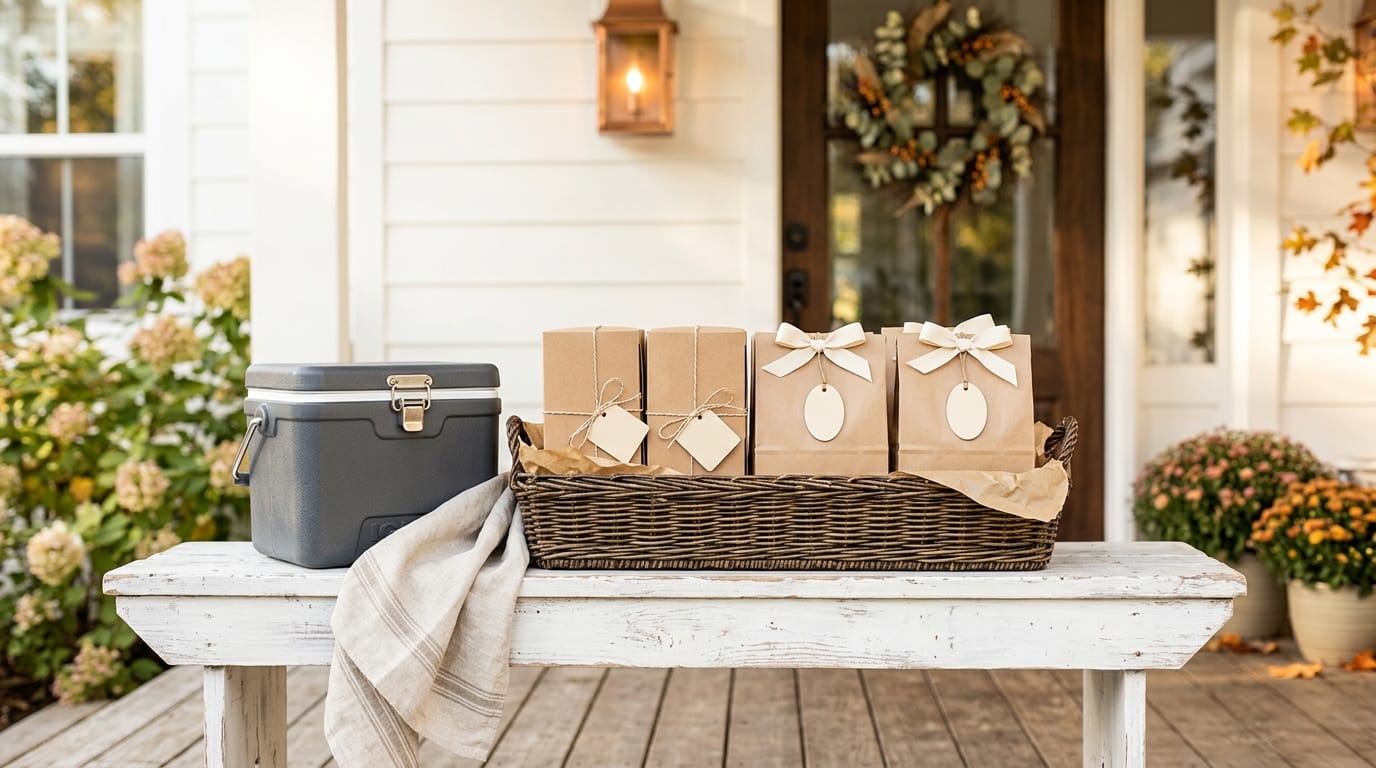
It is December 19th. You have eleven orders going out, four customers texting to ask if now is a good time, one who is "just pulling up" while you are elbow-deep in royal icing, and a cousin who says she will "swing by sometime this week."
Nobody has done anything wrong. There is just no system. And in December, no system turns into your kitchen doubling as a lobby.
The vendors who get through the holidays without losing their minds all figured out the same thing: fulfillment is a product decision, not an afterthought. Here is how to set up local pickup and delivery now, in the quiet weeks of early fall, so that December runs on rails.
Pick Your Lanes — and Only Offer Those
The single biggest source of holiday chaos is offering "whatever works for you." Generosity feels like good service. It is actually how you end up doing eleven individual handoffs across four days.
Choose two or three fulfillment lanes and publish them as the only options:
- Scheduled porch pickup. Specific windows on specific days — say Thursday 4 to 7 and Saturday 9 to noon. Orders are labeled, bagged, and waiting in a cooler or a covered bin. No doorbell, no conversation required.
- Market handoff. Customer orders online, you bring it to your booth, they collect it while they shop. This is the cheapest lane you have — you were going to be there anyway — and it drives foot traffic to your table.
- Local delivery on set days. One or two days a week, a defined radius, a minimum order, and a flat fee that actually covers your time and gas.
- Central drop point. One location, one hour, everyone comes to you. Coffee shop parking lots, church lots, and gym lots all work. This is the highest-volume-per-hour option in existence and it is criminally underused.
Three lanes is plenty. Four is generous. Everything-on-request is not a lane, it is a mood.
Price Delivery Like It Is Labor, Because It Is
Most vendors either give delivery away or charge five dollars because that felt polite. Then December arrives and they are doing ninety minutes of driving for an order with eleven dollars of margin in it.
Do the math once, in September, and let it hold. Add up the round-trip drive time, the packing time, and the mileage. Divide by the number of stops you can realistically fit in that window. That is your per-stop cost. Your delivery fee should cover it with a little air, and your order minimum should make the stop worth making at all.
A structure that works well: free pickup, flat delivery fee within a tight radius with a real minimum, and no delivery outside the radius at all. Not "call me and we'll see." Just no. The customer who lives forty minutes away can meet you at the market, and most of them happily will.
If you have never built out your true cost per unit, do that before you set the fee. Our packaging and margins guide is a good companion here, because packaging and delivery are the two costs that quietly eat holiday profit.

Make the Handoff Boring
A great pickup experience is one the customer barely remembers. That is the goal. Boring is the compliment.
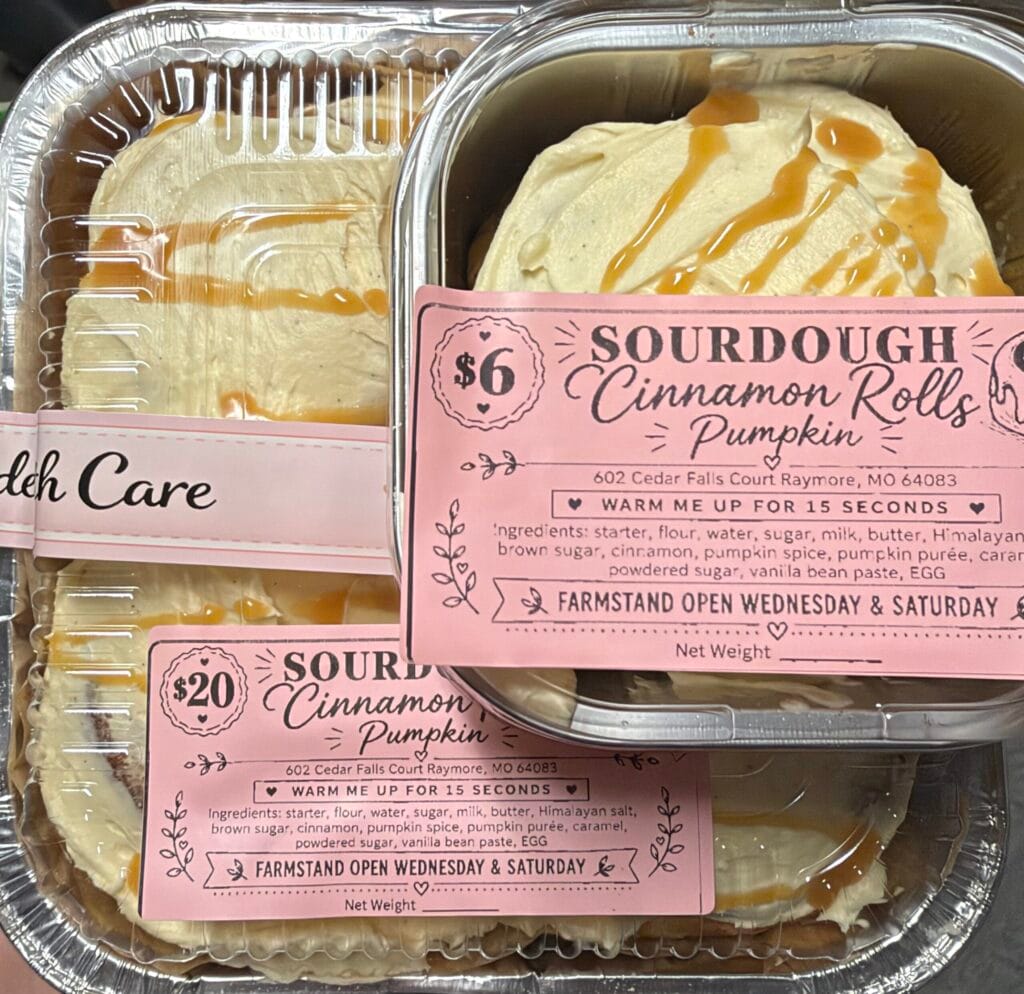
Label every order on the outside with the customer's first name and last initial in letters you can read from four feet away. Bag each order completely so that a pickup is one grab, not a hunt. Put the fragile things on top, the heavy things on the bottom, and a small card inside with reheating or storage notes so you do not get a text about it at nine at night.
Then send one confirmation the day before with three things: the address, the window, and what to do when they arrive. "Orders are in the white cooler on the porch, labeled with your name — no need to knock." That sentence alone will save you an hour of December.
For anything temperature-sensitive, a cooler with ice packs and a stated pickup deadline is not optional. Write the deadline down. "Pickup closes at 7 — after that I have to pull the order for food safety" is a boundary customers accept easily when they hear it in advance and resent when they hear it after.
Build the Calendar Backward from Your Last Bake Day
Start from the last day you are willing to be in the kitchen. Then work backward: last pickup day, last delivery day, last order deadline, and the date your holiday menu goes live. Publish all of it at once, in one place, and repeat it in every email.
The vendors who hold their deadlines are not tougher than the rest of us. They just told people the deadline early enough and often enough that saying no in December did not feel like a surprise. If you are still working out that side of it, our guide to building a weekly pre-order system covers the ordering mechanics, and the custom orders guide covers the requests that arrive after the deadline anyway.
A Few Small Things That Make an Outsized Difference
Put your pickup address in the order confirmation, not just on your website. People search their inbox, not your menu page.
Take a photo of your porch setup and include it. "Look for this cooler" removes an entire category of confusion.
Keep a printed pickup list on the counter with a pen. Check names off. When someone swears they never got their order, the list settles it in four seconds.
Batch your deliveries into a single route and drive it in one loop. Two hours of concentrated driving beats six separate trips, every single time.
And build in one buffer window — a Sunday afternoon, a Monday morning — for the people who miss theirs. Somebody always misses theirs. Planning for it turns a crisis into a scheduled inconvenience.
Why This Is Worth Doing in September
None of this is complicated. All of it is nearly impossible to figure out in the middle of a rush.
Set your lanes now. Price your delivery now. Write your confirmation email now, once, and reuse it forty times. What you are really buying is the ability to be in your kitchen doing the part you love, instead of standing in your driveway at dusk in a coat over an apron, waiting on a cousin who said sometime this week.

What is your fulfillment setup this year — porch, market, or a drop point? Tell us in the comments, because the vendors reading this are all trying to solve the same December.

Keep reading
More from the market
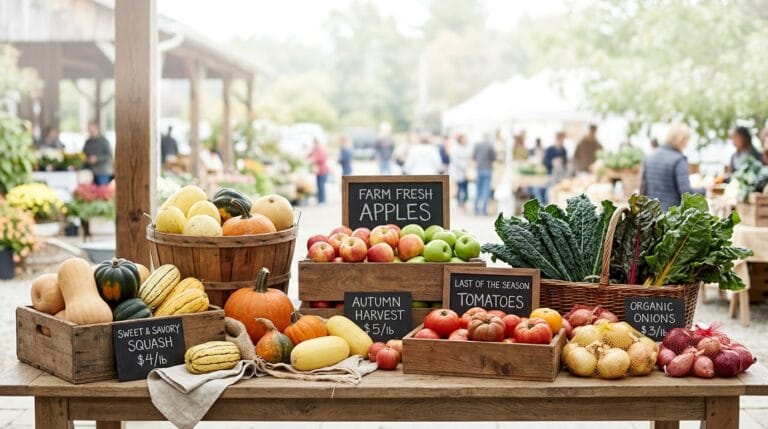
What’s at the Farmers Market in November? Your Late-Fall Shopping Guide
November farmers markets are smaller, colder, and sweeter than you expect. Here is what is in season, what frost improves, and what…
Read more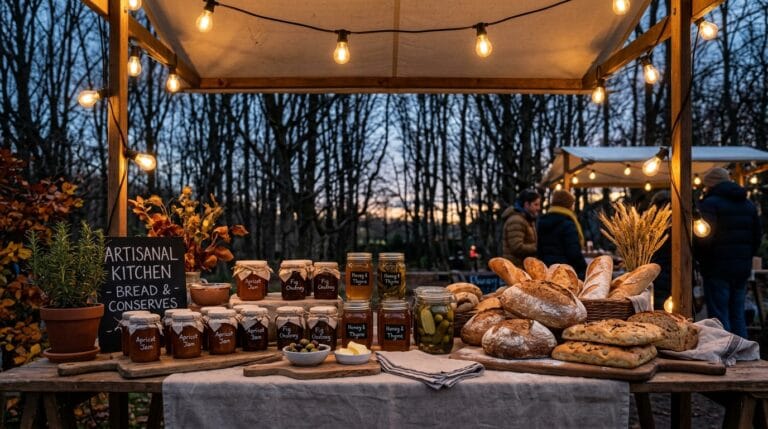
Cold-Weather Booth Setup: Wind, Light, and Days That End at Four
A booth built for August falls apart in November. What to change for wind, cold and a market that ends after dark…
Read more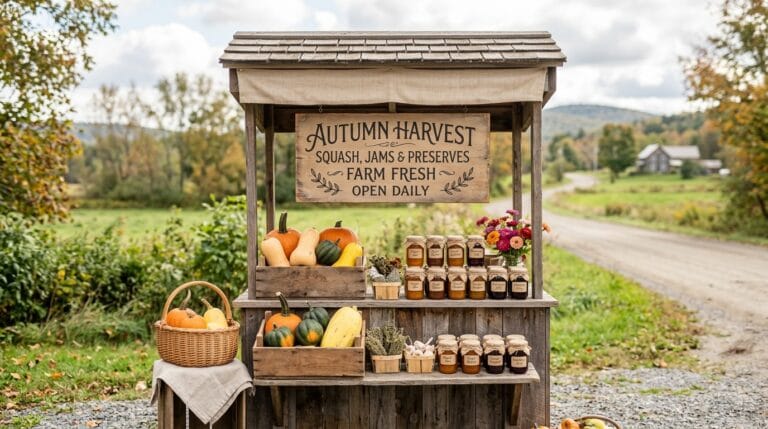
Selling from a Farm Stand: What It Takes and What It Makes
A stand at the end of the drive has no booth fee and no set hours. What to check before you build…
Read more