

Fresh figs show up at the market for about three weeks, cost more than you expect, bruise if you look at them wrong, and are gone before you've decided what to do with them. Every year. Without fail.
So here is the plan: buy the figs, go home, and make this. It takes fifteen minutes of actual work, it comes out of the oven looking like something you'd be charged twenty-six dollars for, and it uses the figs at the exact moment they're perfect instead of the moment three days later when they've gone soft in the bowl.
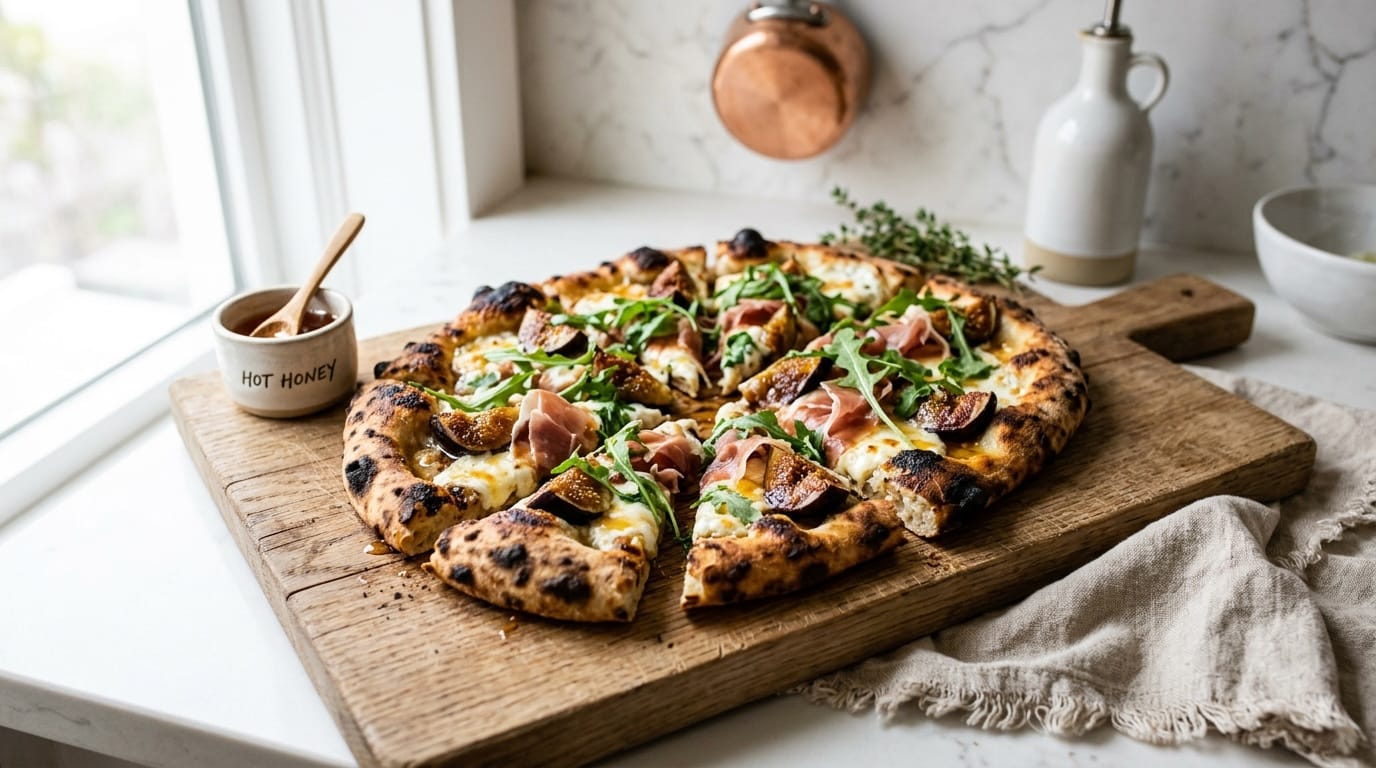
A fig and prosciutto flatbread is about as simple as it sounds: blistered dough, torn mozzarella and a little goat cheese, quartered figs roasted just until they slump, prosciutto laid over the top after it comes out of the oven, a handful of arugula, and hot honey over everything.
Fresh figs: how to buy them and when
Figs do not ripen after picking. Not meaningfully, not the way a peach or a tomato does. Whatever sugar is in that fig when it leaves the tree is all the sugar it will ever have — which is exactly why the ones at the market are so much better than the ones at the store, and why they cost what they cost. They were picked ripe, which means they were picked fragile.
What to look for: heavy for its size, soft and yielding but not mushy, skin taut with maybe a small split or two at the shoulder (a split fig is a very ripe fig, and it's a good sign, not a bad one). A drop of sticky nectar at the base of the fruit is the best sign there is. Avoid anything hard, anything with a sour or fermented smell, and anything weeping cloudy liquid.
Black Mission are the deep purple ones — jammy and intense. Brown Turkey are milder and larger. Kadota and Calimyrna are the green-gold ones, honeyed and delicate. Any of them work here. Buy whichever ones your grower is most excited about.

Then eat them within two days. Store them in a single layer in the fridge, uncovered, stem up, and let them come to room temperature before you use them — cold flattens the flavor completely.
The technique behind a good fig and prosciutto flatbread: heat
The difference between a good flatbread and a sad one is entirely the oven.
Put a sheet pan, a pizza stone, or a cast iron pan in the oven and preheat to 500°F for a full thirty minutes before the dough goes anywhere near it. Not fifteen. Thirty. The oven hits temperature long before the metal does, and it's the hot metal that gives you the fast bottom-crust bake and the blistered puff. Sliding dough onto a cold pan in a hot oven gets you a pale, dense, slightly greasy result — which is what most homemade flatbread is, and why people think they can't make it.
The second thing, and it matters just as much: the prosciutto and the arugula never see the oven. Prosciutto in a 500-degree oven turns into salty leather and loses everything delicate about it. Arugula turns to slime. Both go on in the last thirty seconds, off the heat, while the flatbread is still hot enough to soften the prosciutto and just barely wilt the greens. That contrast — hot crisp bread, cool peppery arugula, room-temperature silky ham — is the entire point of the dish.
The market walk
Figs from the fruit stall, obviously, and ask when they were picked. Dough — a lot of market bakers sell balls of pizza dough, and it's worth asking even if you don't see it on the table. Otherwise a good store-bought dough is completely fine here. Cheese from the cheese vendor; a soft fresh goat cheese and a ball of fresh mozzarella. Arugula from the greens grower — market arugula is peppery in a way bagged supermarket arugula isn't, and it stands up to the honey. Honey from the honey vendor, and if they make hot honey, buy that instead of making your own.
Hot honey has become one of the most reliable sellers at markets in the last couple of years, and there's usually somebody making it. If not, warm regular honey with a pinch of crushed red pepper for two minutes and you're there.
Make it yours
- No figs? This works with thinly sliced ripe pears in the fall, halved fresh apricots earlier in summer, or roasted grapes — which slump and burst in exactly the same satisfying way.
- Skip the meat. Leave off the prosciutto and add a handful of toasted walnuts. It's genuinely just as good and the honey does more work.
- Change the cheese. Gorgonzola or another blue with figs and honey is a classic for a reason. Ricotta makes it milder and creamier. Shaved parmesan at the end adds salt.
- Add balsamic. A thin drizzle of good aged balsamic alongside the hot honey, if you like that sweet-sharp thing.
- Make it an appetizer. Cut into small squares instead of wedges — this is a very good thing to hand people standing in a kitchen with a glass of wine.
- Herbs. Fresh thyme leaves before it bakes; torn basil after.
Fig season is short and it's happening right now, so don't file this one away for later — later is about eleven days from now and then it's over until next August.
If you make it, tag @butterandsagemarket. And if you're trying to track down a local honey maker, a cheese vendor, or a baker selling dough, find the makers near you — the whole board comes from about four stalls.
Fig, Prosciutto and Arugula Flatbread with Hot Honey
Blistered flatbread with melted mozzarella and goat cheese, roasted fresh figs, silky prosciutto, peppery arugula and a drizzle of hot honey. Fifteen minutes of work for something that looks like a restaurant plate.
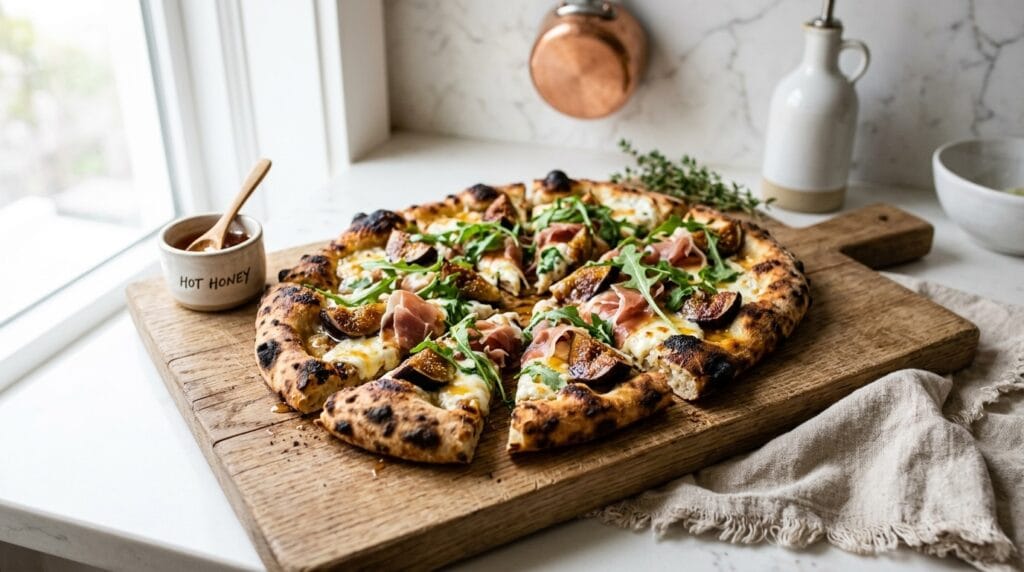
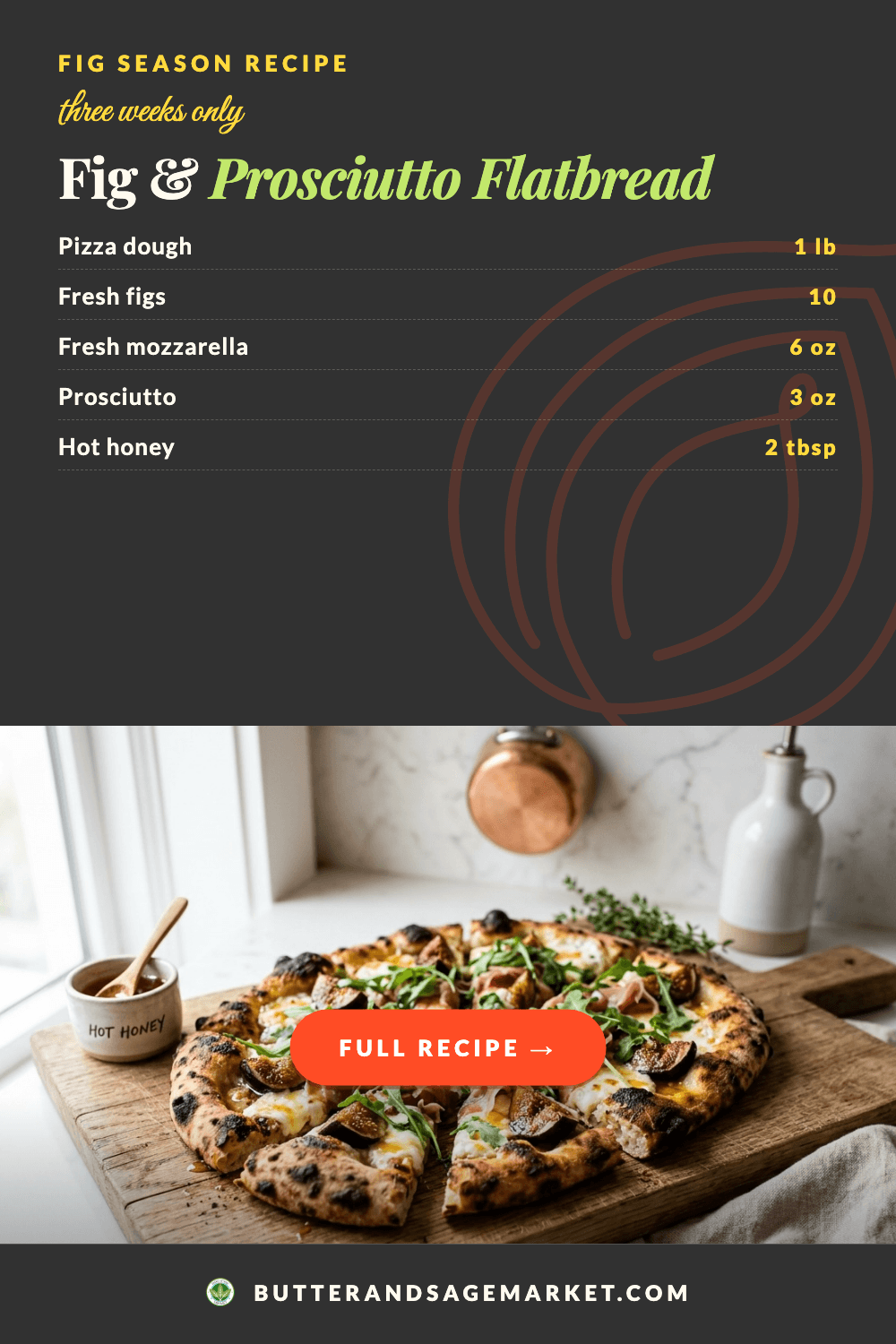
Ingredients
Instructions
- Put a sheet pan, pizza stone, or large cast iron pan in the oven and heat to 500°F for a full 30 minutes. The hot metal is what gives you a blistered crust — do not rush this.
- On a lightly floured surface, stretch one dough ball into a rough oval about 10 inches long. Do not worry about the shape.
- Carefully slide the dough onto the hot pan (a little cornmeal or semolina helps). Brush with olive oil, then scatter over half the mozzarella and half the goat cheese. Arrange half the fig quarters cut side up over the cheese.
- Bake 8 to 12 minutes, until the crust is puffed and blistered brown at the edges and the figs have slumped and caramelized.
- While it bakes, toss the arugula with the lemon juice and a little olive oil.
- Take the flatbread out. Immediately lay the torn prosciutto over the hot surface so it softens without cooking, then pile on half the dressed arugula.
- Drizzle generously with hot honey, finish with flaky salt and black pepper, and cut into wedges. Repeat with the second dough ball, or bake both at once if your oven fits them.
Notes
Fresh figs do not ripen after picking, so buy them ripe: heavy for their size, soft but not mushy, ideally with a bead of nectar at the base. Use within two days and bring to room temperature first.
Variations: swap in sliced ripe pears, halved apricots, or roasted grapes when figs are out of season; skip the prosciutto and add toasted walnuts; use gorgonzola instead of goat cheese; add fresh thyme before baking or torn basil after; cut into squares to serve as an appetizer.

Keep reading
More from the market
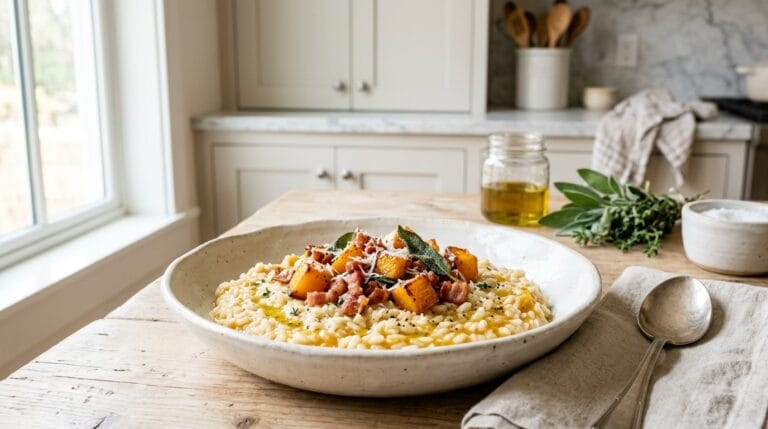
Butternut Squash Risotto with Crispy Pancetta
Half the squash melts into the rice, half stays roasted and whole. The two-texture trick that stops butternut risotto tasting like sweet…
Read more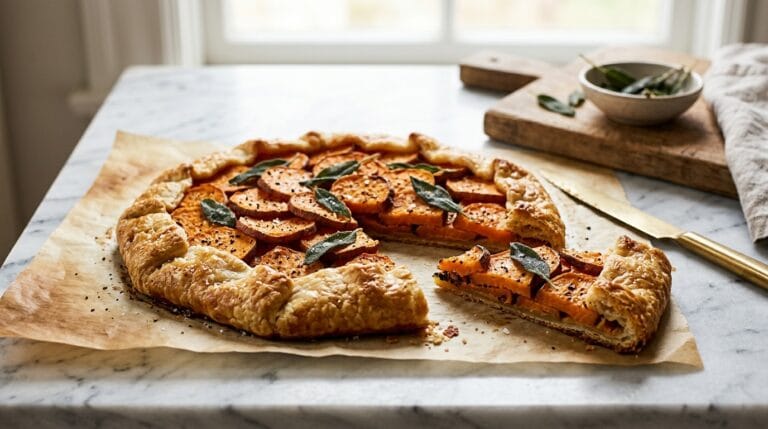
Savory Sweet Potato and Caramelized Onion Galette with Sage
Sweet potatoes, onions cooked down slow, and fried sage on a free-form crust. A savory galette that turns three cheap market vegetables…
Read more
Kale and White Bean Stew with Sausage
One pot and forty minutes. Sausage, creamy white beans and a whole bunch of market kale, with the vinegar trick that stops…
Read more