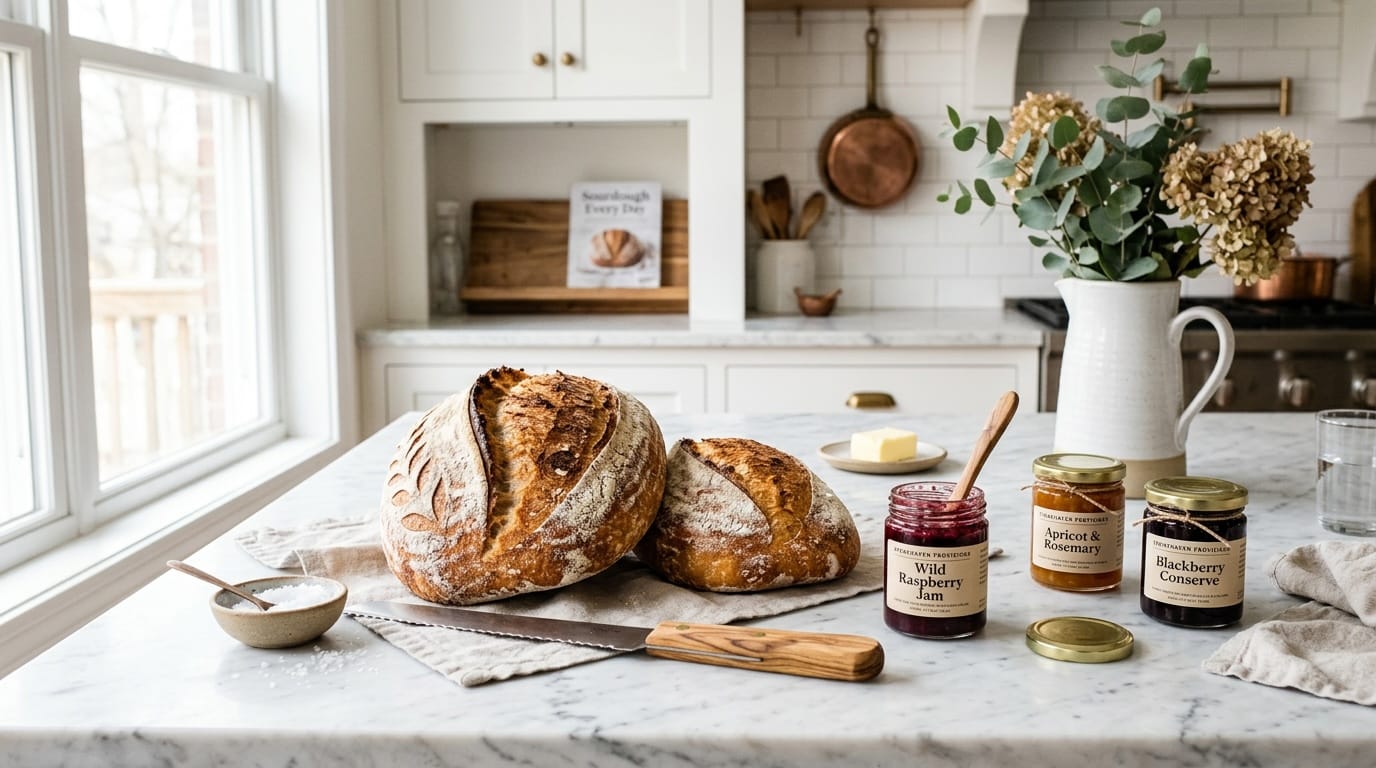
Picture a Saturday morning at the Lexington Farmers Market — your sourdough loaves lined up, a hand-lettered sign, and a line forming before 9 a.m. That’s the dream for a lot of Massachusetts home bakers. The good news? It’s a completely reachable dream. The Massachusetts cottage food framework makes it legal to sell from your home kitchen — though there’s one important twist you’ll want to understand before you start pricing your product stickers.
The Key Thing About Massachusetts: Your Town Runs the Show
Unlike states with a single statewide permit, Massachusetts cottage food law is primarily administered at the local level — meaning your relationship is with your city or town’s board of health, not the state. This decentralized approach gives local communities the ability to set their own requirements, so the rules in Boston may differ from those in Northampton or Provincetown.
What that means practically: your first call should be to your local board of health before you bake a single cookie for sale. They’ll tell you exactly what permit you need, what the fee looks like (typically $50–$100 annually), and whether they require a kitchen inspection. Some towns are very streamlined; others add layers. Either way, the permit process is generally approachable — this isn’t commercial licensing, it’s a cottage food operation permit designed for home kitchens like yours.
Sales Cap and What Products You Can Sell
Massachusetts cottage food operations are typically capped at $25,000 in annual gross sales, though your local board of health is the authoritative source on the exact limit that applies to your town. If your business grows beyond that threshold, you’ll need to look at a licensed commercial kitchen arrangement — which is a good problem to have, and a bridge you’ll cross when you get there.
Permitted products are non-potentially-hazardous foods — items that are safe at room temperature and don’t require refrigeration. That covers a generous range of the cottage food classics: baked goods like breads, muffins, cookies, cakes, and brownies; jams, jellies, and preserves; granola; dried herbs; honey; and candy. If your product requires refrigeration to stay safe, it falls outside cottage food territory and into licensed territory.
Only household members may work in the cottage food operation — you can’t hire an assistant who lives down the street, though a spouse or adult child in your household is fair game.
Online Orders and Farmers Market Sales
Yes, Massachusetts allows online sales — with an important nuance. You can take orders online and get paid online, but the transaction must ultimately be fulfilled as a direct-to-consumer sale. That means local delivery or customer pickup, not shipping packages via UPS or USPS. Think of it less as “e-commerce” and more as “your farmers market booth, available to pre-order online.” For most cottage food vendors in Massachusetts, that’s a very workable model: post your weekend availability, take pre-orders, and hand them off at the farmers market or from your driveway.
Farmers markets, roadside stands, and in-person direct sales are all permitted channels. What’s not permitted: wholesale to grocery stores or restaurants. Your sales need to go directly from your hands to your customer’s hands.
Labeling: The All-Caps Rule You Can’t Miss
Massachusetts has a specific labeling requirement that catches a lot of new vendors off guard: the required cottage food disclaimer must appear in all capital letters. Here’s the exact language you need on every product label:
MADE IN A HOME KITCHEN NOT INSPECTED BY THE MASSACHUSETTS DEPARTMENT OF AGRICULTURAL RESOURCES.
Beyond that statement, your label needs to include the product name, your name and home address, a complete ingredient list in descending order by weight, net weight or volume, and an allergen statement. If you’re selling anything containing peanuts, tree nuts, dairy, eggs, wheat, soy, fish, or shellfish, that needs to be called out clearly — both on the ingredient list and in a separate allergen statement.
A clean, legible label isn’t just a legal requirement — it’s one of the best sales tools you have at a farmers market booth. Customers read labels. Make yours something you’re proud of.
Ready to Take Your Massachusetts Cottage Food Business Online?
Once you have your local permit and your labeling sorted, the next question is usually: where do I sell? Your town farmers market is a natural first step, but the real leverage comes when your existing customers can find you — and new customers nearby can discover you — online.
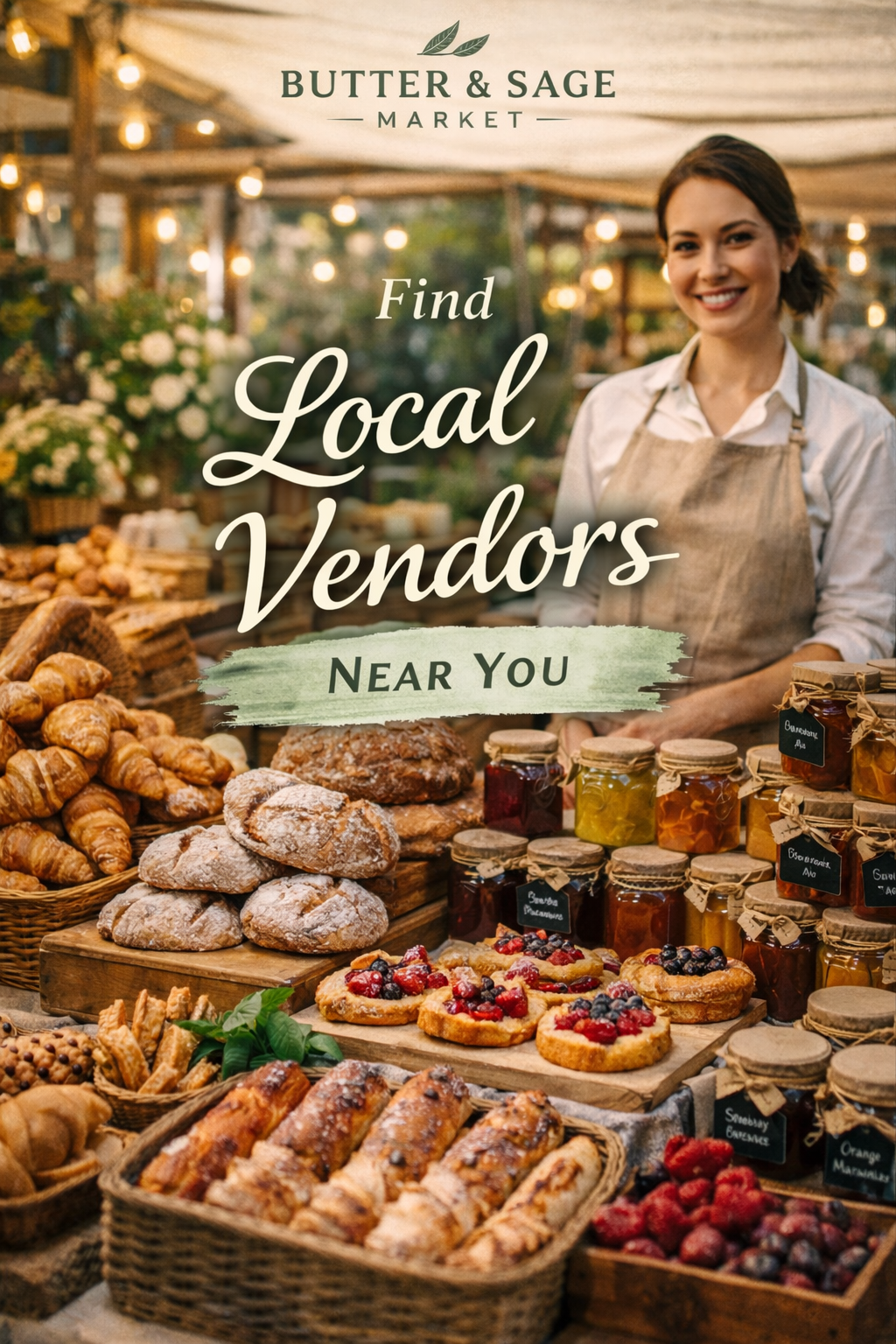
Butter & Sage Market
Sell Your Massachusetts Homemade Food on a Real Marketplace
Butter & Sage Market is the only platform built specifically for cottage food vendors — with a marketplace where local buyers can actually find you, custom order forms, a compliance label maker for all 50 states, and tools designed for the way you actually sell.
Fresh. Local. Sustainable.
For official requirements, visit the Massachusetts Cottage Food Operations page, and contact your local board of health for town-specific permit details.
⚠ Legal Disclaimer: This post is for informational purposes only and is not legal advice. Cottage food laws change frequently — always check your state’s current statutes or consult a local attorney before starting your food business.

0 Comments