
The Farmers Market Sweet Corn Guide: How to Pick It, Store It, and Use Every Last Ear
You can tell almost everything about an ear of sweet corn without opening the husk. How to pick it, why market corn tastes sweeter, and how to make it last.
 1 min read
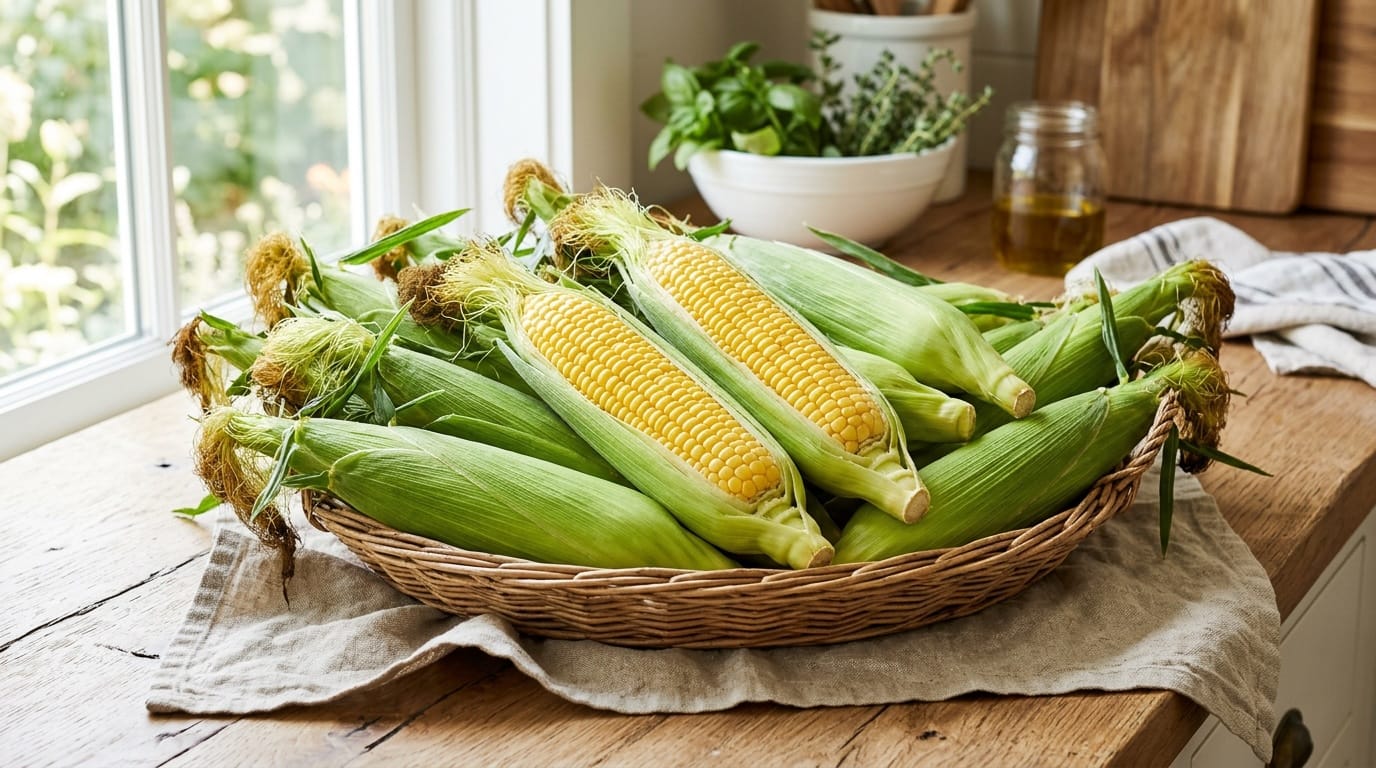
You have seen him. Every market has one. The guy standing at the corn bin peeling the husk halfway down on ear after ear, leaving a growing pile of half-stripped, drying-out corn behind him like a crime scene.
Please do not be that guy. Not just because the farmer standing three feet away is quietly losing money on every ear he ruins, but because he does not even need to do it. You can tell almost everything you need to know about an ear of sweet corn without opening it at all.
Late August into September is the last great stretch of the corn season in most of the country, and market corn in this window is about as good as food gets. Here is how to pick sweet corn at the farmers market, keep it sweet once you get it home, and use every last ear.
How to Pick Sweet Corn Without Stripping the Husk
Four things, all of which you can check in about five seconds per ear.
Feel the kernels through the husk. Run your hand down the ear and press gently. You should feel plump, evenly spaced kernels all the way to the tip. If you feel gaps, dents, or a skinny top third, the ear did not pollinate fully and you will get a patchy cob.
Look at the silk. The tassel at the top should be a golden or light brown, and slightly sticky or damp to the touch. Dry, brittle, black silk means the ear has been sitting. Bright green silk that has not browned at all can mean it was picked early.
Check the husk itself. You want bright green, tight against the ear, and a little damp. Husks that are pale, papery, loose, or starting to yellow are telling you about time, not variety. If the husk has pulled away from the kernels at all, the ear is drying out.
Feel the weight. A good ear is heavy for its size. Corn is mostly water and sugar, and both leave as it sits. A light ear is an old ear.
One more thing that costs nothing: ask when it was picked. At a farmers market you are frequently talking to the person who picked it, and the answer is often "this morning." That single question does more for your corn than any amount of husk peeling, and farmers genuinely enjoy being asked.
Bicolor, White, and Yellow: What the Varieties Actually Mean
The bins are usually labeled by color, which is the least useful information available, because color has almost nothing to do with sweetness.
Yellow corn tends to have a fuller, more classic corn flavor. White corn is often perceived as sweeter and more delicate. Bicolor is a mix of both kernel types on one ear, and it is the most common at markets because it hedges everyone's preference. All three can be excellent or mediocre depending on the variety and the day it was picked.
What actually determines sweetness is the genetic type, and farmers know these by name. Standard sugary corn is the old-fashioned kind, deeply corn-flavored but it loses sugar fast, so it needs to be eaten the day you buy it. Sugar-enhanced varieties are sweeter and hold a bit longer. Supersweet varieties, sometimes labeled shrunken-2, are dramatically sweeter and hold their sugar for days, though some people find them a little candy-like and less corny.
You do not need to memorize any of that. You just need to ask the grower "is this one supersweet, or a sugar-enhanced?" and then say "which do you like better?" You will get a real answer and probably a recommendation you would not have found on your own.
Why Market Corn Tastes Different (The Sugar Clock)
This is the actual reason to buy corn at a farmers market rather than anywhere else, and it is worth understanding.


The moment an ear of corn is picked, it starts converting its own sugar into starch. It is a living thing running out its clock. In older standard varieties that conversion is fast enough that corn picked in the morning and eaten that night is noticeably sweeter than the same ear eaten the following day. Modern supersweet varieties slowed this down considerably, which is why supermarket corn is edible at all after a truck ride and three days in a cooler.
But slower is not stopped. Market corn picked this morning, six miles away, is on a completely different part of that curve than corn that was picked in another state last week. That is not marketing. It is just chemistry and distance.
Cold slows the conversion way down, which leads directly to the next part.
How to Store It So It Is Still Sweet on Day Three
The single best thing you can do is refrigerate it fast, in the husk, and leave the husk on until the moment you cook it.
Get it into the fridge as soon as you are home. Corn sitting in a hot car for two hours loses more than corn sitting in a fridge for two days. Leave the husks on, because they hold moisture in and protect the kernels. If your fridge is crowded, a plastic bag with a few holes works fine.
Do not soak it, do not trim it, do not shuck it in advance to save time later. Shucking is a five-minute job that is much better done five minutes before dinner than three days early.
Eat it within three days if you can. Two is better. One is best, and if you bought standard sugary corn from an heirloom-minded grower, tonight is genuinely the answer.
Three Ways to Cook It, and When to Use Each
Boiling. Fast and forgiving. Bring a big pot of unsalted water to a boil, drop in shucked ears, cover, turn off the heat, and let them sit for five to ten minutes. Salt in the water can toughen the kernels, so season at the table instead. This is the method for a crowd.
Grilling in the husk. Soak the whole ears in cold water for fifteen minutes, then grill over medium heat for fifteen to twenty minutes, turning every few minutes. The husk steams the corn and then chars a little, and the result tastes like summer in a way boiled corn does not. Peel back the husk to serve and you get a built-in handle.
Roasting off the cob. Cut the kernels off raw and roast them on a sheet pan at 425 degrees with olive oil until they blister and pop. This is what you do when you want corn in something rather than corn on a plate. Salads, salsas, chowder, cornbread.
What to Do With the Ears You Did Not Get To
You bought a dozen because it was a dollar an ear and you have regrets. That is fine. Corn freezes better than nearly anything else at the market.
Cut the kernels off raw and freeze them flat in a bag. Genuinely that simple. No blanching required for anything you plan to cook later, and in February a bag of August corn in a chowder is a small miracle.
And do not throw away the cobs. A stripped cob is packed with starch and sweetness and makes a corn stock that is the entire secret to a good corn chowder. Simmer the bare cobs in water for thirty minutes with an onion and a bay leaf, strain, and freeze. It costs nothing and it is the difference between a decent chowder and one people ask about.
The husks and silk can go straight into the compost, or to a neighbor with chickens, who will be delighted.
Go This Weekend
The corn window closes faster than people expect. In most of the country you have a few good weeks left before the stalls turn over to squash and apples for good.
Go early, ask when it was picked, feel four ears instead of peeling twelve, and get it in the fridge before you unpack anything else. Then eat some of it tonight, standing at the counter, with too much butter. That is what it is for.
Find a farmers market near you and see what is still in the bin.

Keep reading
More from the market
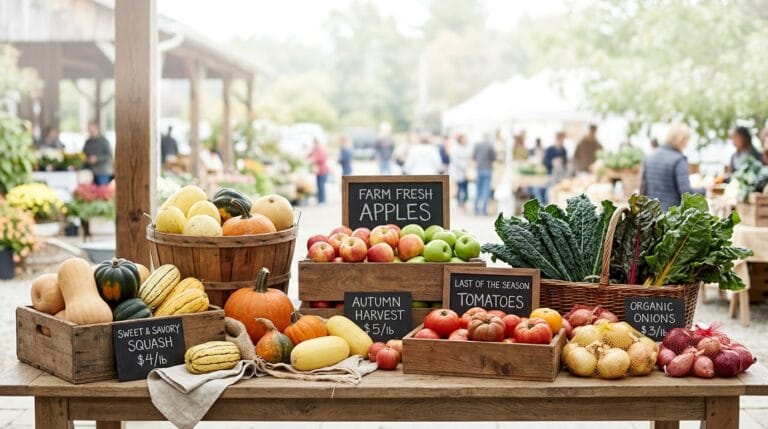
What’s at the Farmers Market in November? Your Late-Fall Shopping Guide
November farmers markets are smaller, colder, and sweeter than you expect. Here is what is in season, what frost improves, and what…
Read more
How to Survive a Slow Market Day (And Get Something Out of It)
Four hours, eleven customers, a full table. What to do with a dead market instead of scrolling, and how to leave with…
Read more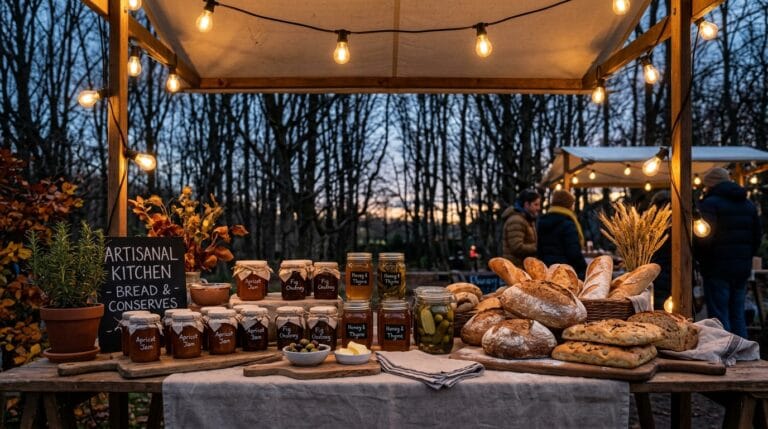
Cold-Weather Booth Setup: Wind, Light, and Days That End at Four
A booth built for August falls apart in November. What to change for wind, cold and a market that ends after dark…
Read more