
What’s at the Farmers Market in July? Your Complete Guide to Peak Summer Produce
July is peak season — heirloom tomatoes, sweet corn, peaches, blueberries, and more are hitting market stalls all at once. Here's what to look for and how to make the most of it.
 1 min read
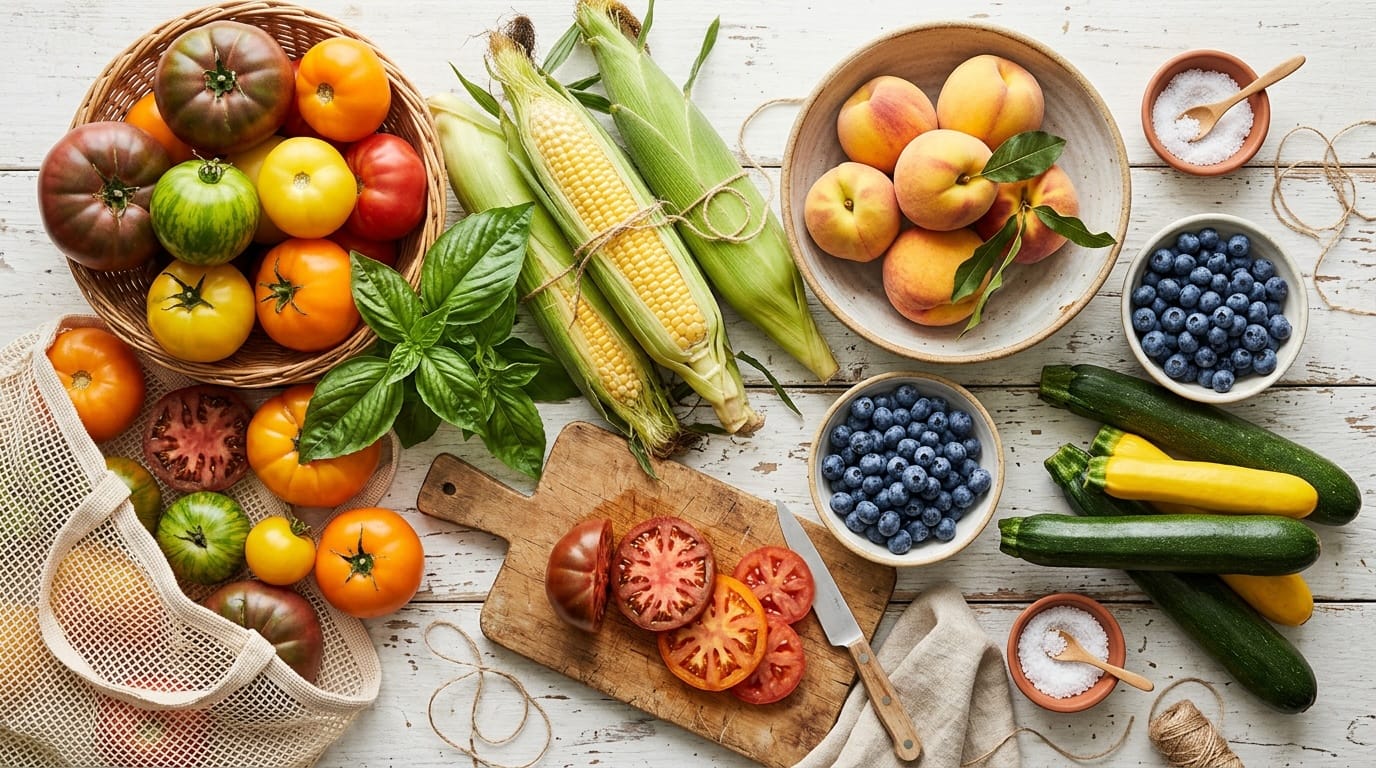
June was a warm-up. July is when the farmers market gets fully, gloriously out of hand. Tomatoes in fourteen colors. Sweet corn in towers. Peaches so ripe they seem to be daring you to eat them over the kitchen sink. Blueberries and blackberries and whatever berry has been biding its time in someone's backyard all summer.
This is the month that makes all the earlier market visits feel like training runs. Here's what to look for, what to do with it, and how to shop July without leaving anything behind.
The Peak July Produce List
Heirloom tomatoes. The most transformative thing about July farmers market season. Buy more than you think you need. Seek out varieties that would never survive commercial shipping — Cherokee Purple, Brandywine, Green Zebra, Sun Gold cherry tomatoes. These exist because of farmers markets, not despite them.
Sweet corn. July corn is the first-of-season ears, still tender and sweet before summer heat pushes the sugars to starch. Grill it. Sauté the kernels with butter and basil. Add it raw to salads. The less you do to it, the better it gets.
Peaches. The undisputed fruit of this summer. Market vendors are growing flavor-forward varieties that never see the grocery store. Look for both yellow and white varieties if your market carries them. Buy more than you planned. Use them in everything from grilled salads to hot honey glazes to cold-pack preserves.
Zucchini and summer squash. Peak season means abundance, which means vendors will price it generously. Look for finger-length zucchini and pattypan squash no bigger than a golf ball — smaller means more concentrated flavor and less watery texture. Great on the grill, in fritters, or layered in a vegetable gratin.

Blueberries and blackberries. If you've been eating the supermarket versions, a July market blueberry will be a revelation. Smaller, more concentrated, genuinely blue all the way through. They go into everything: yogurt, pancakes, galettes, jam, or eaten directly from the pint container in the car. No judgment.
Fresh basil. The height of basil season is right now. Local herb vendors often carry lemon basil, Thai basil, and Italian genovese side by side. This is the time to make pesto and freeze it in ice cube trays. Future-you will thank present-you in November.
Peppers. Sweet and hot peppers are coming in strong — bells in every color, shishito, banana peppers, and the beginning of the jalapeño wave. Many cottage food vendors are using peak-season peppers to make hot sauce, pepper jam, and flavored honey. The hot honey makers in particular are having a season worth noticing.
The Cottage Food Vendors to Seek Out
July is also peak season for cottage food producers who transform fresh market harvest into something you can take home in a jar. Jam makers are at full activity — look for small-batch peach preserves, blueberry jam, and mixed berry confections. Hot honey is at peak right alongside the chiles. Shrub makers are working with whatever stone fruit they can get their hands on.
If you find a cottage food vendor whose products you love, check whether they're listed on Butter & Sage Market — many offer pre-orders so your jar is reserved before you even get to the booth.
How to Shop Smart in July
Walk the entire market before buying anything. July abundance can be overwhelming, and you'll make better decisions after you've seen the full layout. Ask vendors what came in most recently — a vendor who harvested that morning will say so happily. Bring more bags than you think you'll need, and bring a small cooler for peaches, berries, and anything that's going to spend an hour in a hot car.
What to Cook This Week
A few things that peak in July and can carry an entire week of cooking: a big heirloom tomato panzanella with grilled corn, fresh basil, and day-old sourdough from your market bread baker will be the best salad you eat all summer. Grilled peach and burrata is three ingredients and feels like a restaurant dish. A simple pasta with burst cherry tomatoes, garlic, and olive oil needs nothing else. A peach galette takes forty minutes and will make your household unreasonably emotional about a Tuesday night dinner.
How to Preserve Your July Haul
Peaches: peel, slice, freeze flat on a baking sheet, then bag once solid. Tomatoes: roast at 275°F with olive oil and garlic, then freeze in portions for winter pasta sauce. Basil: blanch briefly, blend with olive oil, freeze in ice cube trays. Corn: cut raw kernels from the cob and freeze for soups all winter.
And if you find a cottage food jam maker whose peach preserves make you briefly forget all other foods exist — buy two jars. They sell out. Every year.

Keep reading
More from the market
What’s at the Farmers Market in November? Your Late-Fall Shopping Guide
November farmers markets are smaller, colder, and sweeter than you expect. Here is what is in season, what frost improves, and what…
Read more
How to Survive a Slow Market Day (And Get Something Out of It)
Four hours, eleven customers, a full table. What to do with a dead market instead of scrolling, and how to leave with…
Read more
Cold-Weather Booth Setup: Wind, Light, and Days That End at Four
A booth built for August falls apart in November. What to change for wind, cold and a market that ends after dark…
Read more