
Farm Stand, CSA or Farmers Market: Which Fits Your Farm?
Farm stand vs CSA vs farmers market, from the farm's side: four questions that usually decide it, what each channel asks of you, and the order many farms grow.
 4 min read
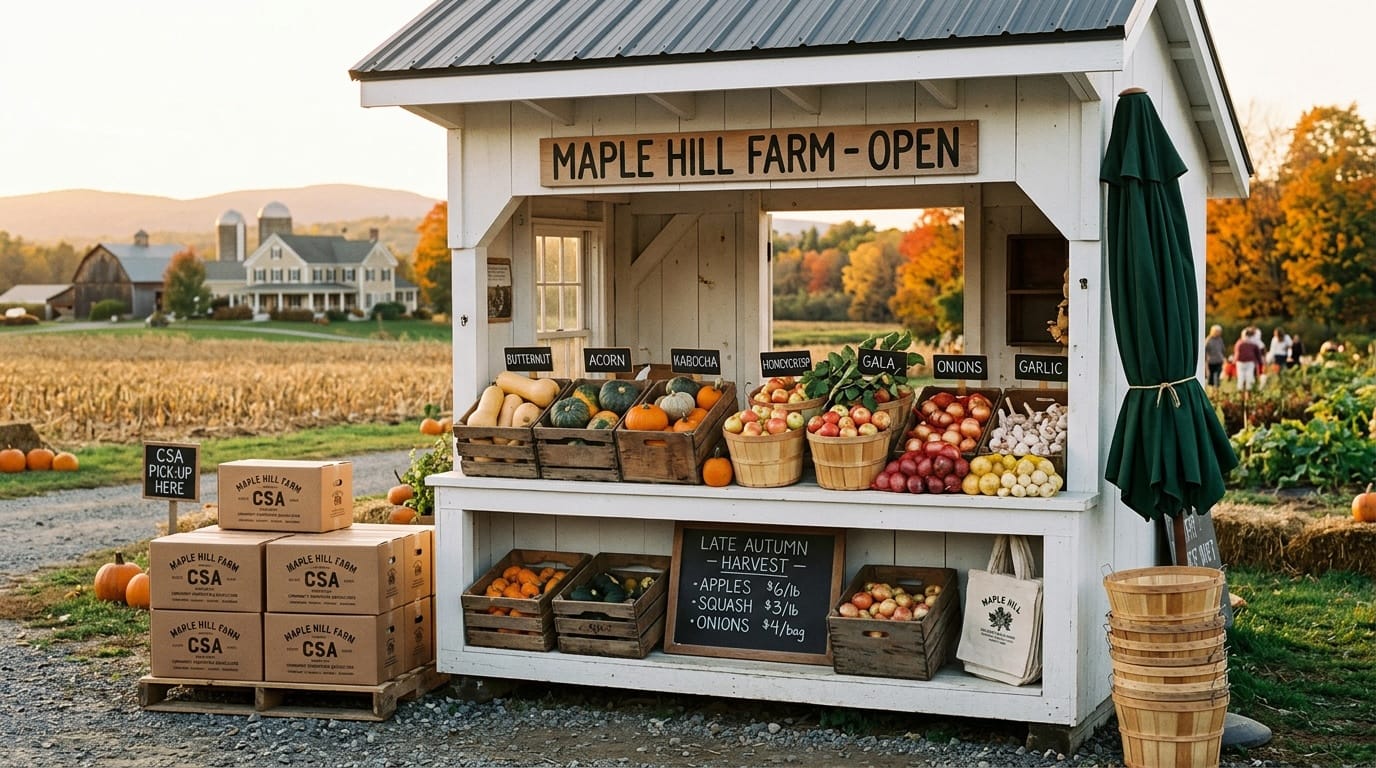
Every small farm eventually stands in the same spot, usually in winter, with a crop plan in one hand and a calendar in the other. Do you load the truck every Saturday for the market, set up a stand at the end of the drive, or ask the community to pay up front for a season of boxes? Farm stand vs CSA vs farmers market is not really a question about which channel is best. It is a question about which one fits your land, your road, your crops and, frankly, your personality.
Shoppers have their own version of this decision, which we covered in CSA Box or Farmers Market?. This is the farm side.
Farm stand vs CSA vs farmers market: what each one asks of you
Direct sales are a serious slice of farm income. USDA’s 2020 Local Food Marketing Practices Survey counted $2.9 billion in sales farms made directly to shoppers. How a farm gets its share of that depends on which of these three it chooses.
The farmers market asks for your Saturdays. Oregon State University Extension’s overview of farm-direct marketing describes markets as a way to reach many customers in a short time each week, with smaller commitments and risks than many other options, which makes them a good starting point. The trade-offs: you apply and must be accepted, follow market rules, pay fees, face competitors with similar crops and lose sales to bad weather.
The farm stand asks for your location. The same OSU guide says a stand lets you start small, control what and when you sell, and enjoy less direct competition, but you have to draw customers to you, and long hours on busy weekends come with the territory. University of Florida Extension’s overview of small-farm direct marketing calls location critical and lists upkeep, advertising, staffing, parking and traffic among the issues every stand has to solve.
The CSA asks for your organization. Members pay up front, which locks in a market and improves cash flow. OSU is blunt that CSA farms are not for beginners: you need a wide variety of crops, precise succession planting and enough members to fill the shares. The Florida guide adds that the farmer must be highly organized, delivery logistics can be complicated, and member turnover is common.
Four questions that usually decide it
1. How varied is your crop plan? A CSA box needs variety every single week. If you grow three crops very well, a market table or a stand built around those three is a better match. If you already run tight successions of twenty crops, a CSA rewards that skill.


2. Where is the farm? A busy road with a safe pull-off is a stand waiting to happen. A farm at the end of a long gravel lane is not, and it may make a market or a CSA pickup in town the better plan.
3. When do you need the money? The CSA is the only one of the three that pays you before the season starts, when seed and repair bills land. Markets and stands pay as you go, which is easier to start but harder on cash flow in spring.
4. Do you like selling face to face? OSU notes that market sales depend on talking with customers, and that stands do better when someone has a strong interest in retail. CSAs need people skills too, but of a different kind: steady communication and meeting member expectations week after week.
The order many farms grow in
These channels work best as a ladder rather than a menu. OSU notes that CSA members may initially be recruited through a market or a stand, which hints at a natural order.
Start at a market. Low commitment, fast feedback on what sells, and a growing list of regulars who know your food. Our guide to getting into a farmers market was written for food makers, but the application steps are the same for growers.
Add a stand if the road allows. It sells on the days you are not at market. Our post on selling from a farm stand covers payment boxes, what sells unattended and what a stand realistically earns.
Your market regulars are your future CSA members. They just do not know it yet.Butter & Sage Market
Offer a CSA once your regulars ask for it. When market customers start saying they wish they could reserve a box, you have your first members. Start small and deliver brilliantly.

Ready to add a CSA to the mix?
We are building CSA tools with a small group of founding farms: sign-ups, share sizes, payment plans, pack lists by pickup spot, and a farm-share map families search.
Join the founding farms
Fresh. Local. Sustainable.
A quick self-check before you commit
- I can name at least fifteen crops I can harvest reliably over the season (CSA).
- Cars can see the farm and stop safely at the edge of it (stand).
- I am free most Saturday mornings and enjoy talking with strangers (market).
- I need cash before planting more than I need flexibility (CSA).
- I want to test prices and products before making promises (market).
Two or three checks in one channel is a strong hint. Checks spread across all three suggest a mix, which is where many small farms eventually land.
Whatever you choose, keep the relationship
The common thread in all three is the neighbor who comes back. A market shopper who becomes a stand regular, then a CSA member, is the most valuable customer a small farm can have. Collect contact details at every stop along the way, and make it easy for people to find you between seasons.

Keep reading
More from the market

How Much to Charge for a Loaf of Sourdough (And Why Batch Size Changes Everything)
How much to charge for a loaf of sourdough? We cost six-loaf and twelve-loaf bake days line by line, and show why…
Read more
What to Do When a Customer No-Shows on a Big Prepaid Order
A customer no-show on a prepaid order is unsettling. What to say first, how long pies and cookies keep, what to do…
Read more
What to Put in Your Farmers Market Vendor Application and Rules
What belongs in a farmers market vendor application and rules packet: products, producer-only terms, cottage food papers, insurance, booth rules, enforcement.
Read more