Best Platforms for Cottage Food Vendors in 2026: An Honest Comparison
An honest, founder-written comparison of every major cottage food platform in 2026 — with updated pricing, accurate feature comparisons, and a decision guide for every vendor type.
 11 min read
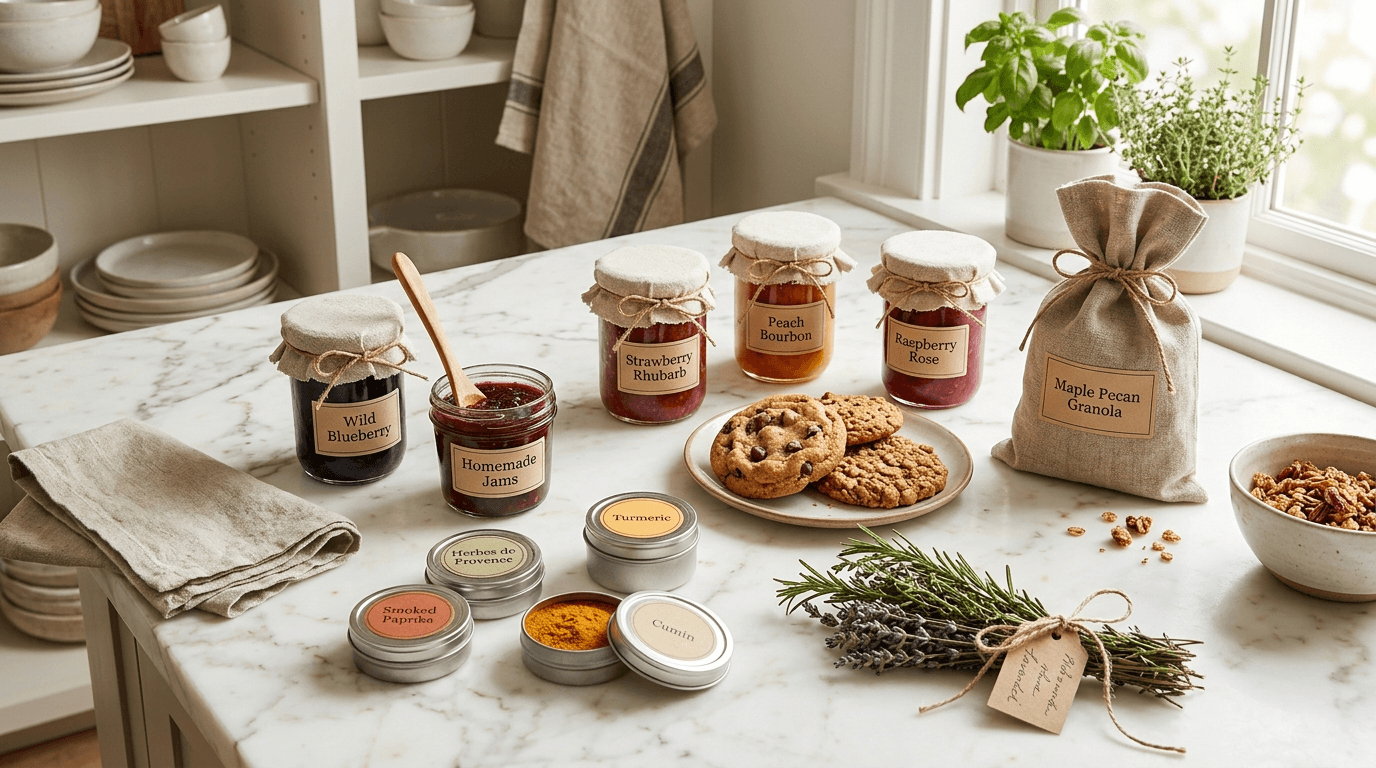
You’ve got a product people love — your jam sells out at the farmers market, your cookies have a waiting list, your neighbors keep asking how to order more. Now you’re ready to take it online. But if you’ve spent more than ten minutes researching platforms, you’ve probably discovered that the options are all over the place: some are just a website builder with your name on it, some are SaaS tools that help you manage orders but leave customer acquisition entirely up to you, and then there’s the rare thing — a marketplace where buyers are already showing up to browse.
This is an honest breakdown of every major platform cottage food vendors are using in 2026, what each one actually does well, and what it doesn’t. I’m Amy Larsen — I spent 25 years in marketing before a health scare changed how I thought about food and local food systems, and I built Butter & Sage Market because I couldn’t find a platform that did everything a small food business actually needs. I have opinions here, but I’ll give you the full picture — not just the sales pitch.
The Most Important Question Before You Choose a Platform
Before we compare platforms, you need to answer one question: do you already have customers, or do you need to find them?
This matters because the platforms on this list do fundamentally different things:
- Seller tools help you manage your business — orders, inventory, customer communication, pricing, labels. They don’t bring you new buyers.
- Storefronts give you a URL to send to people who already know you. Your Instagram followers, your farmers market regulars, your neighbors. They convert existing fans into online customers.
- Marketplaces do something entirely different: they bring new buyers to you — people who didn’t already know you existed, searching for local food makers in your area.
Most platforms do one or two of these things. Keep that in mind as you read through the options below.
2026 Platform Pricing at a Glance
| Platform | Monthly Cost | Transaction / Commission | Type |
|---|---|---|---|
| Butter & Sage Market | Free, or Pro flat plan | 8% on free plan; $0 on Pro | Marketplace + full platform |
| Homegrown | $10/mo | None | Storefront |
| HotPlate | $0 | ~5% + $0.55/order + processing | Storefront |
| My Custom Bakes | $10/mo | None | Custom order tool |
| Bakesy | $9.99–$17.99/mo | + payment processing | Custom order tool (mobile) |
| Cottage CMS | Free / $20/mo Pro | 1.9% + $0.25 (free plan) | Website builder |
| Butterbase | Free–$29/mo | None | Business operations tool |
Platform-by-Platform Breakdown
Butter & Sage Market — The Complete Cottage Food Platform
Website: butterandsagemarket.com | Cost: Free (8% commission) or Pro flat plan
I’ll be transparent: this is our platform. But what we’ve built in 2026 has changed the honest comparison significantly, so I’ll walk you through it directly.
BAS started as a marketplace — the only platform that brings local buyers to vendor shops rather than relying on vendors to drive their own traffic. That’s still true, and still our core differentiator. But we’ve expanded into a full platform that now competes directly with every category on this list.
Your storefront, actually branded like a business. Every vendor gets a custom subdomain (yourshop.butterandsage.shop) built on a professional design system — three template directions (Farmhouse, Editorial, Bold), dozens of accent color palettes, full preview before you publish. The result looks like a high-end food brand, not a free website. No design background required.
Custom orders that rival dedicated custom-order platforms. BAS now has a full custom order system: drag-to-build order forms for structured requests, or a Bea-powered chat that collects the details conversationally. You message the customer in your dashboard, send a quote, and they pay in one click from the email link. If custom orders are a meaningful part of your business, BAS handles it — alongside everything else.
Pickup, delivery, and drops — all managed in one place. Customers can place standard orders, schedule local pickup, or sign up for drops — limited-time product releases announced via the live drop banner on your shop. Order caps prevent overselling. Calendar availability keeps you from taking orders you can’t fulfill. It’s the pre-order and pickup infrastructure HotPlate built, inside a platform that also gives you marketplace discovery.
Marketing built in, not bolted on. A pop-up on your shop captures customer emails and phone numbers with one click. Every subscriber lands in your dashboard, tagged by source, ready for your next drop announcement or email blast. No third-party email tool required for the basics.
Cottage-compliant label maker. Pick a saved recipe, and the label fills itself — ingredients listed by descending weight, Big-9 allergens highlighted, cottage-food disclaimer included, QR code back to your shop. Save label designs, reprint anytime. Most platforms don’t touch compliance tooling. This one does.
Free plan vs. Pro: On the free plan, BAS charges an 8% commission on sales — you pay nothing upfront, and costs scale with revenue. At lower volumes, this is the lowest-risk entry point in the category. As your sales grow, the Pro flat plan removes the commission entirely, replacing it with a fixed monthly fee. This is the path HotPlate doesn’t offer — their per-order fees ($0.55 per order) keep scaling forever; BAS’s Pro plan caps your platform costs as your business grows.
19 total features, 12 free: Recipe batch scaler, market inventory planner, pricing calculator with cost alerts, farmers market directory listings, class and event ticketing (0% marketplace fee on classes), AI assistant Bea, branded QR codes, coupons and promo codes, invoice sending, cottage sales-cap tracker, vacation mode, staff accounts, and more.
Pros:
- Only platform combining marketplace discovery, custom orders, pickup/drops, design system, label maker, and email marketing in one place
- Professional design system — vendors look like a high-dollar food brand out of the box
- Free plan means zero upfront risk; Pro plan removes commission as you scale
- Custom orders with chat + Bea AI rival dedicated custom-order platforms
- 0% fee on class and event tickets — meaningful if you teach
- Built-in email and text capture — no third-party tool needed
- Cottage-compliant label maker included (most platforms skip compliance entirely)
Cons:
- 8% commission on the free plan is higher than HotPlate’s rate at very small order volumes — run the math for your mix
- Newer platform — marketplace traffic is growing but not at Etsy scale yet
Best for: Cottage food vendors who want one platform that does everything — marketplace discovery, professional storefront, custom orders, pickup/drops, label compliance, and marketing tools — without stitching together four different apps.
Homegrown — Best Simple Storefront for Local Pickup
Website: findhomegrown.com | Cost: $10/month
Homegrown is a clean, well-built storefront for local food vendors. You get a simple online presence where existing customers can browse your products, place pre-orders, pay online, and schedule local pickup. Setup is fast — most vendors are live in under 30 minutes. The flat $10/month with no transaction percentage is genuinely attractive.
The key limitation remains: Homegrown is a storefront, not a marketplace. There’s no browsable directory where new buyers discover you. You drive your own traffic, and Homegrown handles the transaction. That’s useful — it’s just not the same as marketplace exposure. And with fewer platform tools than BAS, Homegrown works best for vendors who want simplicity above all else.
Pros:
- Clean, simple interface — live in under 30 minutes
- $10 flat fee with no per-transaction cut (valuable at higher volumes)
- Well-established platform with a proven track record
Cons:
- No marketplace discovery — buyers must already know your link
- Thinner feature set than BAS — no label maker, no design system, no email capture, no drops management
Best for: Vendors who already have an established following and want the simplest possible way to take online pre-orders for farmers market pickup.
Not ideal for: Vendors who need marketplace exposure or a full platform toolset.
HotPlate — Best Zero-Fee Pre-Order Platform
Website: hotplate.com | Cost: No monthly fee; ~5% + $0.55 per order + payment processing
HotPlate is YC-backed and has built a solid product for cottage food vendors, pop-up operators, and food trucks. The pitch is compelling: no monthly subscription, you only pay when you make a sale. Features include pre-order management, inventory controls, customer messaging, and a prep list calculator.
The fee structure deserves a close look before committing. HotPlate’s ~5% + $0.55 per order sounds lower than BAS’s 8%, but the math depends on your order sizes and volume. On larger orders, BAS’s flat 8% may be comparable or better. More importantly, HotPlate’s fees scale forever — there’s no path to a flat monthly plan. BAS’s Pro plan removes commission entirely once your business hits a size where that math works in your favor.
HotPlate also remains a private storefront — no marketplace where buyers discover you without a direct link — and has no design customization system, label maker, or built-in email/text marketing.
Pros:
- Zero monthly fee — only pay when you sell
- Strong pre-order, pickup, and inventory management
- Well-funded, actively maintained platform
Cons:
- Per-transaction fees scale indefinitely — no flat plan option
- No marketplace discovery — you drive all your own traffic
- No label maker, design system, or email/text capture
Best for: Vendors with existing followings who want zero upfront cost and a streamlined pre-order system.
Not ideal for: Vendors who need marketplace discovery, a professional design system, or want to cap platform costs as they scale.
My Custom Bakes — Best Pure Custom-Order Tool
Website: mycustombakes.com | Cost: $10/month, no transaction fees
My Custom Bakes remains the dedicated custom-order specialist. The intake forms, quoting workflow, and order tracking are purpose-built for customization-heavy businesses. No transaction fees on the monthly plan. Founder Lisa He has built genuine trust in the cottage food community, and MCB’s cottage food law resource library is excellent.
Worth noting: BAS now has a full custom order system that rivals MCB’s core functionality — with the addition of marketplace discovery, a professional storefront, label maker, and 16 other features. If custom orders are all you need and you have an established customer base, MCB is still a focused, affordable choice. If you want custom orders as part of a fuller platform, BAS now covers that ground.
Pros:
- Best dedicated custom order intake workflow
- No transaction fees
- Strong cottage food law resources
- Trusted founder brand
Cons:
- No marketplace discovery
- Narrower feature set — focused on custom orders only
Best for: Vendors whose entire business is custom orders and who want a standalone tool dedicated to that workflow.
Not ideal for: Vendors who also need a marketplace presence, label compliance tools, or email marketing.
Bakesy — Best for Custom Orders via Mobile App
Website: bakesy.app | Cost: $9.99–$17.99/month
Bakesy is purpose-built for bakers taking custom orders, with a polished native mobile app experience. Custom order request forms, product catalog management, and customer communication tools. It’s baked-goods-specific — not the right fit for jams, spice blends, or other cottage food categories. No marketplace discovery.
Best for: Cottage bakers who primarily run custom orders from their phone.
Not ideal for: Non-baked-goods vendors, or anyone who needs marketplace exposure or a full platform.
Cottage CMS — Best Free Website Builder for Cottage Food
Website: cottagecms.com | Cost: Free plan available; Pro at $20/month
Cottage CMS is a website builder designed specifically for cottage food businesses. It understands labeling requirements and compliance in a way generic builders like Squarespace don’t. The free forever plan makes it accessible to vendors just getting started. But it’s a website, not a marketplace — no buyer discovery, no design system, no marketing tools.
Best for: Vendors who need a basic professional web presence with no monthly fee.
Not ideal for: Vendors who need a full platform or marketplace exposure.
Butterbase — Best for Recipe Costing & Business Operations
Website: butterbase.app | Cost: Free–$29/month
Butterbase fills a gap the other platforms don’t address: understanding whether you’re actually making money. Recipe costing, ingredient cost tracking, inventory management, CRM, invoicing. It’s not a storefront or marketplace — it’s the financial infrastructure for running a profitable food business. Best used alongside BAS or another storefront.
Best for: Any cottage food vendor who wants to price for profit and understand their true margins.
Which Platform Is Right for You?
| Your Situation | Best Platform |
|---|---|
| You want one platform that does everything — marketplace, custom orders, pickup, design, labels, marketing | Butter & Sage Market |
| Farmers market vendor going online, want new buyers to discover you | Butter & Sage Market |
| Established following, want the simplest possible storefront | Homegrown |
| Want zero upfront cost, comfortable with per-order fees forever | HotPlate |
| Your entire business is custom orders and you don’t need a marketplace | My Custom Bakes |
| Baker running custom orders from your phone | Bakesy |
| Need a web presence with zero monthly fee, no transactions needed | Cottage CMS |
| Want to understand your recipe costs and price for profit | Butterbase (as a companion to any platform) |
A Word on Platform Sustainability
When evaluating a platform, ask how it makes money. A platform that runs on venture capital without a clear revenue model will eventually face the same fate as Castiron — it shut down, and vendors lost their storefronts overnight. Look at the business model before committing your customer relationships to a platform.
The platforms with the clearest models: Homegrown ($10/month flat), BAS (8% commission on free plan, flat fee on Pro), Cottage CMS (free plan + Pro tier), HotPlate (transaction fees). Know which model you’re betting on.
If you’re ready to open your shop on Butter & Sage Market, it takes about as long as setting up a social media profile — and unlike social media, the customers you build here belong to you.
Fresh. Local. Sustainable.
Frequently Asked Questions
What is the best platform for cottage food businesses in 2026?
For vendors who want one platform that covers everything — marketplace discovery, custom orders, pickup and drops, a professional design system, email and text marketing, and a cottage-compliant label maker — Butter & Sage Market is the most complete option. For vendors who already have a strong following and want the simplest storefront, Homegrown ($10/month) is a solid choice.
How is Butter & Sage Market different from Homegrown?
Homegrown is a storefront — customers who already know you can browse and place orders. Butter & Sage Market is a full platform: a marketplace where new buyers discover you, plus custom order management, pickup and drops, a professional design system, built-in email and text marketing, and a cottage-compliant label maker. Homegrown does one thing simply; BAS does many things in one place.
How does Butter & Sage Market pricing compare to HotPlate?
HotPlate charges ~5% + $0.55 per order with no monthly fee — those fees scale forever regardless of your volume. BAS charges 8% on the free plan, with a Pro flat-fee plan that removes the commission entirely as your sales grow. At scale, BAS’s Pro plan can be significantly cheaper than HotPlate’s ongoing per-order fees. BAS also includes marketplace discovery, a design system, label maker, and email marketing — none of which HotPlate offers.
Does Butter & Sage Market handle custom orders?
Yes. BAS has a full custom order system: drag-to-build order forms or a Bea AI-powered chat that collects order details conversationally. You message the customer in your dashboard, send a quote, and they pay from an email link. It rivals dedicated custom-order platforms, with the added benefit of marketplace exposure and 18 other features.
What happened to Castiron?
Castiron has shut down. Vendors looking for alternatives should consider Butter & Sage Market (marketplace exposure + full platform), Homegrown (simple storefront), or My Custom Bakes (custom order workflows). See our full Castiron alternative guide for a detailed comparison.

Keep reading
More from the market
Castiron Is Gone: Best Alternatives for Cottage Food Vendors in 2026
Castiron has shut down. Here are the best alternatives for cottage food vendors in 2026, with honest pros, cons, and pricing for…
Read more
Cottage CMS vs. Butter & Sage Market: What a Website Builder Cannot Do That a Marketplace Can
Cottage CMS is a solid website builder for cottage food sellers. But there is a fundamental question it cannot answer: who finds…
Read more
Cottage Cakes vs. Butter & Sage Market: Two Ways to Sell Homemade Food Online — But Only One Helps You Grow
Both platforms connect home bakers with buyers. But the similarities end there. An honest comparison of Cottage Cakes vs. Butter & Sage…
Read more