

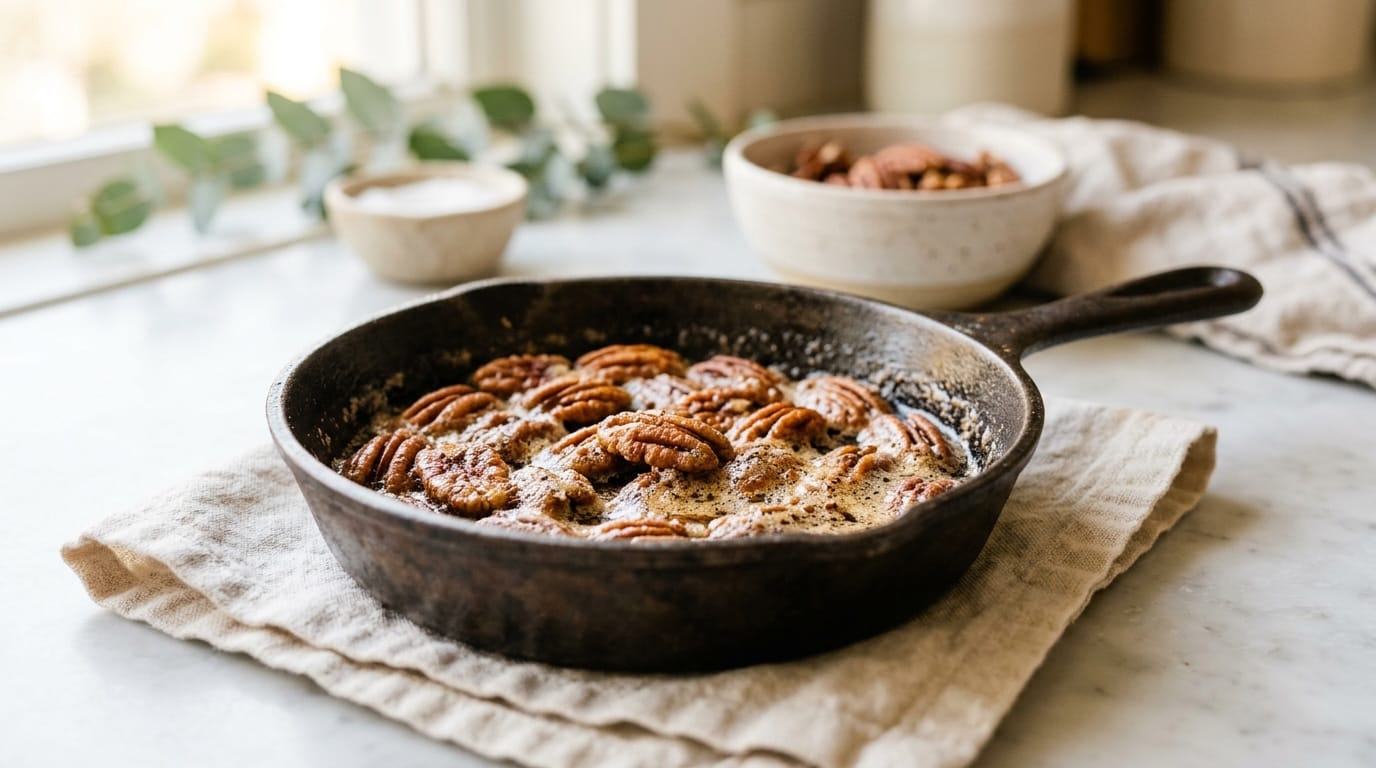
Four ingredients. One skillet. Eight minutes, most of which you spend standing still and paying attention.
Brown butter pecans are the highest return-on-effort thing in the entire fall repertoire. They go on a salad, on roasted squash, on ice cream, into a cheese board, or straight into your mouth over the sink while they're still warm. They cost about four dollars to make and they taste like something you'd pay fourteen for in a little cellophane bag at a nice market.
And there is exactly one thing that can go wrong, which is the entire reason this post exists.
The ninety seconds that decide everything
Brown butter goes from pale, to nutty and gorgeous, to acrid and ruined in about ninety seconds. There is no timer for it. There is no visual cue you can catch from across the room. The only warning you get is the smell, and by the time burnt butter smells burnt, you are already making a second batch.
So: do not walk away. Do not check your phone. This is a stand-at-the-stove recipe and it is only eight minutes long.
Here's the sequence your butter runs through, and it always runs through it in this order:
- It melts. Nothing interesting yet.
- It foams up loudly. That's the water in the butter boiling off. Sounds like a tiny rainstorm.
- It goes quiet. This is the cue. The water is gone, and now the milk solids are about to toast. From here you have well under a minute.
- Brown flecks appear on the bottom and the kitchen suddenly smells like toffee and hazelnuts. This is it. This is the moment.
The pecans go in at step four, and their cool mass drops the pan temperature just enough to stop the browning from running away. That's not a coincidence — it's why the recipe works.
Use a light-colored pan if you have one
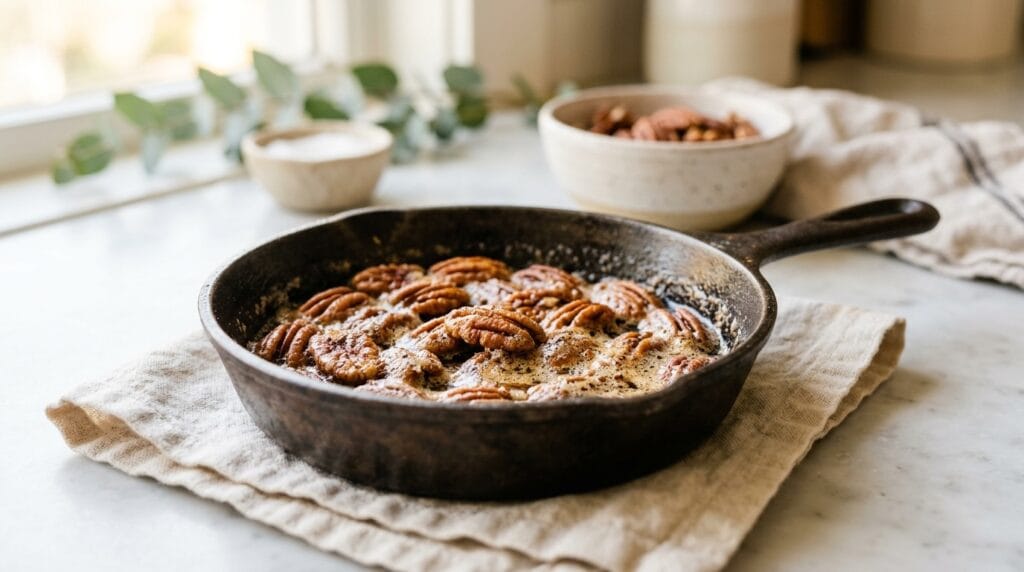
This is the single most useful piece of equipment advice here. Brown butter is judged entirely by color, and you cannot see the color of anything against black cast iron. A stainless or light-enameled skillet lets you watch the flecks develop and pull the pan at the right second.
If cast iron is what you have, use it — just lean harder on your nose and on the moment the foaming goes quiet. And tilt the pan toward the light now and then.
One more: butter keeps cooking after you take the pan off the burner. Cast iron especially holds enormous residual heat. Pull it a hair earlier than you think, because the pan is going to carry it the rest of the way whether you like it or not.
Why now, specifically
Two reasons this is an August-into-September recipe rather than a November one.
Butter is unusually cheap right now — noticeably cheaper than it's been in several years — which makes this a genuinely good week to burn a stick or two learning the technique. If you have been meaning to get comfortable with brown butter, this is the moment where practice is affordable.
And pecans from the new crop start showing up at markets in the fall. If your market has a nut grower, buy from them: pecans go rancid faster than almost any other nut because of their high oil content, and a nut that was harvested last month tastes like a completely different ingredient than one that has been sitting in a warehouse. Taste one before you buy. It should be sweet and buttery, never sharp or like old paint.
Where these actually go
- On a salad with bitter greens, sliced pear or apple, and a sharp cheese. The salt-fat-crunch combination does most of the work.
- On roasted squash — delicata, butternut, acorn. If you already made our roasted delicata squash with brown butter and sage, you know exactly why this pairing works.
- On a cheese board, next to a blue or an aged cheddar and a jar of local honey.
- On ice cream or yogurt, still slightly warm, which is arguably the best use.
- Chopped into cookie dough, banana bread, or granola.
- In a jar with a ribbon, which is where the vendors reading this should be paying attention.
Make it yours
- Rosemary. A sprig dropped into the butter as it browns, fished out before the pecans go in. Fantastic with the maple.
- Heat. A quarter teaspoon of cayenne or a spoonful of hot honey in place of the maple.
- Orange. A strip of zest in the butter, or a little grated over at the end.
- Other nuts. Walnuts and hazelnuts work identically. Almonds need an extra minute or two.
- Savory version. Skip the maple entirely, finish with flaky salt and black pepper, and put them on literally any roasted vegetable.
A note for the vendors reading this
These are a very good market product and an even better sample product. They're shelf-stable for a couple of weeks in a sealed jar, they cost almost nothing per unit, they smell incredible from ten feet away, and a small jar with a cream ribbon is an easy add-on at the register in the run-up to the holidays. A bowl of warm ones at the front of your table will stop more foot traffic than a sign will.
Go brown some butter. Stand there while you do it. Eight minutes.
If you make them, tag @butterandsagemarket — and if you're hunting for new-crop pecans or a local honey to go with them, find the makers near you.
Brown Butter Maple Pecans
Butter, pecans, salt, and a spoonful of maple at the very end. Eight minutes in one skillet, with one moment of real attention required — the second the foaming goes quiet.
Ingredients
Instructions
- Line a sheet pan or plate with parchment and set it next to the stove. You will need it fast.
- Melt the butter in a light-colored skillet over medium heat, swirling the pan. It will foam up loudly, then go quiet — that quiet is your cue. Within about a minute after that, brown flecks appear on the bottom and the kitchen smells like toffee. Do not walk away during this step; the window between nutty and burnt is roughly 90 seconds.
- The moment it smells like toffee, add the pecans and the kosher salt. Toss to coat. The cool nuts drop the pan temperature and stop the butter from browning any further.
- Toast 3 to 4 minutes, stirring constantly, until the pecans are fragrant and a shade darker.
- Take the pan off the heat and add the maple syrup. It will sputter. Toss for about 30 seconds until the nuts are glossy and the syrup has thickened onto them.
- Spread in a single layer on the parchment, sprinkle with flaky salt, and let cool at least 10 minutes. They crisp as they cool — warm ones will still be a little soft, which is not a mistake, just not the final texture.
Notes
Butter keeps cooking off the heat, and cast iron especially holds a lot of residual heat — pull the pan slightly earlier than feels right.
Storage: airtight at room temperature for about a week. Do not refrigerate; they lose their snap.
Variations: a rosemary sprig in the browning butter (fish it out before the nuts go in); 1/4 tsp cayenne or hot honey in place of the maple; a strip of orange zest in the butter; walnuts or hazelnuts straight across, almonds need an extra minute or two; or skip the maple entirely and finish with flaky salt and black pepper for a savory version.

Keep reading
More from the market
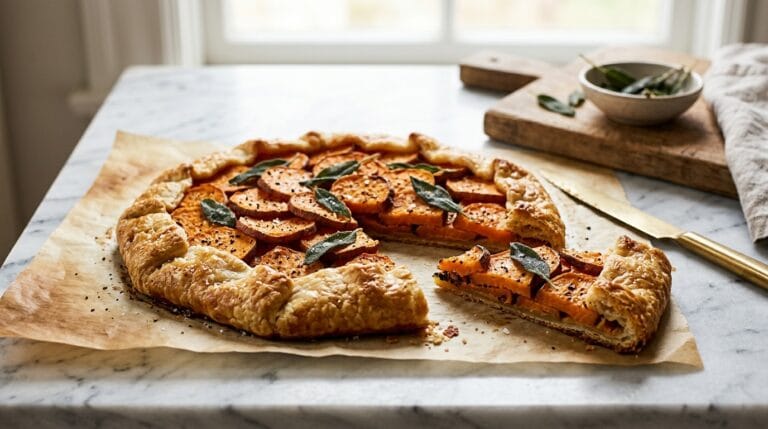
Savory Sweet Potato and Caramelized Onion Galette with Sage
Sweet potatoes, onions cooked down slow, and fried sage on a free-form crust. A savory galette that turns three cheap market vegetables…
Read more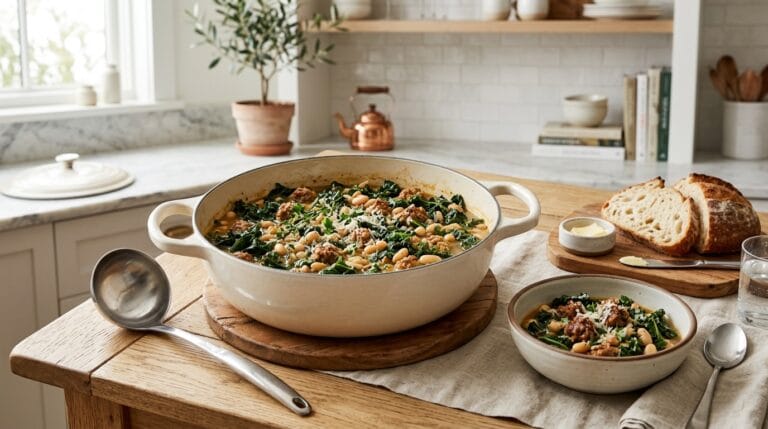
Kale and White Bean Stew with Sausage
One pot and forty minutes. Sausage, creamy white beans and a whole bunch of market kale, with the vinegar trick that stops…
Read more
Skillet Baked Eggs with Blistered Tomatoes and Feta
One skillet, thirty minutes, and the best possible use of late-summer market tomatoes and farm eggs. Breakfast, lunch, or a very good…
Read more