Can You Ship Cottage Food? The State-by-State Breakdown for 2026
Can you mail your cottage food products? It depends on your state. Here's the 2026 state-by-state breakdown: the 30 states that allow in-state shipping, the 10 that don't, and the 11 still unclear.
 4 min read
Updated November 6, 2026: rebuilt state by state from current law, including changes in Hawaii (2025) and Virginia (2026).
One of the most common questions cottage food vendors ask goes something like: “My customer lives three hours away and wants to order my jam. Can I just mail it?”
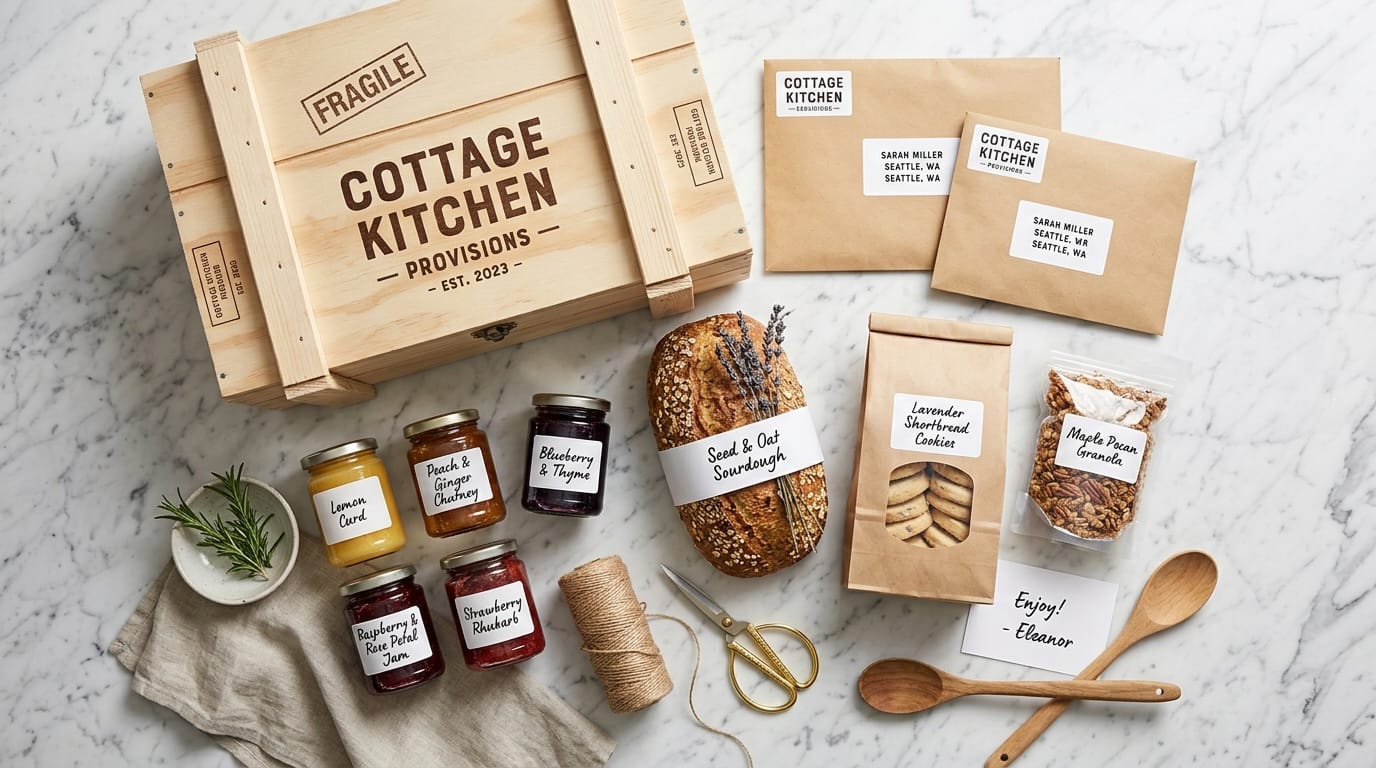
The answer depends entirely on which state you’re in — and whether you’re shipping within your state or across a state line. Let’s break it down clearly, without the legal-ese.
The big rule: shipping almost always stays inside your state
Before you get excited about UPS labels, there’s one federal reality to understand: cottage food exemptions are state-level laws. The moment your product crosses a state line, it enters interstate commerce — and federal FDA rules apply. Your state exemption doesn’t cover that.
That’s why most states that allow shipping limit it to customers inside the state. Shipping from Texas to Oklahoma, for example, is off the table under your Texas cottage food exemption — even though both states allow in-state shipping.
A few states go further:
- Kansas and North Dakota explicitly allow sales to out-of-state customers.
- Pennsylvania home processors (registered as Limited Food Establishments) can ship out of state, but need a nutrition panel and may need FDA registration.
- Arkansas doesn’t prohibit it, but shipping out of state puts you under federal FDA rules — talk to a food attorney first.
Even in those states, the state you’re shipping into has its own rules. Check them before you ship.
States that allow in-state shipping (30 states)
These states let you send cottage food to customers in your own state by mail or carrier (USPS, UPS, FedEx and the like):

Alabama, Alaska, Arizona, Arkansas, California, Florida, Georgia, Hawaii, Idaho, Illinois, Indiana, Iowa, Kansas, Maryland, Massachusetts, Michigan, Missouri, Nebraska, New Mexico, New York, North Dakota, Ohio, Oklahoma, Oregon, Pennsylvania, South Carolina, Tennessee, Texas, Vermont, and Virginia.
Several come with conditions worth knowing:
- Texas — In-state shipping is allowed, but at least one part of the transaction has to happen in person. A customer who meets you at the farmers market and orders more later can have it shipped; a stranger who finds you online needs an in-person step first.
- Arizona — Products without dairy, meat or poultry can go by carrier. Anything with them has to be delivered in person.
- Illinois — Shelf-stable foods only, in tamper-evident packaging.
- Nebraska and Tennessee — Shelf-stable foods can be shipped; anything that needs refrigeration can’t.
- Michigan — Allowed since HB 4122 (March 2026), as long as the buyer has a chance to talk with you, in person or by video, before buying.
- Massachusetts — The state counts mail-order sales as direct-to-consumer sales under a residential kitchen permit. Check with your local board of health before you ship.
- Newly added — Alaska (HB 251, 2024), Georgia (HB 398, July 2025), Hawaii (August 2025) and Virginia (July 2026).
States that don’t allow carrier shipping (10)
In these places, orders have to be picked up or delivered by you personally:
Connecticut, Kentucky, Minnesota, Mississippi, Nevada, New Hampshire, New Jersey, Rhode Island, Washington, and Washington, D.C.
- Minnesota — Shipping human food becomes legal on August 1, 2027.
- Nevada — Phone and internet sales open up when AB 352 takes effect July 1, 2027.
- New Hampshire — In-state mail order is possible with a Class H Homestead license ($150).
- Mississippi — You can advertise online, but online and mail-order sales aren’t allowed.
States where the rules aren’t clear (11)
Colorado, Delaware, Louisiana, Maine, Montana, North Carolina, South Dakota, Utah, West Virginia, Wisconsin, and Wyoming either allow online sales without saying whether a carrier can make the delivery, or leave it to the agency to decide.
In these states, the safest move is to ask your state’s Department of Agriculture (or Department of Health) before you ship anything. “Online sales are allowed” doesn’t automatically mean “drop it in a UPS box.”
Your label still matters when you ship
A shipped product needs the same label it would have at your booth — producer name and address, a complete ingredient list, net weight, an allergen statement, and your state’s cottage food statement if your state requires one (Maine, Massachusetts, North Carolina and Pennsylvania don’t). A few states add shipping-specific rules, like Illinois’s tamper-evident packaging, and some want the label visible through the outer packaging. When in doubt, label generously.
Want to reach buyers closer to home?
Shipping rules are moving in a good direction — Alaska, Georgia, Hawaii, Michigan and Virginia have all opened up in the last two years, and Minnesota and Nevada follow in 2027. If your state doesn’t allow carrier delivery yet, the trend is your friend.
In the meantime, connecting with local buyers who can pick up or receive delivery you arrange directly is a powerful way to build your customer base without the shipping question at all. If you’re also looking to sell cottage food online, we’ve got a full guide on that too.
⚠ Legal Disclaimer: This post is for informational purposes only and is not legal advice. Cottage food laws change frequently — always check your state’s current rules or ask your state agency before you ship.


Keep reading
More from the market
Georgia Cottage Food Laws 2026: No License Fee, Retail Sales Now Legal, and How to Start
Georgia eliminated its cottage food license fee and opened retail and restaurant sales in 2025 — and 2026 is your first full…
Read more
Food Freedom States 2026: Where Cottage Food Laws Go the Furthest
Nine states have passed food freedom laws that go far beyond standard cottage food rules — no permits, no sales caps, and…
Read more
Can I Hire Help for My Cottage Food Business? Employee Rules by State
Your sister volunteers to help bag granola. Your neighbor offers to do labels. Can you say yes? Cottage food employee rules vary…
Read more