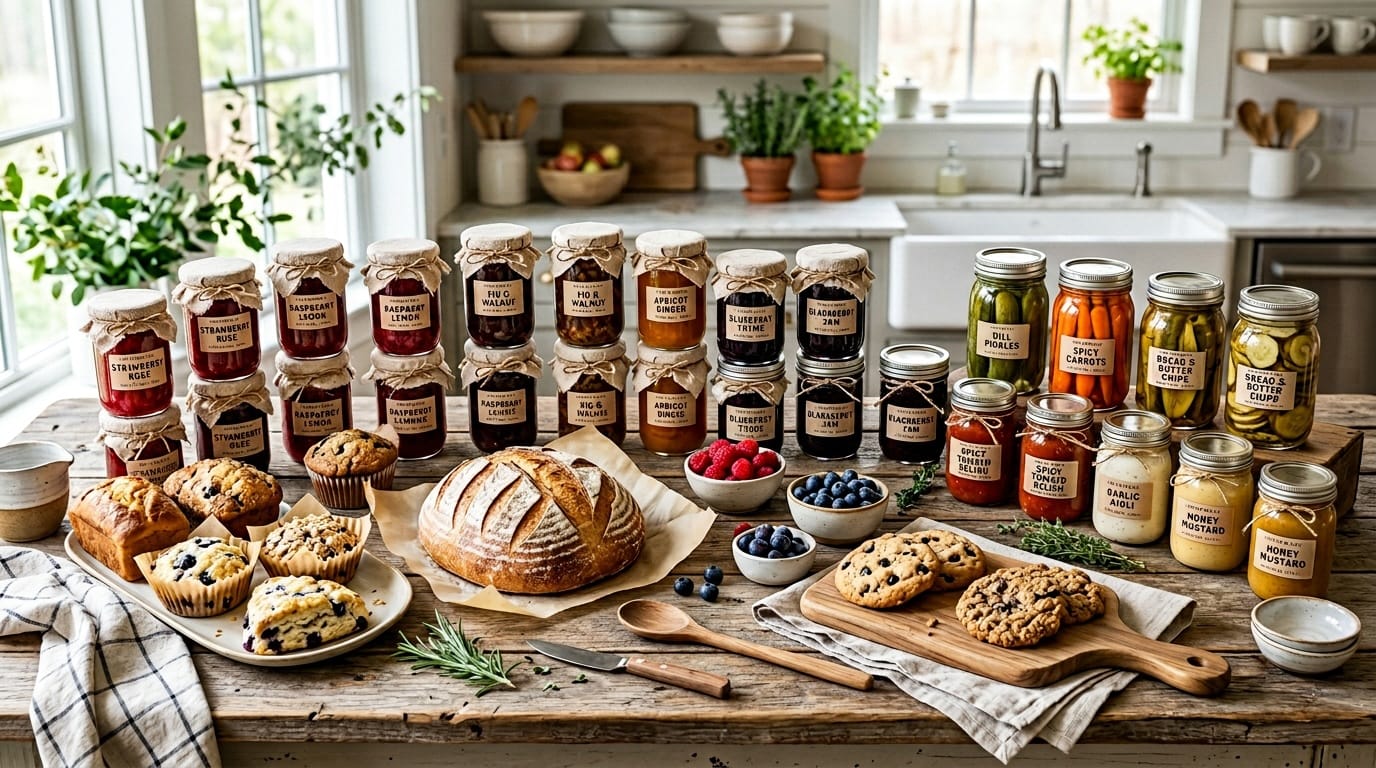

Somewhere along the line, certain states decided that a neighbor selling homemade jam to another neighbor shouldn't require a permit, an inspection, and months of paperwork. They called it food freedom — and once you understand what it means, you'll understand why it's become one of the fastest-growing trends in cottage food legislation.
What is a food freedom law?
Traditional cottage food laws give you permission to sell specific types of homemade food from your home kitchen, usually with a sales cap and an approved product list. Food freedom laws flip that framework. Instead of telling you what you can do, they largely get out of the way and let you sell almost any homemade food — including products that would never appear on a traditional approved list — directly to an informed consumer.
The defining characteristics: no sales cap (or a very high one); no permit or license required; no kitchen inspection; a wider product list that often includes TCS foods, pickled goods, fermented products, and acidified foods. Sales must still be direct-to-consumer — restaurants and grocery stores are usually still off-limits.
The phrase that shows up in most food freedom statutes is "informed end consumer." The buyer knows your product was made in a home kitchen and is choosing it anyway. The state's position: that's their right.
The 9 states with food freedom laws in 2026
Wyoming — The original. Wyoming's Food Freedom Act (2015) was the first in the country and remains a model. No permit, no inspection, no sales cap. TCS foods allowed with some conditions.
Utah — A tiered food freedom system with expanding permissions at each level. Very broad product allowances with no cap at the top tier.
North Dakota — Broad food freedom provisions with wide product allowances and no sales cap.
Maine — Direct-to-consumer food freedom with a local focus; some provisions specify sales within the county or town.
Arkansas — True food freedom: no permits, no fees, no revenue caps, no inspections. One of the most producer-friendly laws in the country. Important note: despite being a food freedom state, Arkansas does NOT allow TCS foods — a common and costly misconception.
Montana — A permissive framework with no sales cap and broad product allowances.
Oklahoma — HB 2975 (expanded 2024) added significant food freedom provisions. The Local Food Freedom Act (effective November 1, 2026) will allow retail placement for non-TCS items with a required placard.
Tennessee — No license, no cap, online sales with seller delivery. HB 130 (effective July 2025) added TCS foods including poultry and pasteurized dairy baked goods.
Alaska — HB 251 (effective August 2024) converted Alaska to a food freedom state: no sales cap, TCS foods allowed, online sales and in-state shipping permitted.
What food freedom doesn't mean
It doesn't always mean TCS foods are allowed. Arkansas is the clearest example — a true food freedom state where temperature-controlled foods are still not permitted. Always check your specific state's provisions, not just whether it has a food freedom law.
It doesn't mean wholesale. Most food freedom laws still limit sales to direct-to-consumer. Selling to restaurants or grocery stores typically still requires a commercial kitchen license even in the freest states.
It doesn't mean labels aren't required. Even in the most permissive states, you still need your name, address, ingredients, net weight, and the disclaimer that the food was made in a home kitchen not subject to state inspection.
Is your state next?
The trend is real and bipartisan. Food freedom legislation has been introduced or passed in more than a dozen additional states in 2025 and 2026. If your state isn't on this list today, it may not be far behind. The Institute for Justice's food freedom resource page tracks active legislation across all 50 states.
⚠ Legal Disclaimer: This post is for informational purposes only and is not legal advice. Cottage food laws change frequently — always check your state's current statutes or consult a local attorney before starting your food business.
Butter & Sage Market
Whatever Your State's Law — Sell Here
Butter & Sage Market is built for cottage food vendors across all 50 states. Whether you're in a food freedom state or working within a tight sales cap, we're your partner in the marketplace.
Fresh. Local. Sustainable.

0 Comments