
What’s in a Winter CSA Share, and Is It Worth Joining?
What a winter CSA share really holds, from storage roots and squash to tunnel-grown greens, how pickup changes after frost, and the questions to ask first.
 5 min read
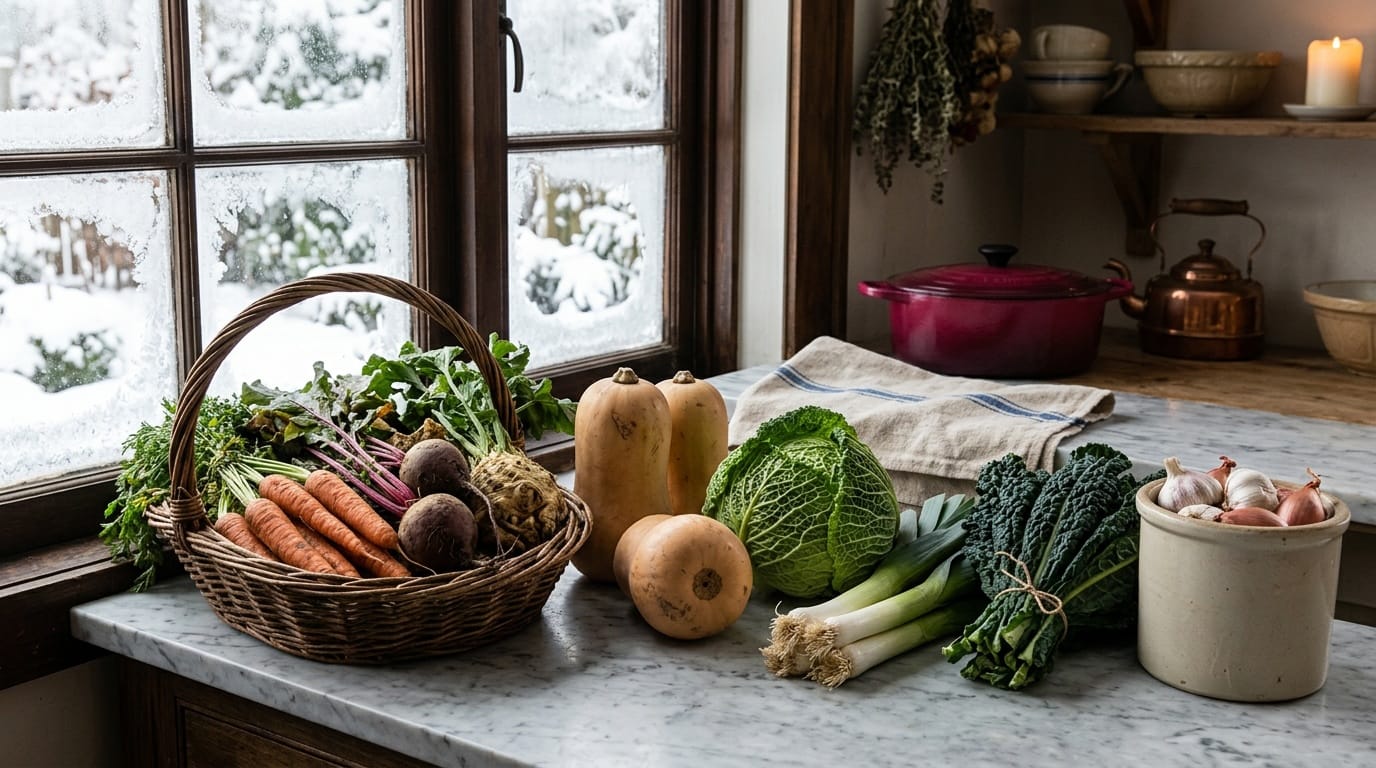
The summer box is easy to love. Tomatoes, peaches, corn, a fistful of basil. Then October arrives, the farm sends an email about a winter CSA share, and you find yourself picturing eleven weeks of turnips. Fair. But a good winter share is one of the quietly great deals in local food, as long as you know what you are signing up to receive.
If you are new to the whole idea, start with our guide to how a CSA works. This post is only about the cold-weather version: what actually shows up, how pickup changes, and how to tell whether one will earn its place in your kitchen.
What goes into a winter CSA share
Winter shares are built from two kinds of food: crops the farm harvested in fall and is holding in storage, and hardy crops still growing under cover.
The storage side is the backbone. University of Massachusetts Extension sorts the classic winter crops by how they like to be kept, and the list reads like a winter share: carrots, beets, turnips, celeriac, cabbage, leeks and Brussels sprouts kept cold and moist, potatoes a little warmer, winter squash and sweet potatoes warm and dry, and onions, garlic and shallots cold and dry. Farms with a good root cellar or walk-in cooler can hold many of these for months.
The growing side comes from high tunnels and row cover. The same UMass material lists the greens that keep going in deep winter: spinach, very hardy kales, tatsoi and miner’s lettuce. Those are the leaves that make a January box feel fresh instead of dutiful.
Plenty of farms round things out with add-ons from the pantry or from neighbors: eggs, honey, dried beans, flour, apples from cold storage, a loaf of bread. Each farm is different, so read the offer rather than assuming.
That naming point is real. One North Carolina farm in a USDA-funded SARE project renamed its “winter CSA” to “late season CSA” to match what it actually delivered, a run of extra weeks past the main season rather than a share through February.
How pickup changes after the frost
Expect fewer, bigger pickups. Storage crops do not need to be eaten within a week, so many winter shares come every other week or once a month, with more weight per box. That suits a lot of households better than the summer rhythm, because a box of roots and squash will wait patiently while life happens.
Expect breaks, too. A Vermont farm reporting in a University of Vermont Extension grower newsletter skipped three weeks over Christmas and New Year’s, describing it as a rest for the farm and for members who were tired of the same storage crops. The same farm noted its share was in a “no greens” phase in late January: roots, squash and cabbage. That is an honest picture of midwinter in a cold climate.




Where you live changes everything. A winter share in the South can still carry lettuce, collards and citrus. In the northern states, February is about what was put away in October.
Is a winter CSA share worth it for your household?
The general CSA-versus-market question is covered in CSA Box or Farmers Market?, so here are only the winter-specific tests.
- You like to cook soups, braises, roasts and gratins at least a few nights a week.
- You have a cool, dark spot for squash and onions, and fridge drawer room for roots.
- Your winter farmers market is small, far away or closed.
- You would rather plan dinners around a box than around a grocery flyer.
- You are fine with cabbage appearing more than once.
If most of that sounds like you, a winter share is likely a better fit than a summer one. Winter food is more forgiving: it holds, it reheats, and it does not punish you for a busy week the way a bag of ripe peaches does.
If you mostly cook from recipes bought ingredient by ingredient, or you travel a lot over the holidays, ask about a smaller share or a monthly pickup before you say no outright.
Winter food is forgiving. A box of roots and squash will wait while life happens.Butter & Sage Market
Questions to ask the farm before you join
How many pickups, and how far apart? Divide the price by the number of pickups, then look at what a typical box holds. That gives you a far better comparison than the headline price.
What is grown under cover, and what comes from storage? A farm with tunnels will have greens. A farm working only from storage will have mostly roots, squash and alliums. Both are fine; you just want to know which one you are buying.
Can I see a past box list? A farm that has run a winter share before can usually show you what went out last year, week by week.
Where is pickup, and is it indoors? Standing in a dark parking lot at five in February is a different experience from a heated barn.
Do you accept SNAP or offer payment plans? Many farms do one or both. If you use SNAP, ask how their payment timing works, since farms handle it differently.
Making the most of a winter box
Sort it the day you bring it home. Greens go in the fridge in a bag with a dry towel. Roots lose their tops and go in the crisper. Squash, onions and garlic go somewhere cool and dark, not the fridge. Our guide to storing root vegetables and winter squash walks through each one.
Then lean on a few reliable methods instead of a stack of new recipes. As a baker and longtime home cook, I find one hot oven does most of the work: roast whatever came in the box, make a big pot of soup on the weekend, and save the peels and ends for stock. Celeriac mashed with potatoes, cabbage braised low with apples, and roasted squash folded into a grain salad will carry you a long way.
Finding a winter share near you
Winter shares often fill from the farm’s existing members before they are advertised widely, so ask your summer farm first. If you do not have one yet, search our farm-share directory for CSAs near you, then ask each farm whether a winter or late-season share is on offer this year. Your future self, standing over a pot of soup in January, will be glad you asked.

Keep reading
More from the market

The Hidden Crisis in American Food: Why Small Farms Are Disappearing — and What You Can Do
Over $1 billion in federal local food programs has been cut in 2026, and small farms are feeling it. Here is what…
Read more
How to Start a Market Garden: Growing Vegetables for Profit on a Small Plot
A market garden can generate real income on less than an acre. Here's how to plan your space, pick high-value crops, and…
Read more
What Is a CSA? A Complete Guide to Community Supported Agriculture for Small Farms
Community supported agriculture (CSA) gives small farms upfront income and loyal customers. Here's how CSA works, how to start one, and how…
Read more